

<< >>
Encyclopaedia Judaica
Jews in Germany 02: Reformation and Napoleon's equality
Propaganda against the Jews in Reformation times - welcome Jews because of their tax payments and trade connections - absolutism - enlightenment, court Jews, assimilation and anti-assimilation movement - equality under Napoleon
Encyclopaedia Judaica (1971): Germany, vol. 7, col. 472. [[Example of an upheaval against Jewish moneylenders etc.]]:
The plundering of the Frankfort ghetto [[the alleys around the "Judengasse"]] in 1614 [[under the leadership of Fettmilch]].
Engraving by H. Merian, from Gottfried: Chronica; Frankfort 1642
from: Germany; In: Encyclopaedia Judaica (1971), vol. 7
from: Encyclopaedia Judaica (1971): History, vol. 8
presented by Michael Palomino (2008)

![Encyclopaedia Judaica (1971): Germany, vol. 7,
col. 472. [[Example of an upheaval against Jewish
moneylenders etc.]]: The plundering of the Frankfort
ghetto [[the alleys around the
"Judengasse"]] in 1614 [[under the
leadership of Fettmilch]]. Engraving by H. Merian,
from Gottfried: Chronica; Frankfort 1642](EncJud_juden-in-D-d/EncJud_Germany-band7-kolonne472-Frkft-pogrom1614.jpg "Encyclopaedia Judaica (1971): Germany, vol.
7, col. 472. [[Example of an upheaval against Jewish
moneylenders etc.]]: The plundering of the Frankfort
ghetto [[the alleys around the
\"Judengasse\"]] in 1614 [[under the
leadership of Fettmilch]]. Engraving by H. Merian,
from Gottfried: Chronica; Frankfort 1642")
| Teilen
/ share: |
Facebook |
|
Twitter
|
[The "Christian" propaganda of the criminal Church against the Jews - other groups with "love for the Jews"]
<The age of the Reformation was characterized by upheavals in all spheres of life - political, economic, social, religious, and cultural. It also produces new attitudes to Jews and Judaism often of a conflicting nature. (col. 471)
[[...]]
Some humanists acknowledged the religious and moral values inherent in Judaism and took up its defense, but in folk literature and the mystery plays the Jew was depicted as a usurer and bloodsucker, as the Christ-killer and reviler of the Virgin Mary, an associate of Satan and ally of the Turk. Yet there was also Johann *Reuchlin who led a courageous struggle against the defamation of the Talmud and called for equal rights for the Jews, as "cocitizens of the Roman Empire". Martin *Luther, after failing to win them [[Luther wanted to win the Jews for conversion to criminal Christianity]], showed vehement hatred for the Jews, and in his writings called upon the secular rulers to deprive them of their prayer books and Talmud, to destroy their homes, to put them on forced labor or expel them from the land.
[[Later Luther's anti-Semitism was model for the Nazi system, and the criminal Church is not banned until now]].
There were, however, other reforming movements, especially the Anabaptists, who appreciated the Jewish Bible and Judaism and displayed sympathy and love for the Jews. (col. 472)
[[...]]
The sweeping economic changes that took place in the 16th and 17th centuries also had their effect upon the situation of the Jews.
[[Colonialism and new capitalism
The colonial capitalist system in Europe was introduced by "Christian" colonialism and the influx of robbed gold and silver from the "Americas", from Potosí and other mines etc., and there were new merchandise products in Europe from Asia and the "Americas" as spices, wood, porcelain, and slaves etc. By this there was a new privileged group of rich "Christian" merchants. The towns on the coast got richer as the traditional main towns on the European continent, and every state was keen to found it's "Colonial Company" and making war on foreign soil in Asia and "America"]].
The early manifestations of nascent capitalism caused much suffering among the masses of the people. Failing to grasp the meaning of the social and economic upheaval, they found in the Jew a scapegoat on whom they could blame their troubles, whom they had always been taught to regard as their enemy and exploiter. The demands for equality and justice which emerged from the social unrest in the cities included a call for the expulsion of the Jews "for the devastating harm that their presence brings to the plain people."
The patrician class, which had supported the Jews in the cities, made way to the guilds, who adhered to a narrow social and economic outlook and would not tolerate any competition. They were also opposed to foreigners, especially if these were infidels. The numerous instances of expulsion that occurred in this period were to a large degree the outcome of these new developments in the structure of the economy. An outstanding Jewish personality of this period was *Joseph (Joselman) b. Gershon of Rosheim who in the course of his life made tremendous efforts to ease the lot of German Jewry and enable them to withstand the onslaught of the diverse forces arraigned against them. (col. 473)
[Example of an upheaval against Jewish moneylenders etc.: Frankfort 1614]
Encyclopaedia Judaica (1971): Germany, vol. 7, col. 472. The plundering of the Frankfort ghetto [[the alleys around the "Judengasse"]] in 1614 [[under the leadership of Fettmilch]]. Engraving by H. Merian, from Gottfried: Chronica; Frankfort 1642
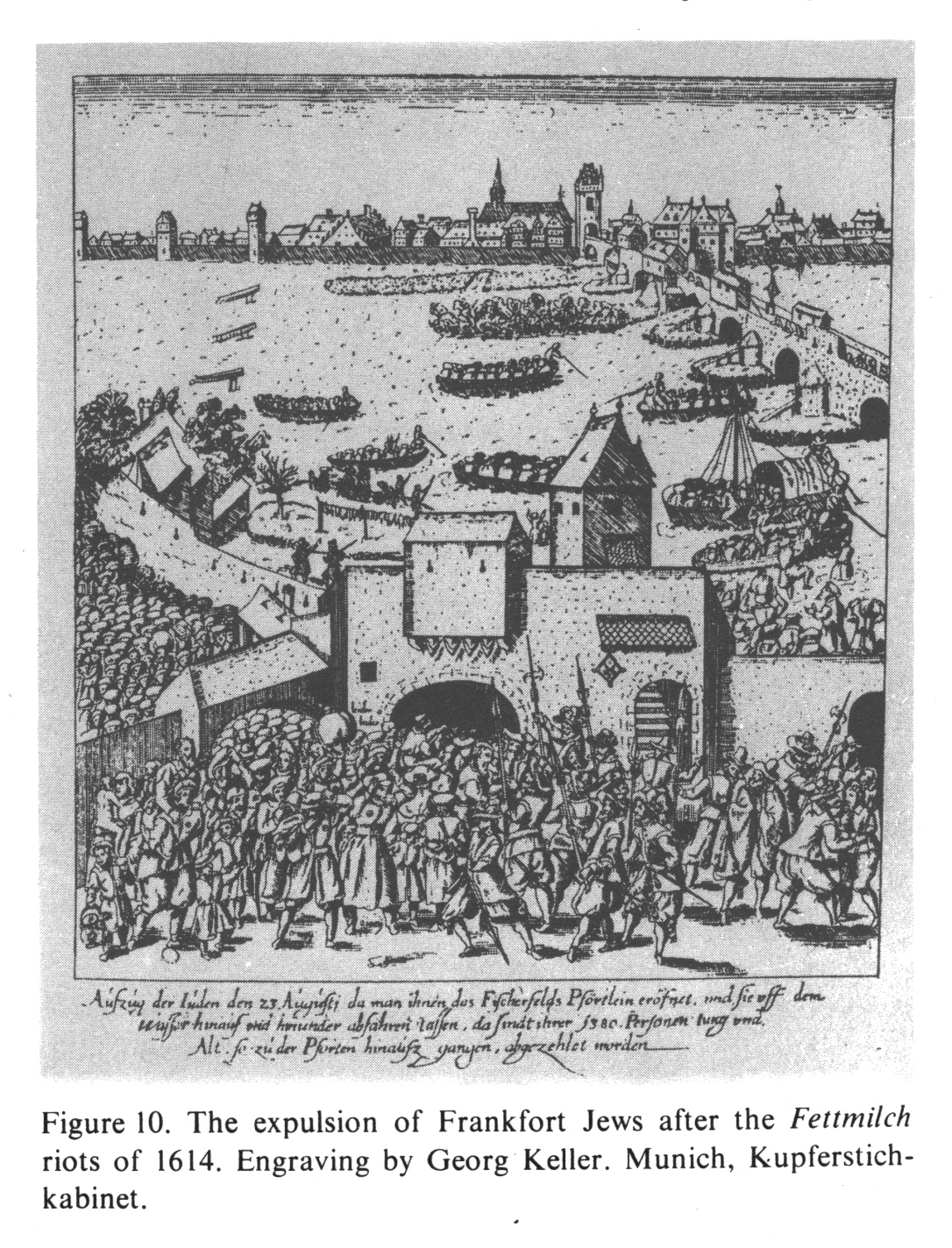
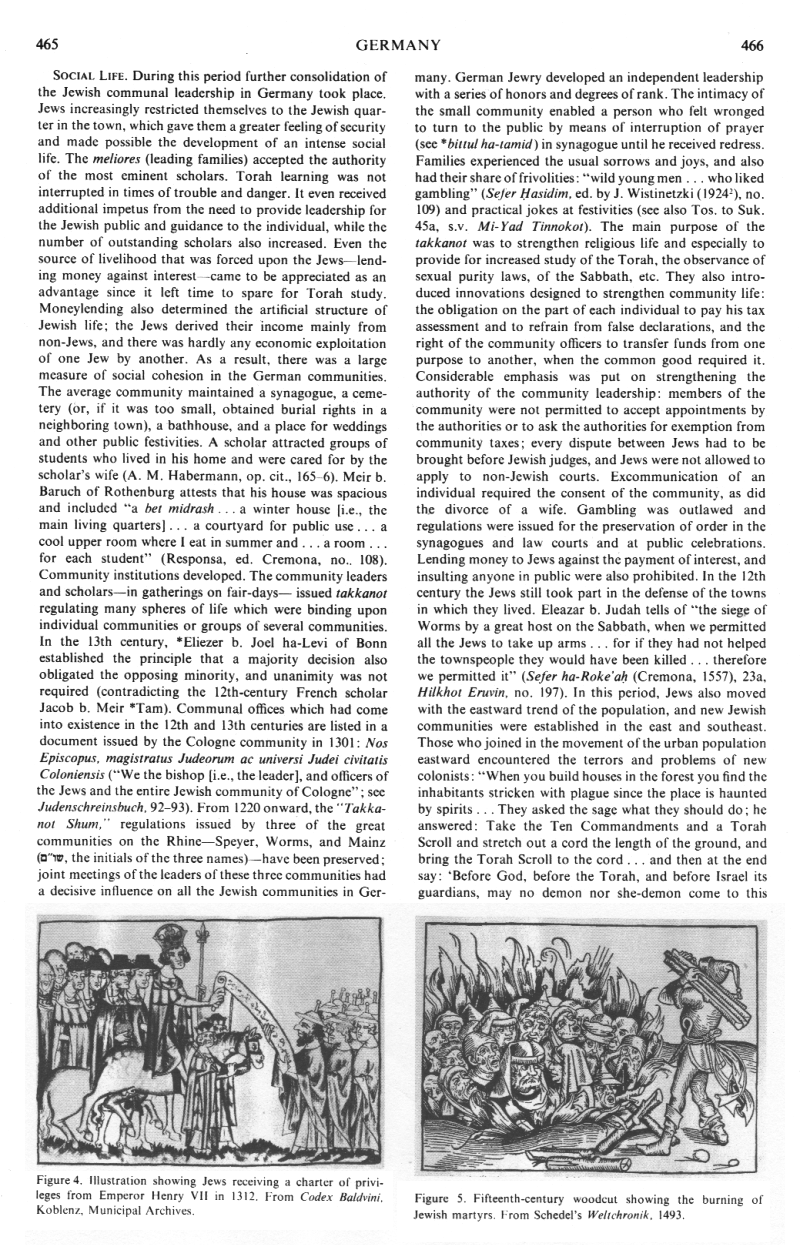
Encyclopaedia Judaica (1971): Germany, vol. 7, col. 474. The expulsion of Frankfort Jews after the Fettmilch riots of 1614. Engraving by Georg Keller. Munich, Kupferstichkabinet.Text: "Auszug der Juden den 23. Augusti [[1614]] da man ihnen das Fischerfelds Pförtlein eröffnet, und sie off dem Wasser hinauf und hinunter abfahren lassen, da sindt ihrer 1380. Personen Jung und Alt so zu der Pforten hinaufzgangen, abgezehlet worden..."
Engl.: "Exodus of the Jews on 23 August [[1614]] when Fisher Fields door was opened for them, and they could go up or down the river. These were 1380 persons, young and old as where counted when they were coming up and passing the door."
THE ABSOLUTIST PRINCIPALITIES.
[Direct taxes - Jews are welcome settlers because of their trade connections]
Absolutism, followed by enlightened absolutism, and the mercantile system of economy introduced into kingdoms and principalities, brought far-reaching changes in the situation of the Jews. In its enlightened and mercantile version, the system that now evolved regarded interests of state as supreme and attached the greatest value to money, commerce, and increase of population; it also came to judge the Jews from the point of view of these interests. The taxes paid by the Jews were highly lucrative, for they were among the few (col. 473)
paid directly into the coffers of the ruler, and did not depend upon the consent of the Estates. Rulers welcomed wealthy Jews with capital and economic experience who could make important contributions to internal and international trade and to the development of industry. In *Hamburg, Portuguese Jews who had been expelled from their native country founded the Hamburg Bank which promoted commerce with Spain and Portugal and traded in tobacco, wine, textiles, cotton, etc. Saxony invited Jews to the *Leipzig Fair in order to forge new trade links with Switzerland, Holland, Italy, and England. Karl Ludwig, the enlightened elector of the Palatinate [[Pfalz]] - a land which had been devastated by the Thirty Years' War - invited Jews to settle there in order to help restore trade and found industries. In Brandenburg, Frederick William, "the Great Elector", permitted 50 Jewish families who had been driven out of Austria to settle in Berlin and elsewhere, granting them extensive privileges and unrestricted trade throughout the country (1670/71).
Jews were allowed to settle in *Frankfort on the Oder, in order to infuse new life into the fair held in that city; in *Cleves, in order to facilitate transit trade with Holland; in *Pomerania and East Prussia, in order to attract commerce to the eastern portion of the country, and in Berlin itself, in order to make it the commercial center of Brandenburg and northeast Germany.
The regime of the absolutist states instituted a system of supervision of the Jews which both regulated every detail of their lives and exploited them (see *Frederick II of Prussia). An unending series of laws and regulations, ordinances, decrees, patents, and privileges, circumscribed the entry and settlement of Jews, the length of their stay, the number of marriages and number of children, matters of inheritance and guardianship, the conduct of business and their moral behavior, their taxes, and even the goods they had to buy, for instance, China - Judenporzellan [[Jewish porcelain]] - in Prussia. Violation of these provisions resulted in severe penalties (and see *Austria, *Berlin, *Prussia).
[Examples of Jewish law]
Encyclopaedia Judaica (1971): Germany, vol. 7, col. 479. Cover of an edict by Frederick William I, Berlin 1726, forbidding Jewish deceit in
monetary matters, with confiscation and expulsion as the punishment . Nuremberg, Germanisches Museum [[Germanic Museum]]
[[Text: Allgemeines EDICT, Dass aller Betrug der Juden in Wechsel=Sachen abgestellet, Und wann ein Jude nicht baar Geld / sondern andere Sachen auf Wechsel angiebt oder sonst betrieged, Er seiner Forderung verlustig seiyn und mit Staupen=Schlägen aus dem Lande gejaget werden soll. De Dato Berlin, den 8. Aprilis 1726. Gedruckt bey des Königl. Preussis. Hof=Buchdruckers Gotthard Schlechtigers Wietwe.
Engl. translation: General EDICT that all fraud of Jews in financial matters will be stopped, And when a Jews cannot give cash / but is indicating other values, he will lose his claim, will be hit and expelled from the country. De Dato Berlin, 8 April 1726. Printed at the Royal Prussian Printing Corp. of the Court Gotthard Schlechtigers Widdow]].
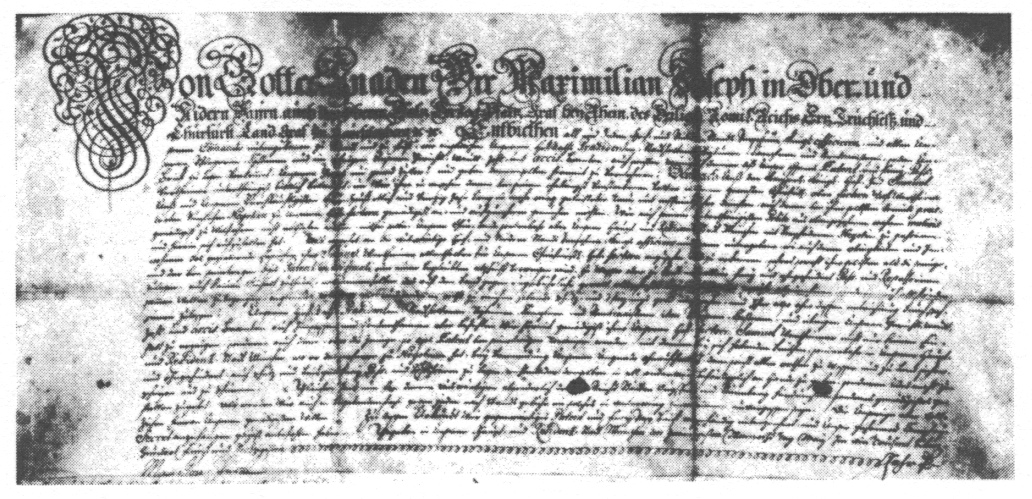
Encyclopaedia Judaica (1971): Germany, vol. 7, col. 482. Charter of privileges granted by Maximilian
of Bavaria to Samuel Wertheimer in 1765. Courtesy Central Zionist Archives, Jerusalem.
Encyclopaedia Judaica (1971): Germany, vol. 7, col. 472. Engraving showing 18th-century synagogue attire with a
heart-shaped Jewish badge. From: Tyroff'schen Trachtenbuch [["Dress booklet of Tyroff]]; Nuremberg, 1766
SOCIAL AND SPIRITUAL LIFE.
[Polish preachers in Germany after 1648 - state control over the communities]
In their internal organization, the Jewish communities, up to the 18th century, continued to base themselves in the main upon the pattern (col. 474)
established in the Middle Ages. In the smaller communities the shtadlan was usually also the local leader. In many of the communities that hat reestablished themselves after an earlier expulsion, leadership became largely a function of wealth. It was not until after the *Chmielnicki massacres of 1648 that scholars, preachers, and teachers from Poland who took refuge in Germany began to play an important role in Jewish education.
At the end of the 17th century the absolutist rulers adopted a policy of interfering in the internal affairs of the communities; as a result, the authority of the autonomous community organs was gradually reduced - a development which corresponded with the abolition of the powers that had previously been vested in the guilds and city councils.
Following upon the Thirty Years' War, proper *conferences of rabbis and community leaders were convened, to which "all the Jewish residents" of the country were invited, in order to decide upon a fair distribution of the tax burden. The powers of these conferences were severely restricted; they could not be held without official permission, and the authorities fought to confine their activities to tax collection. Nevertheless, the conferences in fact became an overall community forum and dealt with all matters that had traditionally been the concern of Jewish autonomous bodies (and see *Landjudenschaft [[Jewish Country Association]]). The authority of the rabbis was reduced in the 18th century by both the secular leaders of the communities and by the authorities, and when *emancipation was introduced, they were divested of their juridical powers.
[Inner conflicts with Shabbateans within the Jewish communities in Germany: Messianism and Kabbalah]
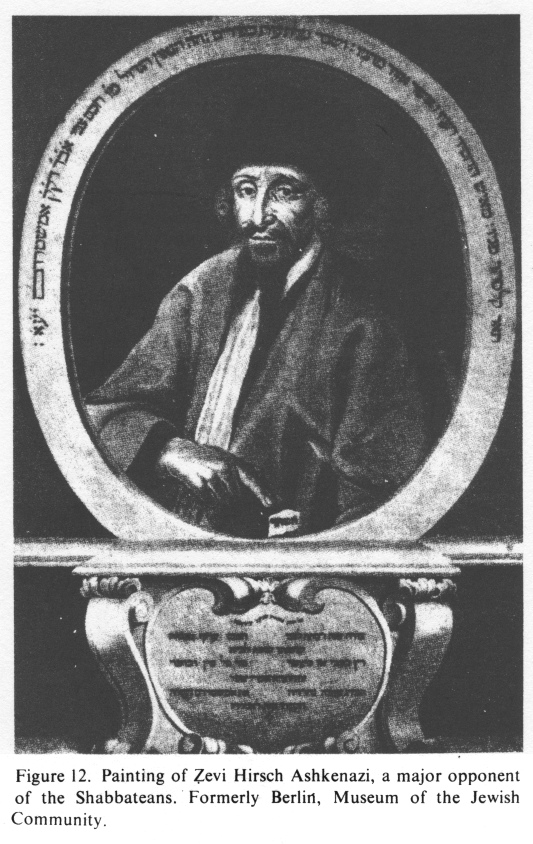
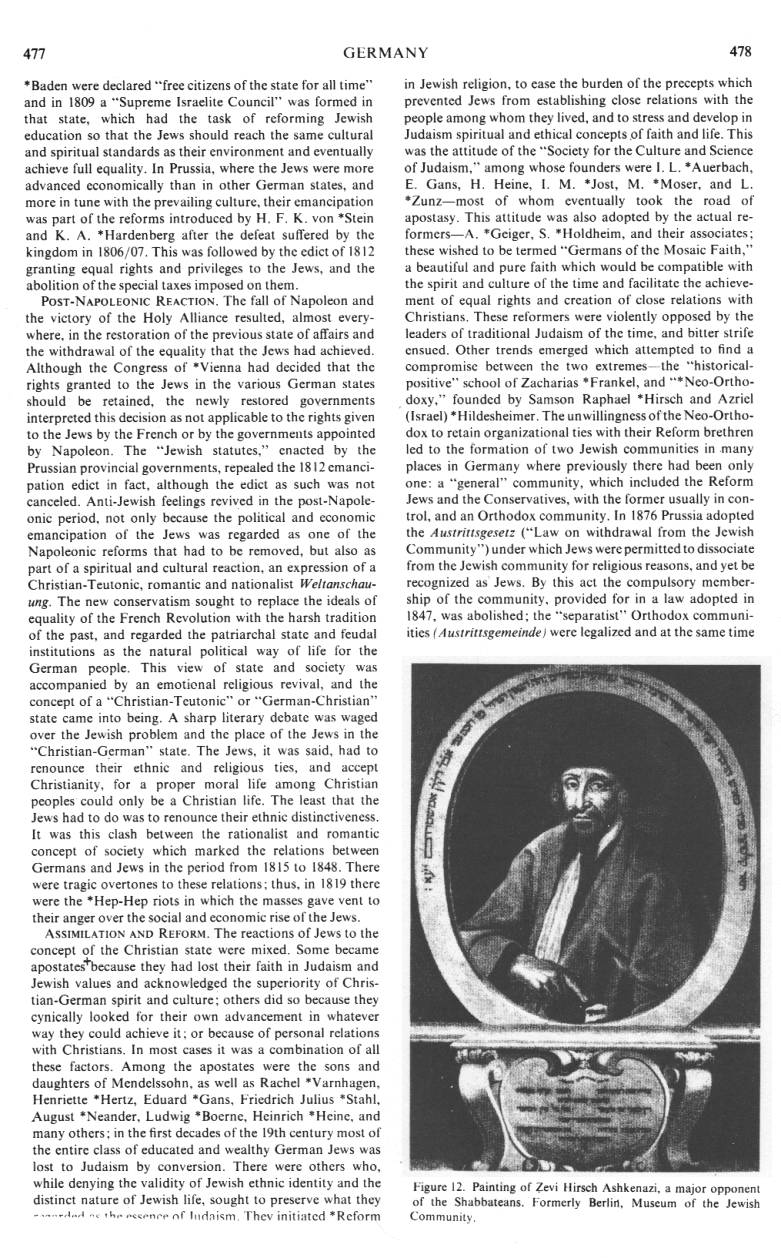
The ferment and crisis caused by the *Shabbateans had a profound effect upon Jewish social and spiritual life in Germany at the end of the 17th century. The two great scholars and spiritual leaders of this period were Jair Hayyim (Ḥayyim) *Bacharach and Zevi (Ẓevi) Hirsch *Ashkenazi. The memoirs of *Glueckel of Hameln reflect the life of well-to-do Jews in the 17th to 18th centuries - their business methods, piety, family life, and ties maintained with neighbors. She gives a vivid description of messianic fervor in Germany with the appearance of Shabbetai Zevi (Ẓevi). (col. 475)
*Messianism and *Kabbalah remained at the center of Jewish spiritual life in Germany until the middle of the 18th century as a result of the passions aroused by the fierce controversy between Jonathan *Eybeschuetz and Jacob *Emden.
Encyclopaedia Judaica (1971): Germany, vol. 7, col. 475. Jonathan Eybeschuetz, Kabbalist suspected of Shabbatean leanings. Jerusalem, Sir Isaac and Lady Wolfson Museum in Hechal Shlomo. Photo David Harris, Jerusalemx
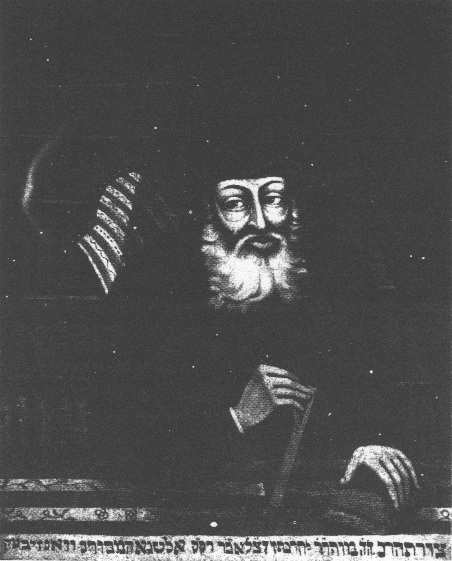
Encyclopaedia Judaica (1971): Germany, vol. 7, col. 478. Painting of Zevi Hirsch Ashkenazi, a major opponent of the Shabbateans. Formerly Berlin, Museum of the Jewish Community.
COURT JEWS.
[Privileged rich Jews giving funds for synagogues and for reestablishing communities - the danger of the role to be a "Court Jew"]
A characteristic innovation of the era of absolutism and the mercantile system was the appearance of the *Court Jews. Some of the Court Jews abandoned Jewish tradition and their ties with the Jewish people; others remained faithful and used their wealth and position to help their brethren. In some instances their intervention succeeded in averting anti-Jewish measures; they built synagogues at their expense, published religious books, and founded institutions of learning. Court Jews were instrumental in reestablishing communities that had been destroyed during the Reformation (e.g. in *Dresden, Leipzig, *Kassel, *Brunswick, and *Halle).
The precariousness of their position could affect both themselves and the Jewish community; as they were dependent upon the whim of the absolutist ruler, any change in his attitude could mean their downfall, and this was often followed by anti-Jewish measures of a general nature. In fact the Court Jews led a double life, often marked by tragedy - as instanced by such figures as Samuel *Oppenheimer, Samson *Ertheimer, and Joseph Suess *Oppenheimer.
HASKALAH.
[German imperialism in Poland - Polish Jews become Germans - assimilation movement in Germany - and resistance against assimilation]
Toward the end of the 18th century there were significant changes in the situation of German Jewry. Large parts of Poland were incorporated into Prussia and their substantial Jewish population became a reservoir of manpower and spiritual values for German Jewry as a whole. At the same time certain groups of wealthy Jews began to turn toward *assimilation in German society, especially in the large cities - such as Berlin - where the Jewish communities were comparatively new and unencumbered by age-old local tradition and custom.
The background to this development was the Haskalah (enlightenment) movement, which was met in its aspirations by the claims of enlightened gentiles for the "moral and social betterment" of the Jews and the abolishment of all social and legal discrimination (see also C.W. von *Dohm; W. von *Humboldt; *Joseph II; G.E. *Lessing). These developments gave rise to considerable ferment in German Jewry. Moses *Mendelssohn, although widely esteemed as the representative figure of German Jewry in the enlightenment period, did not really succeed in becoming the guide of his generation. Many of the "enlightened" Jews - especially among the wealthy - placed general social and cultural values above the traditions of their people, and in their desire for radical assimilation contemplated and often took the road of apostasy which at the beginning of the 19th century assumed the dimensions of a mass movement.
Rabbis of the period, such as David Tevele *Schiff of Lissa and Akiva *Eger, took up the struggle against the "enlightened" and the assimilationists, but the bans and excommunications they issued failed to halt the desertion of Judaism by many wealthy Jews.> (col. 476)
[Jewish educational works in "emancipation" times: Dohm and Lessing - wrong general expressions and generalizations]
from: Encyclopaedia Judaica (1971): History, vol. 8
<Pro-Jewish argumentation proceeded along the main line of enlightenment reasoning in [[racist "Christian"]] Germany. Its principal and most influential spokesmen were Christian Wilhelm von *Dohm [[1751-1820]] and Gotthold Ephraim *Lessing [[1729-1781]]. In a series of literary works - his drama Die Juden
[[1749, "The Jews"; the general expression "the Jews" is absolutely wrong and false and misleading, because Jewry consists always of different groups]]
his die Erziehung des Menschengeschlechts,
[[1778-1780, published in steps, "Education of the Mankind"; also this claim to be able to educate all "Mankind" is absolutely wrong and false and misleading, because mankind consists always of different groups, and Lessing for sure did not know 10% of them]]
and most influential and celebrated of all, his Nathan der Weise -
[[1779, a mad story about a Jew Nathan with the Muslim Saladin and a "Christian" knight]]
Lessing put the case for treatment of Jews as equals in humanity on the basis of deistic conceptions of religion and enlightenment conceptions of nationality and mankind. His parable of the "Three Rings" became famous as expressing the basic similarity of all monotheistic religions. Lessing did not defend Jewish separate existence, he defended the right of the individual Jew to be treated like a human being, despite his religion and outward appearance. Lessing was influenced in this, like Dohm later, by the personality and views of Moses *Mendelssohn. Dohm in his work proposed achieving the betterment of the Jews with a clearly defined aim toward improvement of their condition. (col. 711)
MOSES MENDELSSOHN [1729-1786]
from: Encyclopaedia Judaica (1971): History, vol. 8
[Philosopher Mendelssohn and his acts - Beroin circle - emancipation and beginning of apostasy]
The impact of Moses Mendelssohn represented an old-new type of Jewish encounter with the host society, unfamiliar in [[racist "Christian"]] Germany. As a scholar in the employment of a rich Jew, his position was very similar to that of the scholars in the retinue of the Jewish courtiers [[men on the court of the king]] in Spain. Mendelssohn met intellectuals as an intellectual, men of enlightenment as a leader in the enlightenment philosophy. He put the case not of the material "usefulness" of a Jew but of his cultural usefulness. Defending the separation of [[criminal racist "Christian"]] Church and [[centralized colonial war]] State, and defining Torah as a social constitution or Jewish national law [[crazy!!]], he presented a Jewish approach toward *enlightenment (see also *Haskalah).
There were several families in his Beroin circle who were more radical (col. 711)
in their efforts to achieve practical assimilation. Some of them despised the Jewish faith and culture. The readiness of Christians of high social and cultural standing to meet individual Jews as equals, and the refusal of the enlightened absolutist state to grant rights even to "enlightened" Jews, created conditions of social temptation and psychological pressure to leave the faith and become apostates. This was the beginning of the considerable trend toward apostasy, which at the end of the 18th century and during the 19th was to take away more than 200,000 Jews from Judaism in Europe.> (col. 712)
[[Racist religions in general are the wrong way, not important if it's Jewish religion or "Christian" religions. This step of Human Rights was done after 1945]].
EFFECTS OF FRENCH REVOLUTION.
[Equal rights for the Jews - freedom of commerce - Jews as "free citizens"]
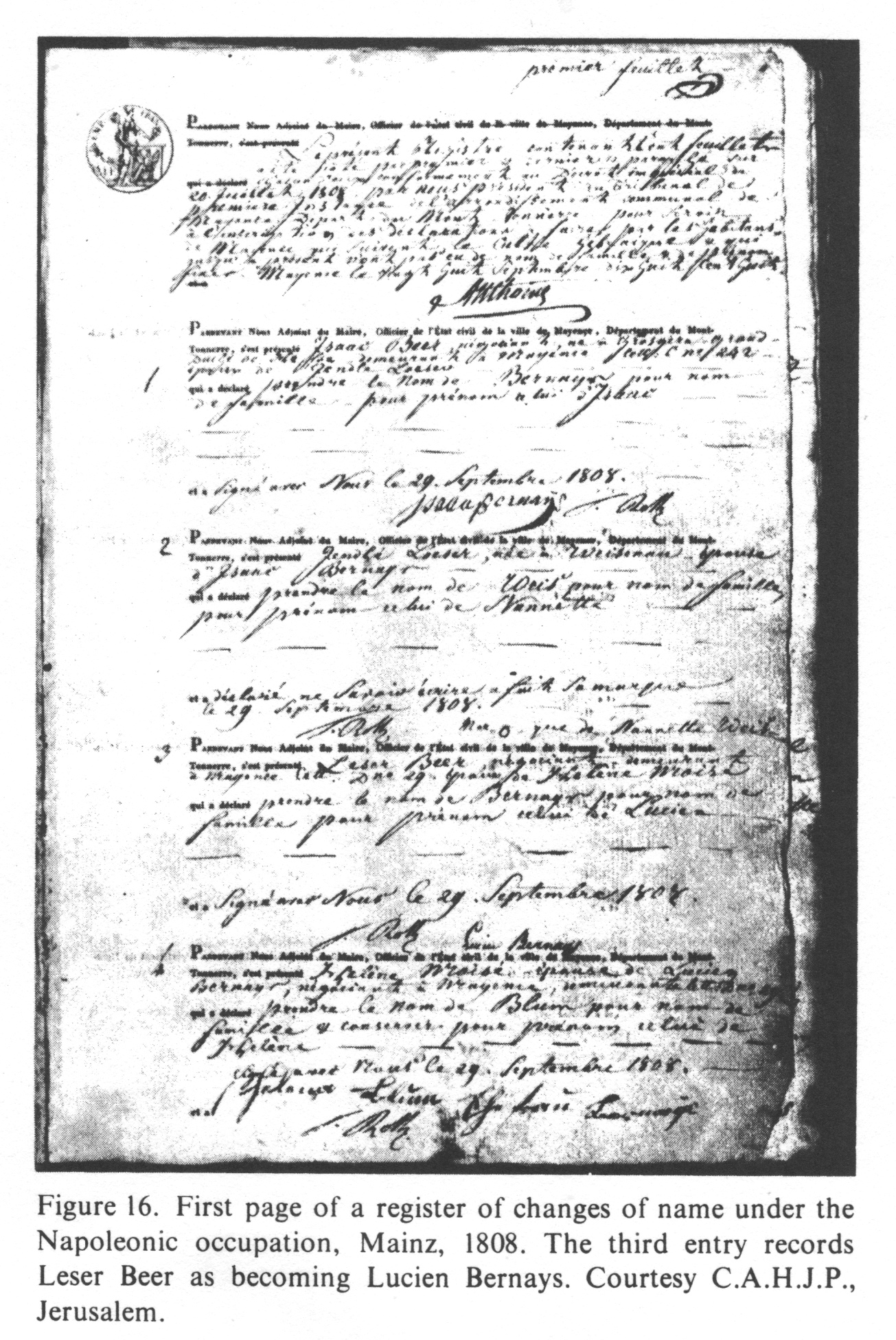
The emancipation granted to the Jews of France by the *French Revolution was soon carried over into Germany by the revolutionary armies. In the states on the left bank of the Rhine, which were incorporated into the French Republic, the Jews became French citizens. When more German states were conquered by *Napoleon, and the Confederation of the Rhine was created, these states, upon French insistence, also declared equal rights for the Jews and granted them freedom to engage in commerce on the same basis as all other citizens (e.g., in Wuerttemberg and the grand duchy of *Berg).
In Frankfort and in the Hanseatic cities emancipation was announced in 1811. In 1808 the Jews of (col. 476)
*Baden were declared "free citizens of the state for all time" and in 1809 a "Supreme Israelite Council" was formed in that state, which had the task of reforming Jewish education so that the Jews should reach the same cultural and spiritual standards as their environment and eventually achieve full equality. In Prussia, where the Jews were more advanced economically than in other German states, and more in tune with the prevailing culture, their emancipation was part of the reforms introduced by H.F.K. von *Stein and K.A. *Hardenberg after the defeat suffered by the kingdom in 1806/07. This was followed by the edict of 1812 granting equal rights and privileges to the Jews, and the abolition of the special taxes imposed on them.> (col. 477)
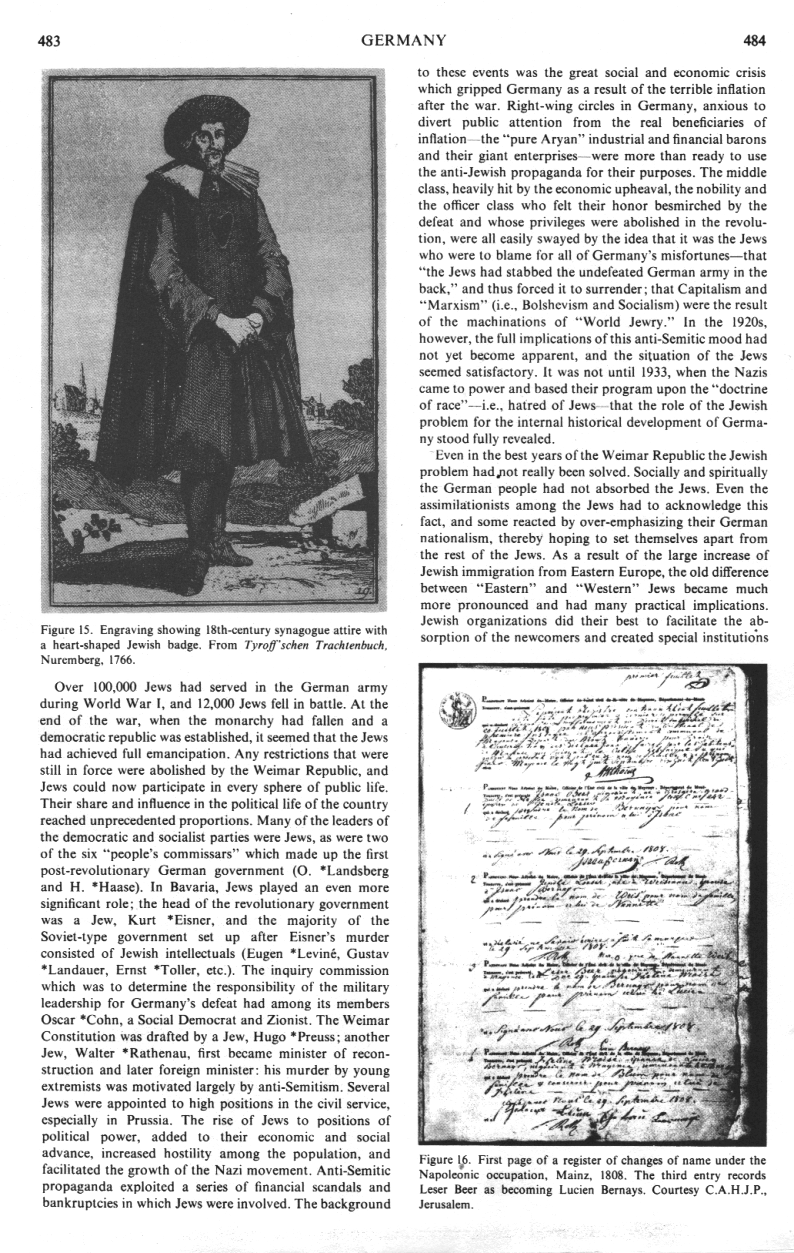
Encyclopaedia Judaica (1971): Germany, vol. 7, col. 484. First page of a register of changes of name under the Napoleonic occupation.
Mainz, 1808. The third entry records Leser Beer as becoming Lucien Bernays. Courtesy C.A.H.J.P., Jerusalem
![Encyclopaedia Judaica (1971): Germany, vol. 7,
col. 479. Cover of an edict by Frederick William I,
Berlin 1726, forbidding Jewish deceit in monetary
matters, with confiscation and expulsion as the
punishment . Nuremberg, Germanisches Museum [[Text:
Allgemeines EDICT, Dass aller Betrug der Juden in
Wechsel=Sachen abgestellet, Und wann ein Jude nicht
baar Geld / sondern andere Sachen auf Wechsel
angiebt oder sonst betrieged, Er seiner Forderung
verlustig seiyn und mit Staupen=Schlägen aus dem
Lande gejaget werden soll. De Dato Berlin, den 8.
Aprilis 1726. Gedruckt bey des Königl. Preussis.
Hof=Buchdruckers Gotthard Schlechtigers Wietwe]].](EncJud_juden-in-D-d/EncJud_Germany-band7-kolonne479-edikt-Friedrich-Wilhelm-I-1726.jpg "Encyclopaedia Judaica (1971): Germany, vol.
7, col. 479. Cover of an edict by Frederick William
I, Berlin 1726, forbidding Jewish deceit in monetary
matters, with confiscation and expulsion as the
punishment . Nuremberg, Germanisches Museum [[Text:
Allgemeines EDICT, Dass aller Betrug der Juden in
Wechsel=Sachen abgestellet, Und wann ein Jude nicht
baar Geld / sondern andere Sachen auf Wechsel
angiebt oder sonst betrieged, Er seiner Forderung
verlustig seiyn und mit Staupen=Schlägen aus dem
Lande gejaget werden soll. De Dato Berlin, den 8.
Aprilis 1726. Gedruckt bey des Königl. Preussis.
Hof=Buchdruckers Gotthard Schlechtigers Wietwe]].")
| Teilen
/ share: |
Facebook |
|
Twitter |
| Sources |
||
 Encyclopaedia Judaica (1971): Germany, vol. 7, col. 471-472 |
 Encyclopaedia Judaica (1971): Germany, vol. 7, col. 473-474 |
 Encyclopaedia Judaica (1971): Germany, vol. 7, col. 475-476 |
 Encyclopaedia Judaica (1971): Germany, vol. 7, col. 477-478 |
 Encyclopaedia Judaica (1971): History, vol. 8, |
|
Č Ḥ Š Ṭ Ẓ
ā ć č ḥ ī š ū ž ẓ
ā ć č ḥ ī š ū ž ẓ
^