Encyclopaedia Judaica
Jews in Poland 05-2: Holocaust in the Regierungsbezirk Kattowitz (East Upper Silesia)
Jews working in the war industry - ghettos - "evacuations"
from: Poland; In: Encyclopaedia Judaica 1971, vol. 13
presented by Michael Palomino (2008 / 2020)
Share:
<Regierungsbezirk Kattowitz (East Upper Silesia).
[Jews in German industries - deportation to the industrial combine Auschwitz]
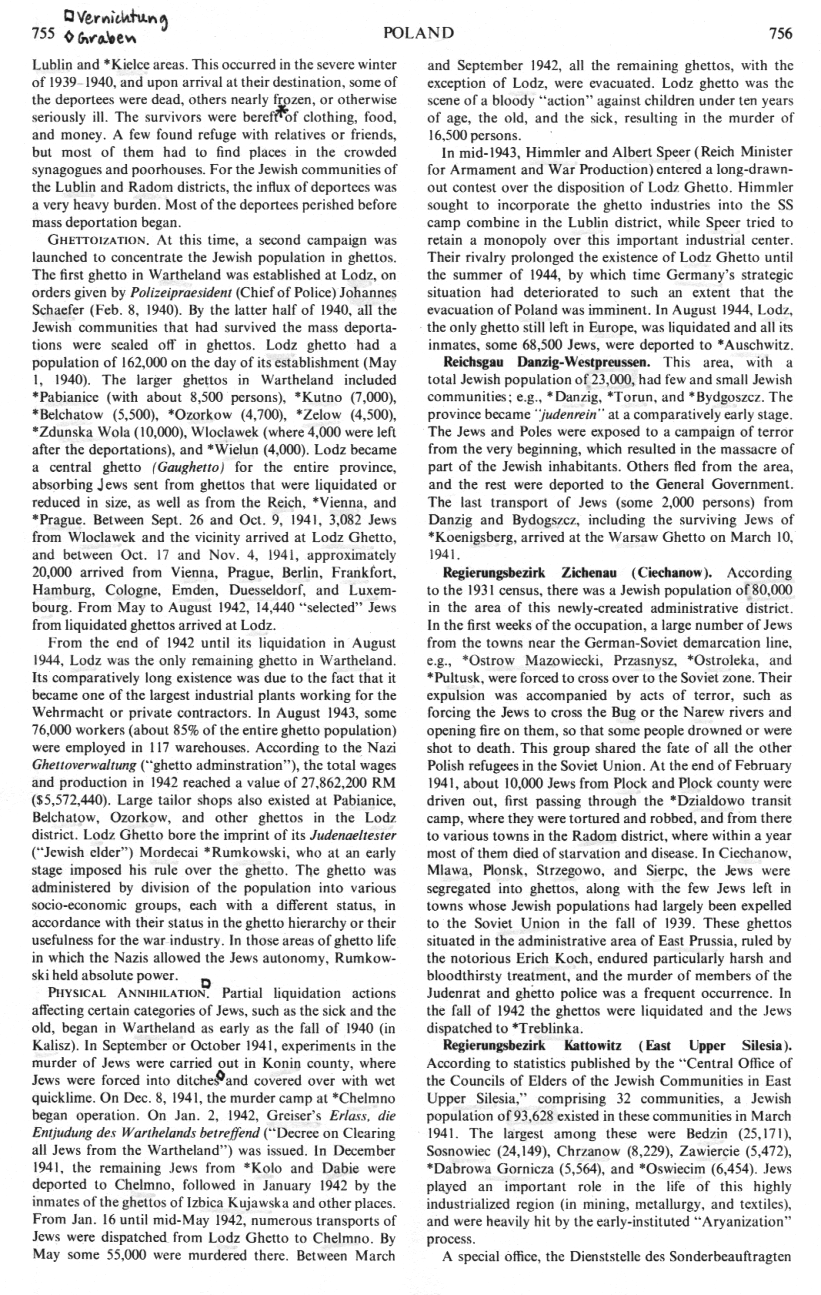
According to statistics published by the "Central Office of the Councils of Elders of the Jewish Communities in East Upper Silesia", comprising 32 communities, a Jewish population of 93,628 existed in these communities in March 1941. The largest among these were Bedzin (25,171), Sosnowiec (24,149), Chrzanow (8,229), Zawiercie (5,472), *Dabrowa Gornicza (5,564), and *Oswiecim (6,454). Jews played an important role in the life of this highly industrialized region (in mining, metallurgy, and textiles), and were heavily hit by the early-instituted "Aryanization" process.
A special office, the Dienststelle des Sonderbeauftragten (col. 756)
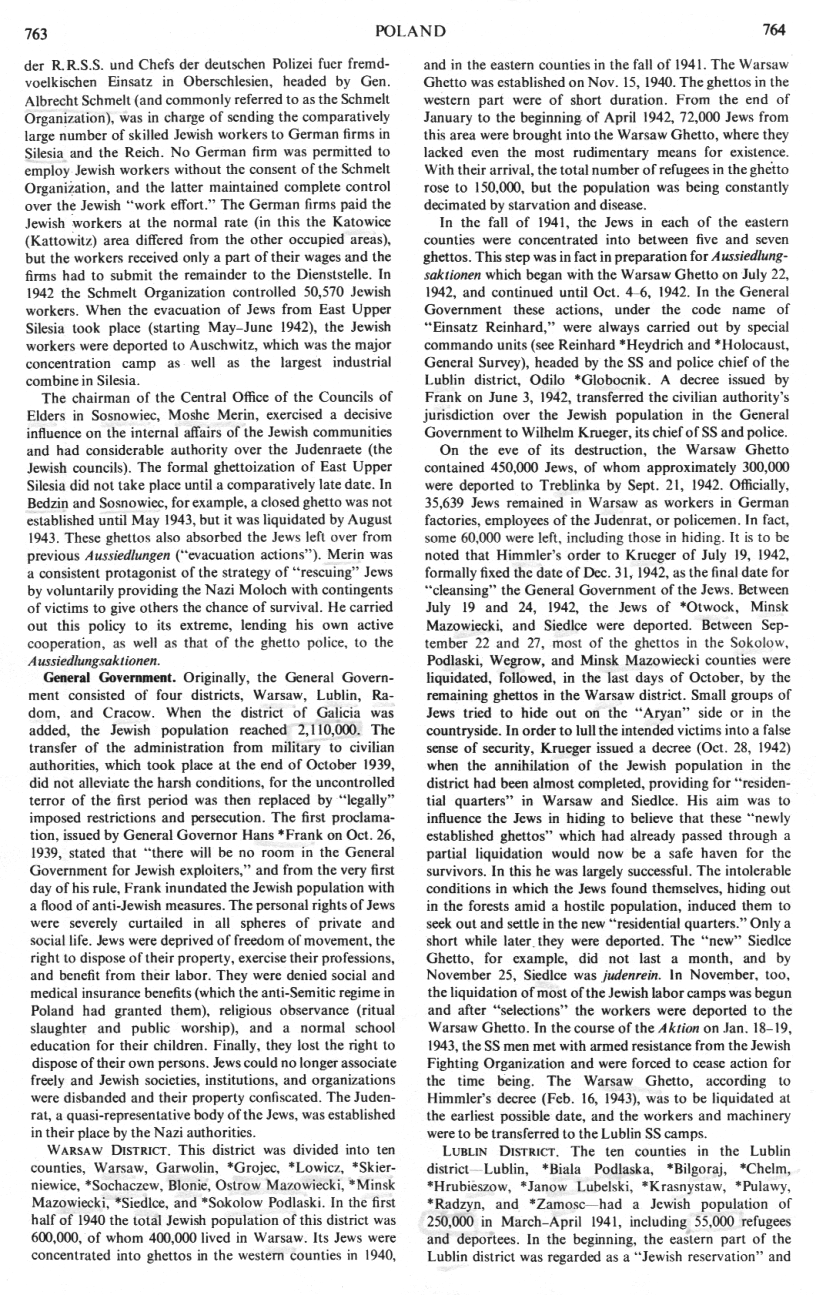
der R.R.S.S. und Chefs der deutschen Polizei fuer fremdvoelkischen Einsatz in Oberschlesien [[office of the special ordinance of the R.R.R.S. and of the heads of the German police for actions according to foreign people in Upper Silesia]], headed by Gen. Albrecht Schmelt (and commonly referred to as the Schmelt Organization), was in charge of sending the comparatively large number of skilled Jewish workers to German firms in Silesia and the Reich. No German firm was permitted to employ Jewish workers without the consent of the Schmelt Organization, and the latter maintained complete control over the Jewish "work effort". The German firms paid the Jewish workers at the normal rate (in this the Katowice (Kattowitz) area differed from the other occupied areas), but the workers received only a part of their wages and the firms had to submit the remainder to the Dienststelle.
In 1942 the Schmelt Organization controlled 50,570 Jewish workers. When the evacuation of Jews from East Upper Silesia took place (starting May-June 1942), the Jewish workers were deported to Auschwitz, which was the major concentration camp as well as the largest industrial combine in Silesia.
The chairman of the Central Office of the Councils of Elders in Sosnowiec, Moshe Merin, exercised a decisive influence on the internal affairs of the Jewish communities and had considerable authority over the Judenraete (the Jewish councils). The formal ghettoization of East Upper Silesia did not take place until a comparatively late date. In Bedzin and Sosnowiec, for example, a closed ghetto was not established until May 1943, but it was liquidated by August 1943.
There ghettos also absorbed the Jews left over from previous Aussiedlungen ("evacuation actions"). Merin was a consistent protagonist of the strategy of "rescuing" Jews by voluntarily providing the Nazi Moloch with contingents of victims to give others the chance of survival. He carried out this policy to its extreme, lending his own active cooperation, as well as that of the ghetto police, to the Aussiedlungsaktionen [[evacuation actions]].> (col. 763)
[[From Auschwitz the majority was deported to the tunnel systems for underground weapon construction and underground oil plants or bunker systems for the Nazi government, with high death rates]].
Sources
Encyclopaedia Judaica (1971): Poland, vol. 13, col. 755-756
Encyclopaedia Judaica (1971): Poland, vol. 13, col. 763-764