|
|
|


IT'S ALL A LIE -
Uwe Topper: The Big Action 12: Defense strategies:
lying+faking
Forgery actions of the cr. Vatican Church from 1409-1600, to 'win' against Islam + China - faking Jesuits!
12.1. "Defence strategy" of the cr. Vatican: The Big Faking Operation 1409-1600 to "win" against Islam
12.1.A. The monks cheerfully forged ahead - "Thought Constructs": the FAKE Antiquity and the FAKE Middle Ages
12.1.B. Demarcation and censorship + the biggest forgery for the FAKE Antiquity - the first uncovering of forgeries
12.1.C. Calendar reform 1582 - the Vatican establishes a "Christian" worldview and the FAKE chronologies - full inquisition and bonfires
12.2. The influence of colonial states: The lying Church is in panic because of Aztecs, Incas and Confucius
12.3. Rome in China: "Defense strategy" of the Holy Vatican against China: The FAKE stone of Xiang from 1625
12.4. Astronomy: Jesuits in China are brilliant with the prediction of solar eclipses - with Kepler in the background - and astrology
12.5. Historiography of the "Tang" [invented]: How the Jesuits invented a historiography for China
Resistance
12.6. Cleanup: "Christian" FAKE statues and FAKE stones in China are stored in the cellars -- 12.6.2. FAKE manuscripts and FAKE documents
12.7. "Le dénicheur de saints" ("The hunter of saints" - e.g. Jean de Launoy in France)
12.8. The Jesuit Germon: with analytical-logical works - things are discovered
12.9. The Bollandists [FAKE martyr legends are uncovered - then comes a "unification"]
12.10. Conclusion: Antiquity is INVENTED - Church is INVENTED - Fantasy Jesus = Knight's Romance
12.11. Objection: Church = lying monster - the other religions - the "Christian" FAKE chronology - spread to the whole world by the Christian Jesusites.
from: The Big Action. Europe's invented history. The Systematic Falsification of Our Past from Antiquity to the Enlightenment --
orig. German: Die Grosse Aktion. Europas erfundene Geschichte. Die planmässige Fälschung unserer Vergangenheit von der Antike bis zur Aufklärung --
Edition Grabert -- ISBN 3-87847-172-6 -- Tübingen 1998; 2nd edition 2000
Commented edition
presented by Michael Palomino (2025)
| Share: |
Facebook |
|
Twitter
X |
|
|
|
Mentioned literature
Books
-- book by Mr. Athanasius Kircher (Catholic Vatikan jesuit): China illustrata; Amsterdam 1670; new print: Geneva-Paris 1980
-- book by Mr. George H. Dunne: Generation of Giants. The Story of the Jesuits in China in the Last Decades of the Ming Dynasty; Indiana 1962, "USA"
-- book by Mr. M.G. Pauthier: China oder die historische, geographische und literarische Beschreibung (orig. French: Chine ou Déscription Historique, Géographique et Littéraire); part 1, Paris 1837
-- scripture by Mr. Barthélémie Germon: "From the old documents of the Frankish kings and the art of distinguishing genuine from forged." (orig. Latin: "De veteribus regum francorum diplomatibus et arte secernendi vera a falsis" - Paris 1703)
-- book by Mr. Barthélémie Germon: "From the old heretical corruptors of the books of the Church Fathers" (orig. German: "Von den alten ketzerischen Verderbern der Bücher der Kirchenväter")
-- FAKE book by FAKE Augustin (lat.: Augustinus): About the Theocracy (De Civitatae Dei)
-- book by Mr. Ernst Bernheim: Introduction to Historical Science (orig. German: Einleitung in die Geschichtswissenschaft); Berlin-Leipzig 1912
Articles
-- article by Christoph Marx: The (until nowadays) last "Big Jump" (orig. German: Der (bislang) letzte "Grosse Ruck"); In: Zeitensprünge edition 3/96; Gräfelfing 1996, p.339ff.
Content
12: Defense strategies: lying+faking
12.1. "Defence strategy" of the cr. Vatican: The Big Faking Operation 1409-1600 to "win" against Islam
12.1.A. The Big Action of the faker Jesus Fantasy monks from 1409 to 1600: They were happily faking without end - control sciences were not yet available (!) - this is how various "air castles" came into being: the FAKE Antiquity and the FAKE Middle Ages - translations are enhancing the INVENTED works (!)
12.1.B. The defense strategy against the decline and loss of Byzantium to Islam: demarcation and censorship + biggest faking action for presenting a FAKE Antiquity - first detection of forgeries
12.1.C. Calendar reform of 1582 - the Vatican establishes a "Christian" worldview and FAKE chronologies - full inquisition and stakes are burning against scientists, truthers, and pioneers
12.2. The influence of colonial states: The lying Church is in panic because of Aztecs, Incas and Confucius
Danger to the highly criminal monopoly Vatican in Europe comes from indigenous cultures in "America" AND from China - Leibniz since 1669
12.3. Rome in China: "Defense strategy" of the Holy Vatican against China: The FAKE stone of Xiang from 1625
12.4. Astronomy: "Defense strategy" of the cr. Vatican against China: Jesuits in China are brilliant with the prediction of solar eclipses - with Kepler in the background - and astrology
12.5. Historiography of the "Tang" [invented]: "Defense Strategy" of the Vatican against China: How the cr. Jesuits invented a historiography for China that corresponds with FAKE Antiquity + FAKE Middle Ages in Europe - and propaganda against Confucius and Chinese emperors
Resistance
12.6. Cleanup:
12.6.1. "Christian" FAKE statues and FAKE stones in China are stored in the cellars
12.6.2. FAKE manuscripts and FAKE documents are testimonies of "Christian" lying mentality
12.7. "Le dénicheur de saints" ("The hunter of saints" - e.g. Jean de Launoy in France)
12.8. The Jesuit Germon
12.8.1. The enlightener Barthélémi Germon - Jesuit from Orléans (France) - with analytical-logical works
12.8.2.A. Germon detecting contradictions: Criminal on the wood - Daniel with "two-horned Alexander" - adulteress and virgin
12.8.2.B. Germon finds contradictions: cr. Vatican claiming+mobbing that Judaism had distorted the NT, cannot be true
12.8.2.C. Germon notes contradictions: papal letters + synods + councils are all A FAKE + calling the fakers or forger groups
12.8.2.D. Germon notes contradictions: The New Fantasy Testaments
12.8.2.E. Germon wanted to 'purify' the Church - but then it became too much and the Church organized the opponents
12.9. The Bollandists [FAKE martyr legends are uncovered - then comes a "unification"]
12.10. Conclusion:
12.10.1. Antiquity is INVENTED - Church is INVENTED
12.10.2. The FAKES must be placed in their TRUE time of origin with the TRUE author - then the works make sense: for example with "Roswitha"=friendship circle of Pirkheimer, with Dionysius, and the Fantasy Jesus=knight's romance
12.11. Objection
Church = lying monster - the other religions - the "Christian" FAKE chronology - spread to the whole world by the Christian Jesusites.
12.11.1. [After the loss of Byzantium]: the criminal faking Jesus Fantasy monks created a monster of lies - one begins, others continue, etc.
12.11.2. Criminal "Christianity" with its inventions and extortions has arisen on the foundation of OTHER fantasy religions
12.11.3. The "Christian" FAKE chronology - [and the criminal Jesuits implanted it all over the world - the "Christian" imperialism against ALL other cultures]
Chapter 12: Defense strategies [criminal Vatican is censoring and faking]
12.1. "Defence strategy" of the cr. Vatican: The Big Faking Operation 1409-1600 to "win" against Islam [which is also only a fantasy!]
12.1.A. The Big Action of the faker Jesus Fantasy monks from 1409 to 1600: They were happily faking without end - control sciences were not yet available (!) - this is how various "air castles" came into being: the FAKE Antiquity and the FAKE Middle Ages - translations are enhancing the INVENTED works (!)
Topper quote (translation):
"The Big Action had started in the late Middle Ages, without anyone having a concept ready, without a plan or program. It emerged gradually over generations, with only few knowing that a new creation was underway. In most cases, the following writers no longer had an overview and accepted the existing writings as what was written in them. This process is by no means unusual or naïve, it takes place in a very similar way in today's natural sciences (see Friedrich 1997).
Auxiliary sciences such as investigation of the hand writing, archaeology, numismatics or also chronology did not exist until the Renaissance. Until then, the thought of whether the manuscript in question was ten or a thousand years old hardly ever occurred. The matter was about the content. If it was theologically or ideologically acceptable, then the text was also recognized as well. This purely practical approach to literature made it possible to incorporate very different and alien thought structures [air castles], with the invention of a gnosis, of Islam, of Jewry, because as soon as such a foreign work was once translated and available in a common hand writing (although it was already being reshaped anyway), it could be incorporated as its very own creation, as long as the condition of dogmatic correctness was met." (p.241)
12.1.B. The defense strategy against the decline and loss of Byzantium to Islam: demarcation and censorship + biggest faking action for presenting a FAKE Antiquity - first detection of forgeries
Topper quote (translation):
"Such openness to foreign cultural content is no longer conceivable today [year 2000]. The Big Action was enriching in every respect. That did not go on like this. With the downfall of Byzantium (this was the last decisive event), a new wind arose, which was surely also triggered by the refugees from this first bastion of Christian thought. With the awareness that was thus breaking in, that outside the gates lay another world with its own calendar and historical conception, with literature and science, which could no longer be integrated, the limitation began. Now the (p.241) [Jesus Fantasy] Church determined which books should belong to the Word of God (Canon), which preparatory works should serve as a theological foundation ("Church Fathers"), and what the history of its own "childhood" should look like. Now they were sorting out, declassifying, writing and faking. Only with the now strengthened Renaissance, which could better be called "Naissance", does the Big Action become a conscious action. However, there were no regulations at all; on the contrary: The discipline, which had previously relied on unspoken common sense, was completely lost. The wildest blooms sprang up. Only now the criminals became aware how many texts were faked, and the authority wanted to stop any more publication. That's why, for the first time, forgeries were uncovered or suppressed.
12.1.C. Calendar reform of 1582 - the Vatican establishes a "Christian" worldview and FAKE chronologies - full inquisition is going on and stakes are burning against scientists, truthers, and pioneers
Topper quote (translation):
"But the "Cinquecento" (16th century) almost entirely passed in fruitful discussions, wild intrigues, and exciting new creations were published. Only with [Jesus Fantasy] Pope Gregory and his calendar reform in 1582, which had been demanded for over a century [and by which 1000 years were invented with the maneuver "J" - "I" - "1"], was a decisive line drawn that was meant to kick out pagans and heretics from the society. Now, the authority was systematically securing and defending the reclaimed territory against intrusions. With the purification of the "Church Fathers" and the creation of a compulsory time line (chronology) inventing "definitive" [FAKE] papal lists, councils [which are mostly INVENTED, too], and the investiture controversy (which is of course as FAKED as everything else), a reliable foundation was established that remains valid to this day – aside from little course corrections.
But also this final workd was also highly controversial. No measures were spared, even to the point of murder, as soon as the air castle began to sway. And this must have happened quite frequently in the beginning, considering that the pillars could only be replaced one at a time and that the craftsmanship only improved with the mistakes made. Perhaps this assurance for the dizzy team was the most exciting chapter of the entire operation." (p.242)
[So: The criminal pedo-gay-drug Church not only lies, but also kills if you don't believe in their lies - with defamations or with knives etc.].
12.2. The influence of colonial states: the lying Church is in panic because of Aztecs, Incas and Confucius
Danger for the highly criminal monopoly Jesus Fantasy Vatican in Europe comes from native cultures in "America" AND from China - Leibniz since 1669
Topper quote (translation):
"The greatest threat came from China.
Due to the surprising news from America about Aztecs and Incas, Europe in the 16th century had clearly felt that there was more culture on this earth besides the Jerusalem-Athens-Rome axis. But the Chinese culture, which was superior in many respects (p.242), meant a catastrophic shock for the Catholic Church. She saw herself robbed of her monopoly as an administrator of wisdom. Confucius fascinated the enlightened minds."
-- And now a Mr. Leibniz (1646-1716) comes into play:yyyyy
-- The German political historian and mathematician Leibniz from Hanover and Brunswick (Braunschweig) said from 1669 onwards that a cultural exchange between Europe and China - the "two most highly developed cultures on earth" (?!) - could have a very fruitful effect
[-- Mr. Leibniz apparently had NO IDEA what "developed" meant - apparently he was a European arch-racist and gun enthusiast like the whole European aristocratic elite and he had NO idea about natural medicine]
-- MoSSad-Wikipedia says about Leibniz, who came from Lower Saxony, that he was a "pioneer of the Enlightenment":
Gottfried Wilhelm Leibniz (born 21 Junejul. / 1 July 1646greg. in Leipzig, Electorate of Saxony; † 14 November 1716 in Hanover, Electorate of Brunswick-Lüneburg) was a German philosopher, mathematician, jurist, historian and political advisor of the early Enlightenment. He is considered the universal spirit of his time and was one of the most important philosophers of the late 17th and early 18th centuries as well as one of the most important pioneers of the Enlightenment." [web01]
-- Leibniz was an inventor of the first calculating machines because of the suggestions from China, but was NEVER in China itself, but only maintained contact with the Jesuit (!) China mission and published a newspaper with China news: "Novissima Sinica" (Latest news from China) Link [web01]
-- der deutsche Poli-Historiker und Mathematiker Leibniz aus Hannover und Braunschweig meinte ab 1669, ein Kulturaustausch zwischen Europa und China - den "beiden höchstentwickelten Kulturen der Erde" (?!) - könnte sich sehr fruchtbar auswirken
[-- Herr Leibniz hatte scheinbar KEINE AHNUNG, was "entwickelt" heisst - scheinbar war er ein europäischer Erz-Rassist und Waffennarr wie die ganze europäische Adels-Elite und von Naturmedizin hatte er KEINE Ahnung]
-- MoSSad-Wikipedia meint zu Leibniz, der aus Niedersachsen kam, er sei ein "Vordenker der Aufklärung" gewesen:
"Gottfried Wilhelm Leibniz (* 21. Junijul. / 1. Juli 1646greg. in Leipzig, Kurfürstentum Sachsen; † 14. November 1716 in Hannover, Kurfürstentum Braunschweig-Lüneburg) war ein deutscher Philosoph, Mathematiker, Jurist, Historiker und politischer Berater der frühen Aufklärung. Er gilt als der universale Geist seiner Zeit und war einer der bedeutendsten Philosophen des ausgehenden 17. und beginnenden 18. Jahrhunderts sowie einer der wichtigsten Vordenker der Aufklärung." [web01]
-- Leibniz war durch die Anregungen aus China ein Erfinder von ersten Rechenmaschinen, war aber NIE in China selbst, sondern pflegte nur Kontakt zur jesuitischen (!) Chinamission und gab ein Blatt mit China-Nachrichten heraus: "Novissima Sinica" (Neueste Nachrichten aus China) Link [web01]
Topper quote (translation):
"It was above all Leibniz who enthusiastically took up the suggestions in 1669 and proposed a mutual exchange of cultural ambassadors, because he expected a lot if the two most highly developed cultures on earth would unite their findings. In 1697 he set down the revolutionary ideas in his work Novissima Sinica. His Binary Mathematics (1703), which is now the basis of computer technology, was a direct result of his preoccupation with Chinese philosophy." (p.243)
[That is, China would have a partial copyright on every computer].
-- the criminal church wants China out because the world view of China would otherwise abolish the church:
Topper quote (translation):
Topper Zitat:
"Es war vor allem Leibniz, der 1669 begeistert die Anregungen aufnahm und einen gegenseitigen Austausch von Kulturbotschaftern vorschlug, weil er sich viel davon versprach, wenn die beiden höchstentwickelten Kulturen der Erde ihre Erkenntnisse vereinigen würden. 1697 legte er in seiner Schrift Novissima Sinica die revolutionierenden Gedanken nieder. Seine binäre Mathematik (1703), die heute Grundlage der Computertechnik ist, war ein direktes Ergebnis der Beschäftigung mit chinesischer Philosophie." (S.243)
[Das heisst, China hätte ein Teil-Copyright auf jeden Computer].
-- die kriminelle Kirche will China draussen haben, weil das Weltbild von China sonst die Kirche abschaffen würde:
Topper Zitat:
"Der umfangreiche Briefwechsel zwischen europäischen Wissenschaftlern und den Jesuiten in Peking befruchtete das abendländische Denken in einem Masse, dass es der Kirche himmelangst wurde. Es ging vor allem um ein geschichtliches Problem: Entweder glaubten die Leute, dass die im Alten Testament festgelegte Vorstellung der Weltgeschichte korrekt sei, also die Hauptereignisse wie die grosse Flut und die Abstammung aller Menschen von den Söhnen Noahs sowie das damit vorgegebene Zeitmass universelle Gültigkeit hätten, oder die ganz anders gestaltete chinesische Geschichtsschreibung gewann Anhänger auch im Abendland." (S.243)
The extensive correspondence between European scholars and the Jesuits in Beijing greatly enriched Western thought, to the extent that it caused the Church deep fear. It primarily revolved around a historical problem: Either people believed that the conception of world history established in the Old Testament was correct, meaning that the major events such as the Great Flood and the descent of all humans from the sons of Noah, as well as the set timeframe given, would have universal validity, or the very differently shaped Chinese historiography gained supporters even in the West.
12.3. Rome in China
"Defense strategy" of the Holy Vatican against China: The FAKE stone of Xiang from 1625.
12.3.A. Die FAKE-Steinplatte von 781 gefunden in Sian-Fu 1625 - ein Jesus-Fantasie-Missionar Olopen von 635 - "Christenverfolgungen" und Märtyrer 699 und 713 - alles nach Matrix (!) - der Krieg der Vatikan-Kirche gegen die nestorianische Kirche
12.3.B. Die FAKE-Steinplatte von Xiang von 781 ist in chinesischen Schriften NIRGENDWO erwähnt - KEIN sicheres Datum und Fundort (!) - alles Legende (!) - KAUM Verwitterung des Steins bis 1625
12.3.C. Der Jesuit Athanasius Kircher verteidigt den FAKE-Stein aus Xiang mehrmals - Voltaire macht Witze drüber
12.3.D. Der FAKE-Stein mit Kreuzfahrer-Kreuz (Malteserkreuz) von 1096 und syrischer Inschrift
12.3.E. Der FAKE-Stein mit dem Neuen FANTASIE-Testament - aber OHNE Fantasie-Kreuzigung - Palästina soll ein Paradies sein - und das Dogma des Fegefeuers ist auch enthalten - alles GEFÄLSCHT
12.3.F. Der FAKE-Stein: Schriftenvergleich - These: Chinesen haben den Stein gemeisselt - die Jahresangabe ist je nach Kalender strittig
12.3.G. Der FAKE-Stein wurde 1625 in Xiang "gefunden" - und dann musste noch eine Ahnenreihe mit FAKE-"Missionaren" in China erfunden werden (!)
12.3.H. Der FAKE-Stein: Die syrische Inschrift
12.3.I. Der FAKE-Stein und die Matrix der kr.kath. Kirche: wird kopiert - das Original "verschwindet" - die perfekten chinesischen Zeichen fallen 1628 auf - komischer Selbstmord von Lügen-Jesuit Trigault 1628
12.3.J. Der FAKE-Stein: Viele Historiker sagen klar: Der FAKE-Stein von Xiang ist ein FAKE
12.3.A. Die FAKE-Steinplatte von 781 gefunden in Sian-Fu 1625 - ein Jesus-Fantasie-Missionar Olopen von 635 - "Christenverfolgungen" und Märtyrer 699 und 713 - alles nach Matrix (!) - der Krieg der Vatikan-Kirche gegen die nestorianische Kirche
-- irgendwelche Fälscher haben in der Stadt Sian-Fu eine Steinplatte hingelegt, die 1625 von Bauerbeitern "gefunden" wurde: Vor knapp 1000 Jahren sollen hier schon "Christen" gewesen sein und durch Christenverfolgungen Märtyrer geworden sein (S.243)
-- die Stadt Sian-Fu, auch "Singan-fu, Hsian-fu, Sigan-fu, Oh'ang-an" [web02] oder auch Xiang bzw. Xiang-Fu war mehrmals Hauptstadt von China und wurde ab 1974 weltbekannt durch die Ausgrabung von über 8000 Terrakotta-Statuen (Link) [web03]
-- die Steinplatte hatte einen Text mit der typisch "christlich-katholischen" Matrix: Da waren doch so "liebe Christen" [mit Fantasie-Kreuz, Fantasie-Leiche und "heiligen Wein" - Blutkult!] - da waren "Schenkungen" - dann aber auch "Christenverfolgungen" - und dann wurden die "Christen" zu Märtyrern (S.244) - das war die klassische Lügenmatrix [wie aus dem Fantasie-Römischen Reich (!)] - also, die Logiker in Europa hielten gar nichts von diesem Einzelfund aus Xiang! (S.245)
-- diese FAKE-Steinplatte war auch ein Krieg gegen die nestorianische Kirche in China, die damit ausgeschaltet werden sollte (!) (S.244)
-- some forgers have laid down a stone slab in the city of Sian-Fu which was "found" in 1625 by peasants: almost 1000 years ago "Christians" are said to have been here and have become martyrs through persecutions of Christians (p.243)
-- the city of Sian-Fu, also "Singan-fu, Hsian-fu, Sigan-fu, Oh'ang-an" [web02] or also Xiang or Xiang-Fu was the capital of China several times and became world famous since 1974 through the excavation of over 8000 terracotta statues (Link) [web03]
-- the stone slab had a text with the typical "Christian-Catholic" matrix: There were such "dear Christians" [with fantasy cross, fantasy corpse and "holy wine" - blood cult!] - there were "gifts" - but then also "persecutions of Christians" - and then the "Christians" became martyrs (p.244) - that was the classic matrix of lies [like from the fantasy Roman Empire (!)] - well, the logicians in Europe did not think much of this single find from Xiang! (p.245)
-- this FAKE stone slab was also a war against the Nestorian church in China, which was supposed to be eliminated with it (!) (p.244)
Topper quote (translation):
One day in 1625, construction workers in the former Chinese capital Sian-Fu [Xiang-Fu] found a 3 m high and 2 ton stone slab on which quite clear references to Christians in China in the 7th and 8th centuries could be read in Chinese and Syriac script. The inscription named a missionary named Olopen, who had arrived in China in 635 and had planted churches. There was also talk of persecution of Christians in the years 699 and 713, of church buildings and gifts from the [Chinese] emperor, of friendly relations with Buddhist priests, etc. This plaque, which is said to have been erected in 781, was of inestimable value for the Jesuits of the 17th century, because it attested to the high age of Christian efforts in the Middle Kingdom. And that's what it was always about: proof of early ancestors." (p.244)
Topper quote (translation):
"The news was spread in Europe with appropriate proud, but Voltaire and with him many other European scholars immediately rejected this document as a forgery. The basic pattern [the matrix] is typically Catholic; Martyrs and imperial deeds of donation are the pride and joy of the Church in the West. People in Europe knew about Nestorian Christianity and its wide expansion in Central Asia, as well as the friendly reception it had received even in China, but Catholic mission about 1000 years ago in such a distant corner of the world – that was implausible. The classification as a Catholic document was emphasized by the Jesuits: The Chinese text says that Christ left behind 27 books, a kind of canon of his teaching. However, the Syrian canon of the New Testament, the peshitta, contains only 22 books, while the Catholic canon consists of 27 books. With this the Nestorians were driven out of the field by the inscription.
Topper Zitat:
Eines Tages im Jahre 1625 fanden Bauarbeiter in der früheren chinesischen Hauptstadt Sian-Fu eine 3 m hohe und 2 Tonnen schwere Steinplatte, auf der in chinesischer und syrischer Schrift recht deutliche Hinweise auf Christen im 7. und 8. Jahrhundert in China zu lesen waren. Auf der Inschrift wurde ein Missionar namens Olopen genannt, der 635 in China angekommen war und Gemeinden gegründet hatte. Auch von Christenverfolgungen in den Jahren 699 und 713 war die Rede, von Kirchenbauten und Geschenken seitens des [chinesischen] Kaisers, von freundlichen Beziehungen zu buddhistischen Priestern usw. Diese Tafel, die 781 aufgestellt worden sein soll, war von unschätzbarem Wert für die Jesuiten des 17. Jahrhunderts, denn sie beurkundete das hohe Alter christlicher Bemühungen im Reich der (S.243) Mitte. Und darum ging es ja immer wieder: Nachweis der frühen Ahnen." (S.244)
Topper Zitat:
"Die Nachricht wurde in Europa mit entsprechendem Stolz verbreitet, doch Voltaire und mit ihm viele andere europäische Gelehrte lehnten dieses Schriftstück sofort als Fälschung ab. Das Grundmuster [die Matrix] ist typisch katholisch; Märtyrer und kaiserliche Schenkungsurkunden sind ja der ganze Stolz der Kirche im Abendland. Man wusste in Europa vom nestorianischen Christentum und seiner weiten Ausdehnung in Mittelasien sowie der freundlichen Aufnahme, die es selbst in China erhalten hatte, aber katholische Mission vor rund 1000 Jahren in einem so fernen Weltwinkel – das war unglaubwürdig. Die Einordnung als katholisches Dokument wurde von den Jesuiten betont: Im chinesischen Text steht, dass Christus 27 Bücher hinterlassen habe, eine Art Kanon seiner Lehre. Der syrische Kanon des Neuen Testamentes, die Peschitta, enthält aber nur 22 Bücher, während der katholische Kanon aus 27 Büchern besteht. Damit waren die Nestorianer durch die Inschrift aus dem Felde geschlagen. Ausserdem wurde die katholische Zwei-Naturenlehre der Person Jesu gegen die nestorianische Ein-Naturenlehre verteidigt. Darum haben auch im 19. Jahrhundert angesehene Sinologen den Stein als Fälschung abgetan." (S.244)
The message was spread in Europe with corresponding pride, but Voltaire and many other European scholars immediately rejected this document as a forgery. The basic pattern [the matrix] is typically Catholic; martyrs and imperial charters are indeed the pride of the Church in the West. People in Europe knew about Nestorian Christianity and its wide expansion in Central Asia, as well as the warm reception it had received even in China, but Catholic missions around 1000 years ago in such a distant corner of the world - that was unbelievable. The classification as a Catholic document was emphasized by the Jesuits: the Chinese text states that Christ left behind 27 books, a sort of canon of his teaching. However, the Syrian canon of the New Testament, the Peshitta, contains only 22 books, whereas the Catholic canon consists of 27 books. This meant that the Nestorians were defeated by the inscription from the field. In addition, the Catholic doctrine of the two natures of the person of Jesus was defended against the Nestorian doctrine of the one nature. Therefore, in the 19th century, also esteemed Sinologists dismissed the stone as a forgery." (p.244)
12.3.B. Die FAKE-Steinplatte von Xiang von 781 ist in chinesischen Schriften NIRGENDWO erwähnt - KEIN sicheres Datum und Fundort (!) - alles Legende (!) - KAUM Verwitterung des Steins bis 1625
-- die katholischen Jesuiten-Fälscher hatten scheinbar keine Chronisten, die die Zeit und den Ort des für sie wichtigen Fundstücks notierten (!) - somit blieb nur eine Fantasie-Legende vom Jesuiten Emmanuel Dias und ein Fundort von 40 englischen Meilen Umkreis (!) (S.244)
-- die Steinplatte von 781 war komischerweise im Jahre 1625 kaum verwittert, so ERFANDEN die kr. Katholiken, der Stein sei ab 845 "vergraben gewesen" (S.244)
-- wie die kriminellen Jesuiten diese Steinplatte gefälscht haben, ist bis heute nicht bekannt - aber da sind noch weitere Jesuiten-"Aktivitäten" des Vatikans in China (S.244)
Topper Zitat:
"Übrigens sind die Fundumstände des Steines reichlich merkwürdig. In chinesischen Texten gibt es keine Hinweise dazu, und der Jesuit Emmanuel Dias, der 1641 (oder 1644) eine chinesische Abhandlung darüber schrieb, ist sich nicht sicher, wann und wo der Stein gefunden wurde, nimmt aber 1623 bis 1625 an. Der Fundort bewegt sich im Umkreis von 40 englischen Meilen. Man erzählte gleich eine christliche Auffindungslegende dazu, mit einem typischen Schneewunder, das ein alter Bauer erlebt haben will.. .
Da die Inschrift kaum verwittert war, legte man fest, dass der Stein nach seiner Aufstellung 781 nur 64 Jahre oberirdisch gestanden habe; ab 845 sei er vergraben gewesen.
Ob und wie Jesuiten diesen Stein gemeisselt hatten, ist bis heute nicht geklärt. Der Verdacht reicht schon aus zu weitgehenden Überlegungen, die durch andere Tätigkeiten der Missionare in China verstärkt werden." (S.244)
12.3.B. The FAKE stone slab of Xiang from 781 is NOT mentioned anywhere in Chinese writings - NO certain date and place of discovery (!) - all legend (!) - HARDLY any weathering of the stone until 1625
-- the Catholic Jesuit forgers apparently had no chroniclers who noted the time and the place of the find that was important to them (!) - so only a fantasy legend of the Jesuit Emmanuel Dias and a place of discovery of 40 English miles radius (!) (p.244)
-- the stone slab from 781 was strangely enough hardly weathered in the year 1625, so the kr. Catholics, the stone was "buried" from 845 onwards (p.244)
-- how the criminal Jesuits forged this stone slab is not known until today - but there are still other Jesuit "activities" of the Vatican in China (p.244)
Topper quote (translation):
"By the way, the circumstances of the stone's discovery are quite strange. There are no references to it in Chinese texts, and the Jesuit Emmanuel Dias, who wrote a Chinese treatise on it in 1641 (or 1644), is not sure when and where the stone was found, but assumes 1623 to 1625. The site is within a radius of 40 English miles. A Christian legend was told about it, with a typical snow miracle that an old farmer claims to have experienced. .
Since the inscription was hardly weathered, it was determined that the stone had only stood above ground for 64 years after its erection in 781; from 845 he was buried.
Whether and how Jesuits had carved this stone is still not clear today. The suspicion is enough for too far-reaching considerations, which are reinforced by other activities of the missionaries in China." (p.244)
12. 3. C. The Jesuit Athanasius Kircher defends the FAKE stone from Xiang several times - Voltaire makes jokes about it
-- Jesuit Athanasius Kircher (poly-theologian of the lying Vatican, born in Fulda 1602, died in Vatican 1680 [web04]) had first "made known" the stone in Europe in 1640, and in 1670 he described it again as "genuine"*
* Book by Athanasius S.J. Kircher: China illustrata; Amsterdam 1670; Reprint Geneva-Paris 1980
-- Voltaire mocked himself about the clumsy falsification of the Jesuits, he would have expected a better falsification (!) (p.245)
Topper quote (translation):
12.3.C. Der Jesuit Athanasius Kircher verteidigt den FAKE-Stein aus Xiang mehrmals - Voltaire macht Witze drüber
-- Jesuit Athanasius Kircher (Poli-Theologe des Lügen-Vatikan, geb. in Fulda 1602, gest. im Vatikan 1680 [web04]) hatte den Stein erstmals 1640 den FAKE-Stein in Europa "bekannt gemacht", und beschrieb ihn 1670 in seinem Buch "China illustrata" nochmals als "echt"*
* Buch von Athanasius S.J. Kircher: China illustrata; Amsterdam 1670; Neudruck Genf-Paris 1980
-- Voltaire mockierte sich über die plumpe Fälschung der Jesuiten, er hätte eine besser Fälschung erwartet (!) (S.245)
Topper Zitat:
"Weil es sich bei diesem Marmorblock mit seiner heftig umstrittenen Inschrift um ein wichtiges Beweisstück für die katholische Kirche handelt, habe ich mich eingehend damit beschäftigt. In seinem prachtvoll bebilderten und oft gedruckten Standardwerk über die Jesuitenmission in China, China illustrata (Amsterdam 1670 [Neuauflage 1980]), bringt Athanasius Kircher, selbst Jesuit, eine ausführliche Darstellung des Steines und aufwendige Verteidigung seiner Echtheit. Nachdem Kircher schon 1640 in seinem Prodromus coptus den Stein bekannt gemacht hatte, musste er schärfste Angriffe aushalten, die von allen Seiten auf ihn einprasselten, denn niemand wollte an die Echtheit der Inschrift glauben. Er war tatsächlich schon für Leute, die kein Chinesisch können, auf den ersten Blick als absurdes Machwerk erkennbar. »Wenn ihr (Jesuiten) mich täuschen wollt«, schrieb Voltaire in Spottversen, »dann müsst ihr es besser anfangen!« (zitiert nach Dunne, S. 195*)" (S.245)
* George H. Dunne: Generation of Giants. The Story of the Jesuits in China in the Last Decades of the Ming Dynasty; Indiana 1962, "USA"
"Because this marble block, with its highly controversial inscription, is an important piece of evidence for the Catholic Church, I have examined it in detail. In his beautifully illustrated and often published standard work on the Jesuit mission in China, China illustrata (Amsterdam 1670 [reprint 1980]), Athanasius Kircher, himself a Jesuit, provides an extensive account of the stone and a detailed defense of its authenticity. After Kircher had already introduced the stone in his Prodromus coptus in 1640, he had to endure harsh attacks from all sides, as no one wanted to believe in the authenticity of the inscription. To those who could not read Chinese, it was indeed recognizable at first glance as an absurd fabrication. 'If you (Jesuits) want to deceive me,' Voltaire wrote in mocking verses, 'then you must do it better!' (quoted after Dunne, p. 195*) (p. 245)
* George H. Dunne: Generation of Giants. The Story of the Jesuits in China in the Last Decades of the Ming Dynasty; Indiana 1962, "USA"
12.3.D. Der FAKE-Stein mit Kreuzfahrer-Kreuz (Malteserkreuz) von 1096 und syrischer Inschrift
-- das Malteserkreuz kombiniert mit Lilien an den 4 Enden kam erst im 12.Jh. als Zeichen der "christlichen" Eroberung Spaniens auf (S.245)
-- syrisch-"christliche" Missionare im 8.Jh. kannten das Malteserkreuz NICHT (S.245)
Topper Zitat:
"Da sieht man über der Inschrift als Kopfstück ein christliches Kreuz prangen (siehe Abbildung, S. 246), und zwar gleichschenkelig mit Lilien an den vier Balkenenden. Kircher selbst sagt dazu (S. 47-50), dass es dem Kreuz gleicht, das die Kreuzfahrer auf ihren Mänteln trugen, als sie im 12. Jahrhundert zur Eroberung des Heiligen Landes auszogen [1096]. Es ist das sogenannte Malteserkreuz. Das stimmt nicht ganz — denn jenes war nur gegabelt an den Enden —, aber recht hat er trotzdem: Das Kreuz mit den Lilienenden ist erst im 12. Jahrhundert aufgekommen, nämlich bei der „Wieder“-Eroberung Spaniens als Zeichen des Mohrentöters Santiago. Vorher gibt es kein Abbild dieses Kreuzes, schon gar nicht bei den syrischen Missionaren des 8. Jahrhunderts."
12.3.D. The FAKE stone with Crusader cross (Maltese cross) from 1096 and Syrian inscription
-- the Maltese cross combined with lilies at the 4 ends came only in the 12th century as a sign of the "Christian" conquest of Spain (p.245)
-- Syrian-"Christian" missionaries in the 8th century did NOT know the Maltese cross (p.245)
Topper quote (translation):
"There you can see a Christian cross emblazoned above the inscription as a headpiece (see illustration, p. 246), isosceles with lilies at the four ends of the beams. Kircher himself says (pp. 47-50) that it resembles the cross that the Crusaders wore on their coats when they set out to conquer the Holy Land in the 12th century [1096]. It is the so-called Maltese Cross. This is not entirely true — because the latter was only forked at the ends — but he is still right: the cross with the ends of the lily did not appear until the 12th century, namely during the "re-" conquest of Spain as a symbol of the carrot slayer Santiago. Before that, there is no image of this cross, especially not among the Syrian missionaries of the 8th century."
-- the FAKE text on the stone - and the dispute about a year in the text - 27 or 34 books - NO misprint (p.245)
Topper quote (translation):
"The text — consisting of 1789 syllabic signs — is also quite implausible, not only because of the false indication of the number of books of the New Testament in the Syriac Church. The passage that Kircher gives for the number does not contain a Chinese number, and he himself mentions 34 books in his "literal" translation (in words, i.e. no printing error), while in his flowery second translation, more like a retelling, he speaks of 27. Even the beginning of the text is reminiscent of the famous opening verses of [FAKE]-John, except that instead of "word" it says "principle" in Chinese." (p.245)
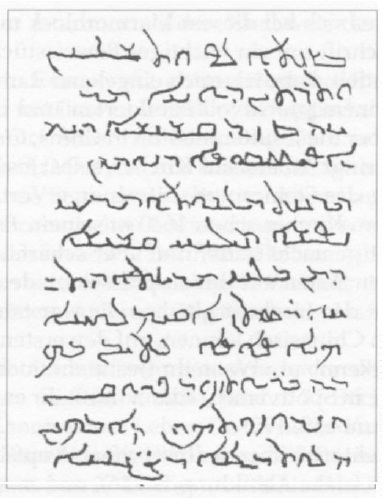
Photo 1: Part of the Syrian inscription on the "Nestorian Stone" of Sian-Fu [Xiang-Fu]. In the first two lines
is the date 1092 of the Greek calendar (according to the drawing by Kircher 1667).
Photo 2: The "Nestorian Stone" of Sian-Fu [Xiang-Fu], upper part with cross and inscription (according to the drawing by Kircher in 1667). (p.246)
-- der FAKE-Text auf dem Stein - und der Streit um eine Jahreszahl im Text - 27 oder 34 Bücher - KEIN Druckfehler (S.245)
Topper Zitat:
"Auch der Text — bestehend aus 1789 Silbenzeichen — ist recht unglaubwürdig, nicht nur wegen der falschen Angabe über die Anzahl der Bücher des Neuen Testamentes in der syrischen Kirche. Die Stelle, die Kircher für die Zahl angibt, enthält keine chinesische Zahl, und er selbst nennt in seiner »wörtlichen« Übersetzung 34 Bücher (in Worten, also kein Druckfehler), während er in seiner blumenreichen zweiten Übersetzung, eher einer Nacherzählung, von 27 spricht. Schon der Anfang des Textes erinnert an die berühmten Anfangsverse von [FAKE]-Johannes, nur dass statt „Wort“ hier auf Chinesisch „Prinzip“ steht." (S.245)
Foto 1: Teil der syrischen Inschrift auf dem „Nestorianer-Stein“ von Sian-Fu. In den ersten beiden Zeilen steht das Datum 1092 griechischer Zeitrechnung (nach der Zeichnung bei Kircher 1667).
Foto 2: Der „Nestorianer-Stein“ von Sian-Fu , oberer Teil mit Kreuz und Überschrift (nach der Zeichnung bei Kircher 1667). (S.246)
12.3.E. Der FAKE-Stein mit dem Neuen FANTASIE-Testament - aber OHNE Fantasie-Kreuzigung - Palästina soll ein Paradies sein - und das Dogma des Fegefeuers ist auch enthalten - alles GEFÄLSCHT
-- der Text enthält das FAKE-NT in Kurzform mit Fantasie-Gott (S.245) und Fantasie-Satan, Fantasie-Jesus als "Mi Xio" (FAKE-Messias), mit Fantasie-Sterndeutern aus Persien, mit der Andeutung einer Fantasie-Bergpredigt, und mit einer schönen Fantasy "Himmelfahrt", "aber der Kreuzestod fehlt" [mit dieser Brutalo-Fantasie aus der Kultur des Nahen Ostens wollten die Jesuiten die Chinesen wohl nicht zu sehr erschrecken] (S.246)
-- der Text enthält aber auch taoistische und buddhistische Begriffe (S.245)
12.3.E. The FAKE stone with the New FANTASY Testament - but WITHOUT fantasy crucifixion - Palestine is supposed to be a paradise - and the dogma of purgatory is also included - all FAKE
-- the text contains the FAKE-NT in short form with fantasy God (p.245) and fantasy Satan, fantasy Jesus as "Mi Xio" (FAKE Messiah), with fantasy Magi from Persia, with the hint of a fantasy Sermon on the Mount, and with a beautiful fantasy "Ascension", "but the death on the cross is missing" [with this brutal fantasy from the culture of the Middle East the Jesuits probably did not want to frighten the Chinese too much] (p.246)
-- but the text also contains Taoist and Buddhist terms (p.245)
Topper quote (translation):
Topper Zitat:
"Auch sonst sind taoistische und buddhistische Begriffe hineingemengt, dagegen erscheinen andere Wörter wie „Gott“ (Holooy (S.245) = Alaha, Elohim) und „Satan“ (Sotan) in phonetischer Schreibweise. [Der Fantasie]-Jesus heisst Mi Xio (Messias), zu seiner Geburt kommen die [Fantasie]-Sternanbeter aus Persien, auch die [FAKE]-Bergpredigt ist angedeutet, aber der [FAKE]-Kreuzestod fehlt. Die [Fantasie]-Himmelfahrt »genau an Mittag« ist dagegen prachtvoll ausgemalt." (S.247)
Topper quote (translation):
"Also, Taoist and Buddhist terms are mixed in, while other words like 'God' (Holooy (p. 245) = Alaha, Elohim) and 'Satan' (Sotan) appear in phonetic spelling. [The fantasy]-Jesus is called Mi Xio (Messiah), at his birth the [fantasy]-wise men come from Persia, the [FAKE]-Sermon on the Mount is also hinted at, but the [FAKE]-crucifixion is missing. The [fantasy]-ascension 'exactly at noon' is magnificently depicted." (p. 247)
-- die Beschreibung von Palästina ist reine FANTASIE - und das Fantasie-Fegefeuer kommt auch vor - und damit ist die Fälschung bewiesen [denn das Dogma des Fegefeuers kommt aus dem Iran und in der kath. Lügen-Kirche erst ab den Kreuzzügen]
Topper Zitat:
"Die Beschreibung von Palästina ist aus chinesischen Romanen genommen, die etwa mit geographischen Vorstellungen in 1001 Nacht verglichen werden können und den altertümlichen Charakter der Inschrift betonen.
Und natürlich ist das Dogma vom Fegefeuer [aus dem Iran] darin verankert, was Kircher mit langen Zitaten (S. 52) aus Bibel und Kirchenväterschriften verteidigt. Seine umständliche Argumentation beweist einmal mehr (was LeGoff klarstellte), wie neu diese Vorstellung im 16. Jahrhundert noch war. Woraus sich ergibt, dass die Inschrift gefälscht ist." (S.247)
[These: Kriminelle Jesuiten wollten in China auch den Scheiterhaufen einführen
-- die kriminellen Jesuiten hatten wohl vor, in China die katholische Kirche mit Scheiterhaufen - dem "echten" Fegefeuer - einzuführen
-- und DESWEGEN hatte diese kriminelle, katholische Kirche in China KEINE CHANCE].
-- the description of Palestine is pure FANTASY - and the fantasy purgatory also occurs - and thus the falsification is proven [because the dogma of purgatory comes from Iran and in the Catholic Church of Lies only since the Crusades]
Topper quote (translation):
"The description of Palestine is taken from Chinese novels, which can be compared to geographical ideas in 1001 Nights, for example, and emphasize the ancient character of the inscription.
And of course, the dogma of purgatory [from Iran] is anchored in it, which Kircher defends with long quotations (p. 52) from the Bible and the writings of the Church Fathers. His circumstantial argumentation proves once again (which LeGoff clarified) how new this idea was in the 16th century. From which it follows that the inscription is fake." (p.247)
[Thesis: Criminal Jesuits also wanted to introduce the stake in China
-- the criminal Jesuits probably intended to introduce in China the catholic church with pyre - the "real" purgatory -
-- and BECAUSE of THAT this criminal, catholic church in China had NO CHANCE].
12.3.F. The FAKE stone: Comparison of fonts - Thesis: Chinese chiseled the stone - the year is disputed depending on the calendar
-- the Syrian words are "bungled" therefore Topper thinks that the marble stele was probably carved by a Chinese man (p.247)
-- the model came from the Jesuit-Dutch fantasy missionary Nicolas Trigault (1577-1628 [web05]) (p.247)
Topper quote (translation):
"The Syriac words in the margin of the page actually only refer to the names of missionaries, but in contrast to the first-class Chinese calligraphy of the main text, these characters are quite bungling, from which I concluded that it was probably not a [lying] Jesuit who made the stone, but – using a template from Father Trigault – a Chinese man to whom Syriac was absolutely foreign."
-- the year of the marble stone is disputed depending on the calendar, but in the end not so important, because it is a total FAKE anyway (p.247)
Topper quote (translation):
"But it is precisely the Syriac text that is extremely important, because it is here that the year of the erection of the stone is immortalized, namely 1092 Greek calendar ("bi senet alf ve tissain ve tarten diunoio"). Since its beginning is set at 310 B.C., this makes 782 A.D.
Kircher also proves this point in a cumbersome and lengthy way. How nice, here we have a double dating, says Kircher happily, because the other information is evidenced by the aforementioned [Chinese] emperor. How this magnificent conclusion will come about remains to be seen. Emmanuel Dias, who describes the find in a letter from August 1625, is 250 years older, but in another letter from 1627 he has the correct number. So on this point too, not all Jesuits were in agreement at first."
12.3.F. Der FAKE-Stein: Schriftenvergleich - These: Chinesen haben den Stein gemeisselt - die Jahresangabe ist je nach Kalender strittig
-- die syrischen Worte sind "stümperhaft" gemeisselt, deswegen meint Topper, die Marmorstele sei wahrscheinlich von einem Chinesen gemeisselt worden (S.247)
-- die Vorlage kam vom jesuitisch-holländischen Fantasie-Missionar Nicolas Trigault (1577-1628 [web05]) (S.247)
Topper Zitat:
"Die syrischen Wörter am Seitenrand betreffen eigentlich nur Namen von Missionaren, aber im Gegensatz zur erstklassigen chinesischen Kalligraphie des Haupttextes sind diese Schriftzeichen recht stümperhaft ausgeführt, woraus ich schloss, dass es wohl kein [Lügen]-Jesuit war, der den Stein herstellte, sondern – unter Benützung einer Vorlage von Pater Trigault – ein Chinese, dem Syrisch absolut fremd war."
-- die Jahresangabe des Marmorsteins ist je nach Kalender strittig, aber schlussendlich nicht so wichtig, denn es ist ja eh eine totale FÄLSCHUNG (S.247)
Topper Zitat:
"Aber gerade der syrische Text ist äusserst wichtig, denn hier ist das Jahr der Errichtung des Steins verewigt, nämlich 1092 griechischer Zeitrechnung (»bi senet alf ve tissain ve tarten diunoio«). Das macht, da deren Anfang mit 310 v.Chr. angesetzt wird, 782 n.Chr.
Kircher beweist auch diesen Punkt umständlich und langwierig. Wie schön, hier haben wir eine Doppeldatierung, sagt Kircher erfreut, denn die andere Angabe sei durch den genannten [chinesischen] Kaiser belegt. Wie dieser prächtige Schluss zustande kommt, wird sich noch zeigen. Emmanuel Dias, der den Fund in einem Brief vom August 1625 beschreibt, hat noch ein um 250 Jahre höheres Alter, in einem anderen Brief von 1627 aber die korrekte Zahl. Auch in diesem Punkt waren sich also zunächst noch nicht alle Jesuiten einig."
12.3.G. Der FAKE-Stein wurde 1625 in Xiang "gefunden" - und dann musste noch eine Ahnenreihe mit FAKE-"Missionaren" in China erfunden werden (!)
-- der Lügen-Jesuit Trigault ging [im Jahre 1625] mit einem 2 Jahre zuvor getauften Chinesen "Melchior Chu" in die Stadt Xiang spazieren und "fand" auf dem Spaziergang den FAKE-Stein (!) - und Trigault anerkannte den Marmorblock "als echt" (S.247)
-- damit wollte der Lügen-Jesuit Trigault dem chinesischen Kaiser und den Chinesen beweisen, dass das FAKE-"Christentum" schon 1000 Jahre früher in China existiert habe, die bisher jegliche vorherige Existenz der Jesus-Lügenstory abgelehnt hatten (S.247)
-- die FAKE-Kirche musste dann noch eine "Ahnenreihe" von Jesus-Fantasie-Missionaren ERFINDEN, die in Peking an die Jesuitenkirche angebracht wurde (S.247)
Topper Zitat:
"Zu den Fundumständen noch ein paar Einzelheiten: Der Jesuitenpater Trigault hatte sich 1625 mit einem zwei Jahre zuvor getauften Chinesen, Melchior Chu, der aus bester Familie stammte und hervorragend gebildet war, nach Sian-Fu [Xiang, Xiang-Fu] begeben, der früheren Hauptstadt Chinas. Dort wurde der grosse Marmorblock gefunden und von (S.247) Trigault als echt anerkannt. Der Gouverneur und viel Volk eilten neugierig herbei und bewunderten diesen Prachtbeweis christlicher [Jesus-Fantasie]-Kontinuität.
Man hatte nämlich von chinesischer Seite den Missionaren gegenüber immer wieder bemängelt, dass man nie zuvor von dieser neuen Lehre, dem Christentum, gehört habe. Der Nachweis hohen Alters ist für Chinesen ungleich wichtiger als für Abendländer, darum musste eine „Ahnenreihe“ der christlichen Religion auch für chinesische Ansprüche aufgestellt werden. Man liess später (1650) an der [Jesus-Fantasie]-Kirche der Jesuiten in Peking eine Tafel anbringen, auf der diese Reihe von Sankt Thomas, einem der 12 [Fantasie]-Jünger [eines Fantasie]-Jesu, über die syrischen [Jesus-Fantasie]-Missionare und Franz Xaver (der nie in China war) bis zu Mateo Ricci, dem ersten grossen Genie der modernen Jesuitenmission, aufgeführt wird.
Wer hier fehlt: die heute durchaus anerkannte Mission der [Jesus-Fantasie]-Franziskaner im 13. und 14. Jahrhundert, die man gewiss gern angeführt hätte, wenn sie damals schon erfunden gewesen wäre." (S.248)
12.3.G. The FAKE stone was "found" in Xiang in 1625 - and then an ancestral line with FAKE "missionaries" had to be invented in China (!)
-- the lying Jesuit Trigault went [in the year 1625] with a Chinese man who had been baptized 2 years before "Melchior Chu" in the city of Xiang and "found" the FAKE stone (!) - and Trigault recognized the marble block "as genuine" (p.247)
-- with this the lying Jesuit Trigault wanted to prove to the Chinese emperor and the Chinese that the FAKE "Christianity" had already existed 1000 years earlier in China who had rejected any previous existence of the Jesus lie story (p.247)
-- the FAKE church then had to INVENT a "line of ancestors" of Jesus fantasy missionaries which was attached to the Jesuit church in Beijing (p.247)
Topper quote (translation):
"A few more details about the circumstances of the find: In 1625, the Jesuit priest Trigault had gone to Sian-Fu [Xiang, Xiang-Fu], the former capital of China, with a Chineseman who had been baptized two years earlier, Melchior Chu, who came from the best family and was excellently educated. There the large marble block was found and recognized by (p.247) Trigault as genuine. The governor and many people hurried up curiously and admired this magnificent proof of Christian continuity.
The Chinese side had repeatedly criticized the missionaries for never having heard of this new doctrine, Christianity, before. Proof of old age is incomparably more important for the Chinese than for Westerners, which is why an "ancestral line" of the Christian religion had to be established for Chinese claims as well. Later (1650) a plaque was installed on the church of the Jesuits in Beijing, on which this series is listed, from St. Thomas, one of the 12 disciples of Jesus, to the Syrian missionaries and Francis Xavier (who was never in China) to Mateo Ricci, the first great genius of the modern Jesuit mission.
Who is missing here: the mission of the Franciscans in the 13th and 14th centuries, which is quite recognized today, and which one would certainly have liked to mention if it had already been invented at that time." (p.248)
-- the FANTASY stone thus asserted the existence of the kr. Catholic pyre church in China since 781, when there was no Catholic church at all (!) (p.248)
-- in insider circles the FANTASY stone is also called "Nestorian stone" (p.248)
-- the logicians and freethinkers in Europe recognized the forgery IMMEDIATELY, because certain elements of the church had not yet been developed around 781 - but the lying Jesuit Nicolas Trigault in China apparently did not know the church history so well and in his naïve way of belief had commissioned the FAKE stone (p.248)
-- der FANTASIE-Stein behauptete also die Existenz der kr. katholischen Scheiterhaufen-Kirche in China seit 781, als es noch gar keine katholische Kirche gab (!) (S.248)
-- in Insider-Kreisen wird der FANTASIE-Stein auch "Nestorianer-Stein" genannt (S.248)
-- die Logiker und Freidenker in Europa erkannten die Fälschung SOFORT, weil gewisse Elemente der Kirche um 781 noch gar nicht entwickelt gewesen waren - der Lügen-Jesuit Nicolas Trigault in China aber kannte scheinbar die Kirchengeschichte nicht so gut und hatte in seiner naiven Glaubensart den FAKE-Stein in Auftrag gegeben (S.248)
Topper Zitat:
"Das wichtigste Bindeglied zwischen der Legende von St. Thomas und der modernen Wirklichkeit war also der „Nestorianer-Stein“, wie das Fundstück von Sian-Fu heute heisst. Es erfüllte zwei Funktionen zugleich: Es befriedigte die chinesische Sucht nach hohem Alter der christlichen [Jesus-Fantasie]-Mission, und es schuf für das Abendland einen unumstösslichen Beweis der seit tausend Jahren unveränderten Rechtgläubigkeit der katholischen [Jesus-Fantasie]-Kirche mit genauen Angaben über [Fantasie]-Dreieinigkeit, [Fantasie]-Jungfraugeburt, [Fantasie]-Fegefeuer und [Fantasie]-Zweinaturenlehre.
Aber gerade diese relativ modernen römischen [Fantasie]-Dogmen wurden den Freidenkern in Europa zum Anstoss, den Stein als Fälschung zu erkennen. Nun habe ich mich gefragt, warum Trigault nicht vorsichtiger war. Ich denke, er hatte zunächst nur den ersten der beiden Effekte im Auge gehabt. Der chinesische Konvertit (Bekehrte), der den Stein schaffen liess, kannte ja nur den katholischen [Jesus-Fantasie]-Glauben des 17. Jahrhunderts und hätte mit syrischen („nestorianischen“) Glaubenssätzen nichts anfangen können." (S.248)
Topper quote (translation):
"The most important link between the legend of St. Thomas and modern reality was therefore the 'Nestorian Stone,' as the find from Sian-Fu is known today. It served two functions at once: It satisfied the Chinese craving for the long history of the Christian mission, and it provided the West with an irrefutable proof of the unchanged orthodoxy of the Catholic Church for a thousand years, with precise details about the Trinity, the virgin birth, purgatory, and the doctrine of the two natures.
But it was precisely these relatively modern Roman dogmas that prompted the free thinkers in Europe to recognize the stone as a forgery. Now I have been wondering why Trigault was not more cautious. I think he initially only had the first of the two effects in mind. The Chinese convert who had the stone created only knew the Catholic faith of the 17th century and would not have been able to make anything of Syrian ('Nestorian') beliefs." (p.248)
12.3.H. Der FAKE-Stein: Die syrische Inschrift
-- ein weiterer Lügen-Jesuit des Vatikans entzifferte als erster den syrischen Text am FAKE-Stein - er hiess Johannes Schreck / Johannes Terrenz (S.248)
-- lat. hiess er Terrentius Constantiensis, chinesisch Den Yuhan Hanpo (geb. in Bingen (BW) 1576, gest. in Peking in der Diözese Konstanz am 13.5.1630) - er hatte angeblich folgende Berufe: "Arzt, Chinamissionar, Naturwissenschaftler und Universalgelehrter" [web06].
Topper Zitat:
"Johann Terrenz (Schreck) aus Konstanz, Kollege von Trigault in der Mission, ein brillanter Naturwissenschaftler und guter Freund von Galilei, war der erste, der den syrischen Teil der Inschrift entzifferte. Vielleicht hat er ihn selbst entworfen. Terrenz hatte sich auf der Seereise nach China mit solchen Texten beschäftigt. Ganz sauber ist das Syrisch aber nicht." (S.248)
12.3.H. The FAKE Stone: The Syrian Inscription
-- another lying Jesuit of the Vatican was the first to decipher the Syrian text on the FAKE stone - his name was Johannes Schreck / Johannes Terrenz (p.248)
-- lat. his name was Terrentius Constantiensis, Chinese Den Yuhan Hanpo (born in Bingen (BW) 1576, died in Peking in the diocese of Constance on 13.5.1630) - he allegedly had the following professions: "doctor, China missionary, natural scientist and polymath" [web06].
Topper quote (translation):
"Johann Terrenz (Schreck) from Constance, Trigault's colleague in the mission, a brilliant scientist and good friend of Galileo, was the first to decipher the Syriac part of the inscription. Perhaps he designed it himself. Terrenz had dealt with such texts on the sea voyage to China. But Syriac is not completely clean." (p.248)
12.3.I. The FAKE stone and the matrix of the kr.kath. Church: is copied - the original "disappears" - the perfect Chinese characters are noticed in 1628 - comical suicide of lying Jesuit Trigault in 1628
-- in order to "secure" the FAKE stone the following maneuvers are carried out by Athanasius Kircher:
a) The governor of Xiang is said to have immediately ordered a copy of the stone - and the original is said to have "disappeared" (p.249)
b) This "disappearance" fantasy [is a common matrix in the kr.kath. Church and] is a prevention against the determination of the actual age of the FAKE stone, which is probably as old as the copy or the copy is the original from 1625 (p.249)
"[In the book of Athanasius] Kircher (1602-1680 [web04]) then describes the usual manoeuvres that always occur in such "finds" for safety reasons: The governor immediately had a copy of the stone made in a completely identical and true-to-life manner and set up in Sian-Fu. After that, the original disappears. Of course, this is only a story to counter later objections if one wants to determine the actual age of the inscription from precise analyses. It then dates from 1625, without proving the forgery." (p.249)
-- another lying Jesuit - Alvarés Samede - wondered in 1628 about the perfect Chinese characters - he didn't know Syriac so well (p.249)
Topper quote (translation):
"The Jesuit Alvarés Samede [not to be found on the Internet], who saw and described the stone in 1628, wonders that the Chinese script was as clean and legible as if it had just been written; only the Syriac signs — he calls them "Chaldean" — are unclear to him. Did the learned man suspect anything?" (p.249)
12.3.I. Der FAKE-Stein und die Matrix der kr.kath. Kirche: wird kopiert - das Original "verschwindet" - die perfekten chinesischen Zeichen fallen 1628 auf - komischer Selbstmord von Lügen-Jesuit Trigault 1628
-- um den FAKE-Stein "abzusichern" werden bei Athanasius Kircher noch folgende Manöver durchgeführt:
a) Der Gouverneru von Xiang soll sofort eine Kopie des Steins veranlasst haben - und das Original soll "verschwunden" sein (S.249)
b) Diese "Verschwinden"-Fantasie [ist eine gängige Matrix bei der kr.kath. Kirche und] ist eine Prävention gegen die Ermittlung des tatsächlichen Alters des FAKE-Steins, der wohl so alt wie die Kopie ist bzw. die Kopie ist das Original von 1625 (S.249)
"Bei [Athanasius] Kircher (1602-1680 [web04]) stehen dann noch die üblichen Manöver beschrieben, die bei derartigen „Funden“ aus Sicherheitsgründen immer vorkommen: Der Gouverneur liess sofort eine Kopie des Steines völlig gleich und naturgetreu herstellen und in Sian-Fu aufstellen. Danach verschwindet das Original. Das ist natürlich nur eine Geschichte, um späteren Einwänden zu begegnen, wenn man aus genauen Analysen das tatsächliche Alter der Inschrift bestimmen will. Er stammt dann von 1625, ohne dass damit die Fälschung bewiesen wäre." (S.249)
-- ein anderer Lügen-Jesuit - Alvarés Samede - wunderte sich 1628 über die perfekten chinesischen Schriftzeichen - Syrisch konnte er nicht so gut (S.249)
Topper Zitat:
"Der Jesuit Alvarés Samede [im Internet nicht auffindbar], der den Stein 1628 sah und beschrieb, wundert sich, dass die chinesische Schrift so sauber und gut lesbar war, als wäre sie gerade erst geschrieben; nur die syrischen Zeichen — er nennt sie »chaldäisch« — sind ihm unklar. Ob der gelehrte Mann etwas ahnte?" (S.249)
-- der Lügen-Jesuiten-Missionar Nicolas Trigault (1577-1628 [web05]) begeht im selben Jahr 1628 offiziell "Selbstmord" - wollte er so seinen Gigabetrug an der chinesischen Geschichtsschreibung vertuschen? (S.249)
-- sein "getaufter Freund" Melchior Chu war schon lang aufgeflogen und vom Kaiserhof isoliert worden (S.249)
Topper Zitat:
"Im selben Jahr beging Trigault in Sian-Fu [Xiang-Fu] Selbstmord durch Erhängen (Dunne, S. 213).*
* George H. Dunne: Generation of Giants. The Story of teh Jesuits in China in the Last Decades of the Ming Dynasty; Indiana 1962, "USA"
Er hatte schon einige Jahre nicht mehr direkt missioniert, sondern sich rein der Erforschung [Erfindung] der chinesischen Geschichte und dem Schreiben gewidmet. Er schlief nur noch drei Stunden täglich und arbeitete unter grösster nervlicher Anspannung. Vielleicht war ihm klar geworden, was er da angerichtet oder geduldet hatte. Sein Gönner und getaufter Freund, Melchior Chu, war übrigens schon als junger Mann am Kaiserhof des Betrugs überführt und auf Lebenszeit von allen Staatsämtern ausgeschlossen worden, was ebenfalls ein seltsames Licht auf den ganzen Vorgang wirft." (S.249)
-- the lying Jesuit missionary Nicolas Trigault (1577-1628 [web05]) officially commits "suicide" in the same year 1628 - did he want to cover up his gigafraud on Chinese historiography? (p.249)
-- his "baptized friend" Melchior Chu had been exposed for a long time and isolated from the imperial court (p.249)
Topper quote (translation):
"In the same year, Trigault committed suicide by hanging in Sian-Fu [Xiang-Fu] (Dunne, p. 213).*
* George H. Dunne: Generation of Giants. The Story of teh Jesuits in China in the Last Decades of the Ming Dynasty; Indiana 1962, "USA"
He had not directly engaged in missionary work for several years, but had devoted himself entirely to the study of Chinese history and writing. He only slept three hours a day and worked under great mental strain. Perhaps it had become clear to him what he had caused or tolerated. His patron and baptized friend, Melchior Chu, incidentally, had already been convicted of fraud at the imperial court as a young man and excluded from all state offices for life, which also casts a strange light on the entire process.
12.3.J. Der FAKE-Stein: Viele Historiker sagen klar: Der FAKE-Stein von Xiang ist ein FAKE
-- der China-Experte Aignan Julien stellt nochmals die FÄLSCHUNG fest - E.E. Salisbury ebenfalls - Ernest Renan ebenfalls - Kopien des FAKE-Steins stehen in New York und im kr. Vatikan - der FAKE-Stein in China steht in Xiang im Museum (S.249)
12.3.J. The FAKE stone: Many historians clearly say: The FAKE stone from Xiang is a FAKE
-- the China expert Aignan Julien again notes the FORGERY - E.E. Salisbury likewise - Ernest Renan as well - copies of the FAKE stone are located in New York and in the Vatican - the FAKE stone in China is in Xiang in the museum (p.249)
Details:
-- der China-Experte (Sinologe) Stanislas Aignan Julien (geb. in Orléans 1799 - gest. in Paris 1873 [web07]) sagte, klar: der FAKE-Stein ist ein FAKE (S.249)
-- der Historiker und Arabist Edward Elbridge Salisbury (Boston, Professor an der Yale-Universität, 1814-1901 [web08]) sagte klar: der FAKE-Stein ist ein FAKE (S.249)
-- der "Religionswissenschaftler und Orientalist" Ernest Renan (geb. in Tréguier am 27.2.1823 - gest. in Paris am 2.10.1892 [web09]) sagt klar: der FAKE-Stein ist ein FAKE, aber 8 Jahre später meinte er plötzlich, der Stein sei "echt" (S.249) - er war auch Schriftsteller, Philologe, Philosoph, Historiker und Gymnasiallehrer und Mitglied der Académie Française und Mitglied der Ehrenlegion [web09] [also man kann annehmen: Da war wohl eine grosse katholische Bestechung im Spiel, den FAKE-Stein später als "echt" zu bezeichnen]
Details:
-- the China expert (Sinologist) Stanislas Aignan Julien (born in Orléans 1799 - died in Paris 1873 [web07]) stated clearly: the FAKE stone is a FAKE (p. 249)
-- the historian and Arabist Edward Elbridge Salisbury (Boston, Professor at Yale University, 1814-1901 [web08]) stated clearly: the FAKE stone is a FAKE (p. 249)
-- the "religious scholar and orientalists" Ernest Renan (born in Tréguier on 27.2.1823 - died in Paris on 2.10.1892 [web09]) states clearly: the FAKE stone is a FAKE, but 8 years later he suddenly claimed the stone was "genuine" (p. 249) - he was also a writer, philologist, philosopher, historian, high school teacher, member of the Académie Française and a member of the Legion of Honor [web09] [so one can assume: There was probably a large Catholic bribery involved in later calling the FAKE stone "genuine"]
Topper Zitat:
Im 19. Jahrhundert stellte der französische Sinologe Stanislas Julien noch einmal fest, dass es sich um eine Fälschung handeln müsse, und sein Kollege E. E. Salisbury von der Yale-Universität hielt dies für die seinerzeit allgemeingültige Ansicht. Auch der grosse Religionswissenschaftler und Orientalist Ernest Renan schrieb 1855, dass der Stein gefälscht ist; erst acht Jahre später entschied er sich für dessen Echtheit. Seit Pauthier (1837) * setzt sich diese Meinung schrittweise durch.
* Buch von M.G. Pauthier: Chine, ou Déscription Historique, Géographique et Littéraire; Band 1; Paris 1837
Topper quote (translation):
In the 19th century, the French Sinologist Stanislas Julien reiterated that it must be a forgery, and his colleague E. E. Salisbury from Yale University considered this to be the prevailing view at the time. The great religious scholar and Orientalist Ernest Renan also wrote in 1855 that the stone was forged; it was only eight years later that he decided to accept its authenticity. Since Pauthier (1837), this opinion has been gradually gaining acceptance.
* Book by M.G. Pauthier: Chine, ou Déscription Historique, Géographique et Littéraire; Volume 1; Paris 1837.
Hirth (1885)* nimmt den Stein als Dokument an.
* Friedrich Hirth: China and the Roman Orient; Shanghai 1885; Neudruck: New York 1966
1908 wurde eine Imitation für das Metropolitan Museum of Art in New York hergestellt [die muss weg, ist FAKE!] und eine Kopie dem Vatikan überreicht [die muss auch weg, ist alles nur FAKE!]. Der Nestorianerstein steht seit 1907 im Stelenwald des Museums in Hsi'an (Sian-Fu) [in Xiang]." (S.249)
[Auch der Stein im Museum in Xiang muss weg - der Stein ist FAKE].
Hirth (1885)* accepts the stone as a document.
* Friedrich Hirth: China and the Roman Orient; Shanghai 1885; Reprint: New York 1966
In 1908, an imitation was made for the Metropolitan Museum of Art in New York [that must go, it is FAKE!] and a copy was presented to the Vatican [that must also go, it is all just FAKE!]. The Nestorian stone has been in the stelae forest of the museum in Hsi'an (Sian-Fu) [in Xiang] since 1907.
[Also the stone in the museum in Xiang must go - the stone is FAKE].
12.4. Astronomie
"Verteidigungsstrategie" des kr. Vatikans gegen China: Jesuiten in China brillieren mit der Vorhersage von Sonnenfinsternissen - mit Kepler im Hintergrund - und Astrologie
12.4.1. Chinas Astronomie und die Vorhersagen für alle Menschen
12.4.2. Muslimische Astronomie regelt von Usbekistan aus ab 1351 die Kalenderfrage in China - zuvor war der Untergang der Ming-Dynastie - auch mit Jesuiten-"Missionaren"
12.4.3. Jesuiten-Lügen-Missionar in China: Matteo Ricci präsentiert Keplers Planetenmodell - Johannes Schreck brilliert mit Astronomie-Berechnungen im Kontakt mit Kepler - Jesuiten ab 1611 beim Jahreshoroskop - der Längengrad von Peking
12.4.4. Die "christliche" Verkleidung als "buddhistischer Mönch" - Jesuisten-Astronomen Ricci und Schall brillieren in Peking gegen die Muslime-Astronomen - chinesische "Kalenderkommission" - Schall bringt Ordnung in die "Kalender und Chroniken Chinas"
12.4. Astronomy
"Defense strategy" of the Holy See against China: Jesuits in China are brilliant with the prediction of solar eclipses - with Kepler in the background - and astrology
12.4.1. China's astronomy and the predictions for all people
12.4.2. Muslim astronomy regulates the calendar question in China from Uzbekistan starting in 1351 - prior to this was the downfall of the Ming Dynasty - also with Jesuit "missionaries"
12.4.3. Jesuit Lie Missionary in China: Matteo Ricci presents Kepler's planetary model - Johannes Schreck shines with astronomy calculations in contact with Kepler - Jesuits from 1611 with the annual horoscope - the longitude of Beijing
12.4.4. The 'Christian' disguise as a 'Buddhist monk' - Jesuit astronomers Ricci and Schall shine in Beijing against the Muslim astronomers - Chinese 'calendar commission' - Schall brings order to the 'calendars and chronicles of China'.
![Widerstand: Wahrheitswisser Adam Schall,
Porträt Widerstand: Wahrheitswisser Adam Schall,
Porträt [kap12 foto3] Portrait von Adam Schall,
gemalt von Johann Grueber in Peking 1660. Eigentum
der S.J., Galloro, Rom. (S.252)](../d/014-03-fototeil-d/kap12-03-astronom-Adam-Schall-portraet.jpg "Astronom Adam Schall, Porträt [kap12 foto3]")
Astronom Adam Schall, Porträt [kap12 foto3] -- Astronom Matteo Ricci, Porträt [kap12 foto4]
Portrait von Adam Schall, gemalt von Johann Grueber in Peking 1660. Eigentum der S.J., Galloro, Rom. (S.252)
Unten: Portrait von Matteo Ricci, gemalt nach dessen Tod von dem chinesischen Jesuiten Manoel Yu Wen-hui. 1614 nach Rom gebracht. (S.252)
Beide Abbildungen in: George H. Dunne, S. J., Generation of Giants (Notre Dame, Indiana, USA, 1962) (S.252)
Astronomer Adam Schall, portrait [chap12 photo3] -- Astronomer Matteo Ricci, portrait [chap12 photo4]
Portrait of Adam Schall, painted by Johann Grueber in Beijing in 1660. Property of the S.J., Galloro, Rome. (p.252)Below: Portrait of Matteo Ricci, painted after his death by the Chinese Jesuit Manoel Yu Wen-hui. Brought to Rome in 1614. (p.252)Both illustrations in: George H. Dunne, S.J., Generation of Giants (Notre Dame, Indiana, USA, 1962) (p.252)
12.4.1. Chinas Astronomie und die Vorhersagen für alle Menschen
-- der Kaiser von China galt als "Abgesandter des Himmels" (S.250)
-- die Astronomie [Astrologie] am Kaiserhof behauptete, alle guten und schlechten Ereignisse voraussagen zu können (S.250)
-- wenn eine Sonnenfinsternis "vergessen" worden war, glaubte das Volk der Kaiser sei "unfähig" (S.250)
Topper Zitat:
"Seit der sagenhaften Frühzeit beschäftigten sich die chinesischen Schriftkundigen mit Astronomie, wobei mystische oder religiöse Ziele oft der Hauptantriebsgrund waren. Es ging nicht so sehr um Kalenderfragen wie zum Beispiel den Aussaatbeginn für die Bauern, sondern meist um horoskopartige Festlegung von günstigen und ungünstigen Tagen, was alle Menschen betraf, vom Kaiser bis zum Kuli, und alle Lebensbelange, vom Hausbau bis zum Tanzvergnügen. Ein dafür angestellter Stab von Beamten legte jeweils zu Jahresbeginn die Voraussagen fest. Wenn sie ungenau waren oder eine Sonnenfinsternis vergassen, glaubte das Volk, dass der Kaiser unfähig sei, denn als Abgesandter des Himmels hätte er es besser wissen müssen." (S.250)
12.4.1. China's Astronomy and Predictions for All People
-- the Emperor of China was regarded as the "Ambassador of Heaven" (p.250)
-- astronomy [astrology] at the imperial court claimed to predict all good and bad events (p.250)
-- if a solar eclipse was "forgotten", the people believed that the Emperor was "incapable" (p.250)
Topper quote (translation):
"Since mythical ancient times, Chinese literati have engaged in astronomy, where mystical or religious goals were often the main driving force. It was not so much about calendar-related issues such as the start of sowing for farmers, but rather about horoscope-like determinations of favorable and unfavorable days, which concerned all people, from the emperor to the coolie, and all aspects of life, from house construction to dance enjoyment. A staff of officials was employed to make predictions at the beginning of each year. If they were inaccurate or forgot a solar eclipse, the people believed that the emperor was incapable, for as an envoy of heaven, he should have known better." (p.250)
-- alle Astronomie [Astrologie] beruht auf errechneten Daten (S.250)
Topper Zitat:
"Leider sind aber die Notizen in den Chroniken kaum brauchbar, da sie fast nie echte Beobachtungen mitteilen, sondern errechnete Daten. Es handelt sich um Astrologie, nicht Astronomie." (S.250)
-- all astronomy [astrology] is based on calculated data (p. 250)
Topper quote (translation):
"Unfortunately, the notes in the chronicles are hardly useful, as they almost never convey real observations, but rather calculated data. It is about astrology, not astronomy." (p. 250)
12.4.2. Muslim astronomy begins to address the calendar issue in China from Uzbekistan starting in 1351 - prior to this was the fall of the Ming dynasty - also involving Jesuit 'missionaries'.
12.4.2. Muslimische Astronomie regelt von Usbekistan aus ab 1351 die Kalenderfrage in China - zuvor war der Untergang der Ming-Dynastie - auch mit Jesuiten-"Missionaren"
Topper Zitat:
"Im 11. Jahrhundert erlebte die islamische Welt einen riesigen Aufschwung [als Gegenreaktion auf die kriminellen "Kreuzfahrer" v.a. aus Frankreich - z.B. in] der astronomischen Wissenschaft, aber erst mit der Durchdringung des chinesischen Inlands 1273 durch Sayyid-i-Adschall aus Buchara ([Usbekistan] unter Kublai Chan) begann die islamische Einflussnahme auf den chinesischen Kaiserhof [also von Nordern her über die Mongolei]. Etwa 1351 beginnt auch dort [in China] die Neuordnung der Chroniken durch islamische Beamte, die als Kalenderreformatoren wirkten. Dieses Datum ist überaus bedeutungsvoll (siehe Marx 1996 a)*,
* Artikel von Christoph Marx: Der (bislang) letzte "Grosse Ruck"; In: Zeitensprünge Ausgabe 3/96; Gräfelfing 1996, S.339ff.
denn vier Jahre vorher muss sich in Innerasien eine ungeheure Katastrophe abgespielt haben, deren Folgen auch in Europa – als Pest oder „Schwarzer Tod“ – spürbar waren. Wir können alle chinesischen Kalenderdaten, die davor liegen, als rückprojizierte Erfindungen ansehen." (S.250)
Topper quote (translation):
"In the 11th century, the Islamic world experienced a huge upswing [as a reaction to the criminal 'Crusaders,' especially from France - for example, in] astronomical science, but it was not until the penetration of the Chinese interior in 1273 by Sayyid-i-Adschall from Bukhara (present-day Uzbekistan) under Kublai Khan that Islamic influence on the Chinese imperial court began [thus from the north through Mongolia]. Around 1351, the reorganization of chronicles by Islamic officials, who acted as calendar reformers, also began there [in China]. This date is extremely significant (see Marx 1996 a)*, * Article by Christoph Marx: The (so far) last 'Great Jolt'; In: Time Leaps Issue 3/96; Gräfelfing 1996, p. 339ff.
because four years earlier, an enormous catastrophe must have occurred in Inner Asia, the effects of which were also felt in Europe - as plague or 'Black Death.' We can regard all Chinese calendar dates that precede this as retro-projected inventions." (p.250)
-- die Ming-Dynastie war u.a. an der Kalenderfrage gescheitert: Die muslimischen Astronomen konnten die Sonnenfinsternis nicht mehr vorhersagen (S.250)
Topper Zitat:
"Als einen der Gründe für den Untergang der Ming-Dynastie und den Selbstmord ihres letzten Kaisers gibt man an, dass seine Hofastronomen unfähig waren, den Kalender korrekt zu handhaben. Offensichtlich hatten die Moslems, die dafür verantwortlich waren, ihre Arbeit in den letzten Jahren nur flüchtig verrichtet, denn Kalender und Finsternisse stimmten nicht mehr." (S.250)
-- the Ming Dynasty failed, among other things, due to the calendar issue: The Muslim astronomers were no longer able to predict solar eclipses (p. 250)
Topper quote (translation):
"One of the reasons given for the fall of the Ming Dynasty and the suicide of its last emperor is that his court astronomers were incapable of handling the calendar correctly. Obviously, the Muslims responsible for this had only been doing a cursory job in recent years, for the calendar and eclipses no longer matched." (p. 250)
-- und zusätzlich hatten kriminell-katholische Lügner-Jesuitenmissionare die Welt Chinas noch mehr durcheinandergebracht: Sie brillierten mit Kenntnissen in Mathe, Landvermessung und Astronomie, aber verbreiteten gleichzeitig ihren Fantasie-Jesus-Glauben mit Fantasie-Kreuz, Fantasie-Hölle und Fantasie-Fegefeuer (S.250)
Topper Zitat:
"Während der letzten Ming-Kaiser begannen die Jesuiten ihre [Jesus-Fantasie]-Mission in China. Es war eine hochintellektuelle Gruppe von [Lügen-Jesuiten]-Männern aus ganz Europa, die unter dem diplomatischen Schutz Portugals (S.250), aber dennoch unter ständiger Lebensgefahr, den katholischen [Fantasie]-Glauben ausbreitete. Wegen ihrer aussergewöhnlichen Fähigkeiten auf den Gebieten der Mathematik, der Landvermessung und der Astronomie genossen sie die Achtung der adligen Chinesen und wurden auch als Berater an den Kaiserhof berufen." (S.251)
-- and additionally, criminally Catholic lying Jesuit missionaries with their Fantasy Jesus who never comes further disrupted the world of China: They excelled in knowledge of mathematics, surveying, and astronomy, but simultaneously spread their fantasy Jesus faith with a fantasy cross, fantasy hell, and fantasy purgatory (p. 250)
Topper quote (translation):
"During the last Ming emperors, the Jesuits began their [Jesus-fantasy] mission in China. It was a highly intellectual group of [lying Jesuits] men from all over Europe, who, under the diplomatic protection of Portugal (p. 250), yet still under constant threat to their lives, spread the Catholic [fantasy] faith. Due to their extraordinary skills in the fields of mathematics, surveying, and astronomy, they earned the respect of the noble Chinese and were also appointed as advisors to the imperial court." (p. 251)
12.4.3. Jesuiten-Lügen-Missionar in China: Matteo Ricci präsentiert Keplers Planetenmodell - Johannes Schreck brilliert mit Astronomie-Berechnungen im Kontakt mit Kepler - Jesuiten ab 1611 beim Jahreshoroskop - der Längengrad von Peking
-- der Jesuit Ricci verbreitet in China das neue Planetenmodell [wahrsch. von Kepler], so dass seine Berechnungen in China viel genauer als die muslimischen Berechnungen waren (S.251)
-- der Jesuit Johannes Schreck brilliert in China mit genauen Astronomie-Berechnungen, denn Schreck hat direkten Kontakt zu Kepler (S.251)
-- die genauen Berechnungen der Jesuiten beeindruckten den chinesischen Hof dermassen, dass sie ab 1611 beim Jahreshoroskop mitmachen durften - dafür musste man aber erst mal den Längengrad von Peking brechnen, und das soll nicht so einfach gewesen sein (S.251)
12.4.3. Jesuit Lies Missionary in China: Matteo Ricci presents Kepler's planetary model - Johannes Schreck shines with astronomical calculations in contact with Kepler - Jesuits from 1611 involved in the yearly horoscope - the longitude of Beijing
-- The Jesuit Ricci spreads the new planetary model [probably from Kepler] in China, making his calculations much more accurate than the Muslim calculations (p.251)
-- The Jesuit Johannes Schreck shines in China with precise astronomical calculations, as Schreck has direct contact with Kepler (p.251)
-- The precise calculations of the Jesuits impressed the Chinese court to such an extent that they were allowed to participate in the yearly horoscope from 1611 - but first, they had to calculate the longitude of Beijing, which was said to be not so easy (p.251)
Topper Zitat:
"Einer der ersten war der adlige Italiener Matteo Ricci, der 1583 nach China gereist war (Abbildung S. 252). Er machte die Chinesen mit dem neuen Planetenmodell bekannt, das sich in Europa gerade durchsetzte. Dadurch waren seine Berechnungen weitaus genauer als die der islamischen Konkurrenz.
Der schon erwähnte Terrenz (Johannes Schreck [web06]) stand auch in China in ständigem Briefwechsel mit Kepler (Pionier-Astronom in Deutschland, 1571-1630 [web10]), der ihn bei Problemen der Astronomie beriet. So gewannen die Jesuiten Einfluss auf die chinesische Zeitberechnung.
Ab 1611 durften sie bei der Erstellung des Jahreshoroskops teilnehmen. Für ihre genauen Berechnungen mussten Sabatin de Ursis und Jacques Poutoria erst den Längengrad Pekings ermitteln, was nicht einfach war. Die Chinesen hatten keine Ahnung von diesen Begriffen." (S.251)
Topper quote (translation):
"One of the first was the noble Italian Matteo Ricci, who traveled to China in 1583 (Figure p. 252). He introduced the Chinese to the new planetary model that was just being established in Europe. As a result, his calculations were far more accurate than those of the Islamic competition.The already mentioned Terrenz (Johannes Schreck [web06]) was also in constant correspondence with Kepler (pioneer astronomer in Germany, 1571-1630 [web10]), who advised him on problems of astronomy. Thus, the Jesuits gained influence over the Chinese time calculation.
From 1611 onwards, they were allowed to participate in the creation of the annual horoscope. For their precise calculations, Sabatin de Ursis and Jacques Poutoria first had to determine the longitude of Beijing, which was not easy. The Chinese had no idea about these concepts." (p. 251)
12.4.4. Die "christliche" Verkleidung als "buddhistischer Mönch" - Jesuiten-Astronomen Ricci und Schall brillieren in Peking gegen die Muslime-Astronomen - chinesische "Kalenderkommission" - Schall bringt Ordnung in die "Kalender und Chroniken Chinas" durch Erfindungen
-- der verkleidete Ricci (S.251)
Topper Zitat:
"Das Wort für „Christentum“ gab es in chinesischer Sprache bis dahin nicht, man nahm einfach das Wort für „Astrologie“, Lehre des Himmels. Die Adligen spürten kaum, dass sie bekehrt wurden, denn die Jesuiten gingen äusserst taktvoll und anpassungsfähig vor. Sie waren zunächst als buddhistische Mönche verkleidet, erst später erhielten sie die Erlaubnis ihres Ordens, chinesische Seidengewänder und Kopfbedeckungen zu tragen. Ricci war sehr darüber erfreut, am liebsten hätte er sich dazu noch Schlitzaugen und eine Stupsnase angeschafft, wie er begeistert schrieb." (S.251)
12.4.4. The "Christian" disguise as a "Buddhist monk" - Jesuit astronomers Ricci and Schall shine in Beijing against the Muslim astronomers - Chinese "calendar commission" - Schall brings order to the "calendars and chronicles of China"
-- the disguised Ricci (p. 251)
Topper quote (translation):
"The word for 'Christianity' [with a Fantasy Jesus] did not exist in the Chinese language at that time; they simply took the word for 'astrology', the teaching of the heavens. The nobles hardly sensed that they were being converted, as the Jesuits were extremely tactful and adaptable. They were initially disguised as Buddhist monks, and only later did they receive permission from their order to wear Chinese silk garments and head coverings. Ricci was very pleased about this; he would have preferred to also acquire slanted eyes and a snub nose, as he enthusiastically wrote." (p. 251)
-- der verkleidete Trigault mit dem verkleideten Johann Adam Schall (S.251)
-- Mathematiker und Astronom Schall brilliert beim chinesischen Kaiser mit der genauen Vorhersage von Sonnenfinsternissen und löst so die ungenauen muslimischen Berater ab - Schall wird Chef der chinesischen "Kalenderkommission" (S.251,253)
-- Schall ordnet den chinesischen Kalender und die chinesischen Chroniken nach seinen präzisen Gesichtspunkten (S.253)
-- the disguised Trigault with the disguised Johann Adam Schall (p. 251)
-- Mathematician and astronomer Schall impresses the Chinese emperor with his accurate predictions of solar eclipses, thus replacing the inaccurate Muslim advisors - Schall becomes the head of the Chinese 'Calendar Commission' (p. 251, 253)
-- Schall organizes the Chinese calendar and the Chinese chronicles according to his precise criteria (p. 253)
Topper Zitat:
"Sein Nachfolger Trigault hatte einen hochbegabten Mann aus Köln, Johann Adam Schall, 1622 nach China mitgebracht (Abbildung, S. 252), der ab 1640 Chef der [Jesus-Fantasie]-Mission in Peking wurde. Als aussergewöhnlicher Mathematiker und Astronom wurde er von den chinesischen Gebildeten bewundert und gefördert. Der erste [chinesische] Kaiser der gerade 1644 an die Macht gelangten Mandschu-Dynastie, der junge Schuntschi, liess sich häufig von Pater Schall beraten, nannte ihn »Grossväterchen« und verkehrte mit dem bärtigen 50jährigen ohne Zeremoniell in liebevoller Weise. Damals entspann sich ein Streit um die Fortsetzung der Kalenderarbeiten, wobei Schall die Unfähigkeit der islamischen Beamten demonstrierte, indem er eine Sonnenfinsternis (S.251) mit grösster Genauigkeit voraussagte. So wurde er Günstling des Mandschu-Kaisers und Chef der Kalenderkommission. In dieser Machtstellung ordnete er Kalender und Chroniken Chinas nach den neuesten Gesichtspunkten. Das Ergebnis legte er 1662 in Chinesisch (und zwei Jahre später in Latein) vor. (S.253)
Topper quote (translation):"His successor Trigault brought a highly talented man from Cologne, Johann Adam Schall, to China in 1622 (illustration, p. 252), who became the head of the [Jesus-Fantasy] mission in Beijing starting in 1640. As an extraordinary mathematician and astronomer, he was admired and promoted by the Chinese intellectuals. The first [Chinese] emperor of the newly established Manchu dynasty, the young Shunzhi, who came to power in 1644, frequently sought advice from Father Schall, referred to him as 'Grandpa,' and interacted with the bearded 50-year-old in a loving manner without ceremony. At that time, a dispute arose regarding the continuation of calendar work, where Schall demonstrated the incompetence of the Islamic officials by accurately predicting a solar eclipse (p. 251). Thus, he became the favorite of the Manchu emperor and head of the calendar commission. In this position of power, he arranged [invented] the calendars and chronicles of China according to the latest perspectives. He presented the result in Chinese in 1662 (and two years later in Latin)." (p. 253)
Foto 1: Portrait von Adam Schall, gemalt von Johann Grueber in Peking 1660. Eigentum der S.J., Galloro, Rom.
Foto 2: Unten: Portrait von Matteo Ricci, gemalt nach dessen Tod von dem chinesischen Jesuiten Manoel Yu Wen-hui. 1614 nach Rom gebracht.
Beide Abbildungen in: George H. Dunne, S. J., Generation of Giants (Notre Dame, Indiana, USA, 1962) (S.252)
Photo 1: Portrait of Adam Schall, painted by Johann Grueber in Beijing in 1660. Property of the S.J., Galloro, Rome.
Photo 2: Below: Portrait of Matteo Ricci, painted after his death by the Chinese Jesuit Manoel Yu Wen-hui. Brought to Rome in 1614.
Both illustrations in: George H. Dunne, S. J., Generation of Giants (Notre Dame, Indiana, USA, 1962) (p. 252)
-- [chinesischer Neid (?)] gegen die christlichen Astronomen inklusive Johann Adam Schall provoziert Mobbing, Rufmorderei und Verurteilung zum Tod wegen "schwarzer Magie und Verunehrung des Konfuzius" (S.253)
-- das Urteil wird aber wegen eines Erdbebens nicht vollstreckt (S.253)
Topper Zitat:
"Zu diesem Zeitpunkt wurde er mit drei seiner Jesuitenbrüder der schwarzen Magie und Verunehrung des Konfuzius angeklagt und zum Tode verurteilt. Am Tag vor der Hinrichtung ereignete sich ein starkes Erdbeben, weshalb der Kaiser ihn begnadigen konnte. Nach seinem Tod 1666 wurde er offiziell rehabilitiert. Dann übernahm Ferdinand Verbiest aus Belgien die Führung und leitete die Mission bis zu seinem Tod 1688." (S.253)
-- [Chinese envy (?)] against the Christian astronomers including Johann Adam Schall provoked bullying, defamation, and a death sentence for 'black magic and desecration of Confucius' (p. 253)
-- however, the sentence was not enforced due to an earthquake (p. 253)
Topper quote (translation):
"At that time, he and three of his Jesuit brothers were accused of black magic and desecration of Confucius and sentenced to death. On the day before the execution, a strong earthquake occurred, which allowed the emperor to grant him clemency. After his death in 1666, he was officially rehabilitated. Then Ferdinand Verbiest from Belgium took over the leadership and directed the mission until his death in 1688." (p. 253)
-- die Lügen-Jesuiten brillierten mit ihrer genauen Kepler-Astronomie in China 170 Jahre lang (S.253)
-- sie nötigten die Chinesen zum Fantasie-Katholizismus, wo sie nur konnten, lösten aber daneben wiederum "zahlreiche wissenschaftliche Aufgaben" in Geographie, in Geschichte, in Technik, sie waren auch politische Berater in Sachen Russland-Grenze usw. (S.253)
Topper Zitat:
"Die Schicksale dieser Männer sind ungemein spannend! Insgesamt hatten die Jesuiten 170 Jahre lang die Leitung des kaiserlichen astronomischen Büros inne und konnten sich ausser der Verbreitung des Katholizismus auch zahlreichen wissenschaftlichen Aufgaben widmen. Sie wirkten als Geographen und Geschichtsforscher, verbreiteten moderne technische Geräte und betätigten sich politisch, indem sie die Kaiser in ihren Verhandlungen mit Russland berieten, das allmählich zum wichtigen Nachbarn an der Nordgrenze wurde." (S.253)
-- the lying Jesuits shone with their exact Kepler astronomy in China for 170 years (p.253)
-- they forced the Chinese to fantasy Catholicism wherever they could, but at the same time they solved "numerous scientific tasks" in geography, in history, in technology, they were also political advisors in the matter of the Russia border etc. (p.253)
Topper quote (translation):
"The fates of these men are immensely exciting! In total, the Jesuits were in charge of the Imperial Astronomical Office for 170 years and, in addition to spreading Catholicism, were also able to devote themselves to numerous scientific tasks. They worked as geographers and historians [inventing Chinese history], disseminated modern technical devices and were politically active by advising the emperors in their negotiations with Russia, which gradually became an important neighbor on the northern border." (p.253)
12.5. Geschichtsschreibung der "Tang"
"Verteidigungsstrategie" des kr. Vatikans gegen China: Wie die kr. Jesuiten für China eine Geschichtschronologie erfanden, die mit FAKE-Antike+FAKE-MA in Europa übereinstimmt - Mobbing gegen Konfuzius und China-Kaiser
12.5.1. Die Lügen-Jesuiten halten sich an Konfuzius - und sie erfinden die Tang-Dynastie
12.5.2. Die ERFINDUNG der chinesischen Geschichte mit Chronologie mit 0-Punkt Fantasie-Jesus
12.5.3. Geschichts-Analyst Glaubil: Die "Geschichte der Tang-Dynastie" von Gaubil ist ERFUNDEN - im Stile von Tacitus - ein Astronom Y-Hang (721-727) ERFUNDEN - das Observatorium des Kaisers Wu-Wang (1122 VOR Fantasie-Jesus) soll noch stehen
12.5.4. Lügner-Jesuiten ERFINDEN ein Chronologie-Gerüst für China
12.5. Historiography of the "Tang" [invented]
"Defense Strategy" of the Vatican against China: How the Jesuits invented a historiography for China that corresponds with FAKE antiquity + FAKE Middle Ages in Europe - and propaganda against Confucius and Chinese emperors
12.5.1. The lying Jesuits cling to Confucius - and they invent the Tang Dynasty
12.5.2. The INVENTION of Chinese history with a chronology featuring a 0-point fantasy Jesus
12.5.3. Historians analyze Gaubil: The "History of the Tang Dynasty" by Gaubil is INVENTED - in the style of Tacitus - an astronomer Y-Hang (721-727) INVENTED - the observatory of Emperor Wu-Wang (1122 BEFORE fantasy Jesus) is said to still stand
12.5.4. Lying Jesuits INVENT a chronological framework for China
12.5.5. Liar-Jesuits INVENT the individual themes to "fill in" the chronological framework - the Jesuits wanted to forbid the emperor from having a harem
12.5.6. Liar-Jesuits incite against "superstition and witchcraft" - inciting against Buddhists has the opposite effect: The emperor then becomes a Buddhist himself
12.5.7. Liar-Jesuits want to manipulate China spiritually: with fantasy chronologies and asceticism - purified Confucius with "canon" - with the fantasy son of the fantasy Noah: Japheth as the bringer of the "true religion" - the fantasy book "Chinese History" from 1778, which corresponds with the fantasy antiquity and fantasy medieval times in Europe (!)
12.5.8. Summary about the Jesuits in China: From calendar reform to bullying against the emperor to a fantasy history book with the number 0 for the fantasy Jesus - China was made to "adjust"
12.5.1. The lying Jesuits adhere to Confucius - and they invent the Tang dynasty.
12.5.5. Lügner-Jesuiten ERFINDEN die Einzelthemen, um das Chonologie-Gerüst "aufzufüllen"- die Jesuisten wollten dem Kaiser den Harem verbieten
12.5.6. Lügner-Jesuiten hetzen gegen "Aberglauben und Zauberei" - hetzen gegen Buddhisten bewirkt das Gegenteil: Der Kaiser wird dann selber Buddhist
12.5.7. Lügner-Jesuiten wollen China geistig manipulieren: mit Fantasie-Chronologien und Asketentum - gereinigter Konfuzius mit "Kanon" - mit dem Fantasie-Sohn des Fantasie-Noah: Japhet als Überbringer der "echten Religion" - das Fantasie-Buch "Chinesische Geschichte" von 1778, das mit der Fantasie-Antike und dem Fantasie-Mittelalter in Europa ÜBEREINSTIMMT (!)
12.5.8. Zusammenfassung über die kr. Jesuiten in China: Von der Kalenderreform über Mobbing gegen den Kaiser zum Fantasie-Geschichtsbuch mit der Zahl 0 für den Fantasie-Jesus - China liess sich "anpassen"
12.5.1. Die Lügen-Jesuiten halten sich an Konfuzius - und sie erfinden die Tang-Dynastie
-- die Lügen-Jesuiten halten sich streng an Konfuzius und lehnen Buddhismus sowie Taoismus ab (S.253)
-- die Tang-Dynastie ist von den "christlichen" Jesuiten ERFUNDEN, um den Mandschu-Kaisern ein neues Vorbild vor die Nase zu setzen (S.253)
Topper Zitat:
"Mit strenger Folgerichtigkeit wurden von den Jesuiten nur konfuzianische Werke gefördert, denn die Missionare führten einen erbitterten Kampf gegen die „Quasireligionen“ Buddhismus und Taoismus. Indem sie die aufgeklärte und staatspolitisch vorteilhafte Philosophie des Konfuzius zu neuen Ehren erhoben, schufen sie sich eine Grundlage für die Ausbreitung des Christentums. Möglicherweise haben sie mittels ihrer Schriften die aufgeklärte Gestalt und politische Strenge des „wiederhergestellten“ Konfuzianismus erst geschaffen, ebenso wie sie literarisch jene glanzvolle Epoche der Tang-Dynastie (618-907) schufen, die nach dem Wunsch der Jesuiten den Mandschu-Kaisern als Vorbild dienen sollte.
-- the lying Jesuits strictly adhere to Confucius and reject Buddhism and Taoism (p. 253)
-- the Tang dynasty was INVENTED by the 'Christian' Jesuits to present a new model to the Manchu emperors (p. 253)
Topper quote (translation):
"With strict consistency, the Jesuits promoted only Confucian works, as the missionaries engaged in a bitter struggle against the 'quasi-religions' of Buddhism and Taoism. By elevating the enlightened and politically advantageous philosophy of Confucius to new honors, they created a foundation for the spread of Christianity [with a Fantasy Jesus who never comes]. They may have shaped the enlightened form and political rigor of the 'restored' Confucianism through their writings, just as they created literarily that glorious era of the Tang dynasty (618-907), which, according to the Jesuits' desire, was meant to serve as a model for the Manchu emperors."
12.5.2. Die ERFINDUNG der chinesischen Geschichte mit Chronologie mit 0-Punkt Fantasie-Jesus
-- Martin Martini [Martino Martini] legte im Jahre 1658 die erste chinesische Chronologie auf Latein vor - mit Beginn 0 ab Fantasie-Jesus (S.254)
-- Martino Martini, geb. im Fürstentum Trient am 20.9.1614, gest. in Huangzhou in China am 6.6.1661, "war ein österreichischer Jesuit, Kartograph und Historiker in China." [web11]
-- der französische Jesuit Antoine Gaubil (1689-1759 [web12]) glich die chinesische Chronologie den in Europa ERFUNDENEN Antike und Mittelalter an (S.254)
-- Antoine Gaubil (geb 14.7.1689 in Gaillac (F), gest. in Peking am 24.7.1759) - war am chinesischen Hof in Peking ein Lügen-Jesuitenmissionar, Mathematiker, Geograph, Astronom, Historiker, Übersetzer - er stand in Kontakt mit den französischen Wissenschaftlern Fréret und Delisle - seine Werke wurden nach seinem Tod v.a. durch Abel Rémusat gewürdigt [web12]
12.5.2. The INVENTION of Chinese history with chronology starting from 0-point Fantasy-Jesus
-- Martin Martini [Martino Martini] presented the first Chinese chronology in Latin in 1658 - starting at 0 from Fantasy-Jesus (p. 254)
-- Martino Martini, born in the Principality of Trento on September 20, 1614, died in Huangzhou, China, on June 6, 1661, "was an Austrian Jesuit, cartographer, and historian in China." [web11]
-- The French Jesuit Antoine Gaubil (1689-1759 [web12]) aligned the Chinese chronology with the ANTIQUITY and Middle Ages invented in Europe (p. 254)
-- Antoine Gaubil (born July 14, 1689 in Gaillac (F), died in Beijing on July 24, 1759) - was a lying Jesuit missionary at the Chinese court in Beijing, mathematician, geographer, astronomer, historian, translator - he was in contact with French scholars Fréret and Delisle - his works were particularly appreciated by Abel Rémusat after his death [web12]
-- im Jahre 1687 präsentierte der Lügner-Jesuit "Pater Philippe Couplet" eine erste chinesische Kaiserliste als "Tabula chronologica Monarchiae Sinicae", die nach seinem Tod von 1693 im Jahre 1728 verbessert in 3 Bänden erschien (S.254)
-- Philippe Couplet , geb. am 31.5.1623 in Malines, gest. am 16.5.1693 vor Goa [bei einem Schiffsunglück] - war "jesuitischer Priester aus Brabant, Missionar in China, Linguist, Historiker und Philosoph" [web13]
-- In the year 1687, the lying Jesuit 'Father Philippe Couplet' presented an initial Chinese imperial list as 'Tabula chronologica Monarchiae Sinicae', which was improved after his death in 1693 and published in 1728 in 3 volumes (p. 254)
-- Philippe Couplet, born on May 31, 1623, in Mechelen, died on May 16, 1693, off Goa [in a shipwreck] - was a 'Jesuit priest from Brabant, missionary in China, linguist, historian, and philosopher' [web13].
Topper Zitat:
"Die vielleicht nachhaltigste Wirkung jesuitischer Arbeit lag aber in der Neugestaltung der chinesischen Chronologie und ihrer Angleichung (S.253) an die abendländischen [FAKE]-Daten. Als älteste europäische Veröffentlichung einer Zeittafel der chinesischen Kaiser gilt die Tabula chronologica Monarchiae Sinicae von Pater Philipp Couplet [Philippe Couplet] (1687), die 1728 in verbesserter dreibändiger Ausgabe vorlag. Aus den zyklischen Zeitvorstellungen der Chinesen war ein gerichteter Zeitstrahl geworden, wie er für das apokalyptische Denken der Kirche typisch ist." (S.254)
Martin Martini hatte 1658 als erster eine lateinische Darstellung der chinesischen Geschichte von den Anfängen bis zur Zeit von Christi Geburt geschrieben. Der geniale Antoine Gaubil spürte die Verbindungen zwischen China und den übrigen Kulturnationen in der Vergangenheit auf und sandte das Ergebnis nach Europa (Chou King, Buch der Geschichte)*; seine Lebensbeschreibung (1739) von Dschingis Chan, die erste für das Abendland, brachte ihm grosse Anerkennung." (S.254)
Topper quote (translation):
"The perhaps most sustainable effect of Jesuit work lay in the redesign of Chinese chronology and its alignment (p. 253) with Western [FAKE] dates. The oldest European publication of a timeline of Chinese emperors is considered to be the Tabula chronologica Monarchiae Sinicae by Father Philipp Couplet [Philippe Couplet] (1687), which was published in an improved three-volume edition in 1728. From the cyclical concepts of time held by the Chinese, a directed timeline had emerged, typical of the apocalyptic thinking of the Church." (p. 254)
Martin Martini was the first to write a Latin account of Chinese history from its beginnings to the time of Christ in 1658. The brilliant Antoine Gaubil traced the connections between China and other cultural nations in the past and sent the results to Europe (Chou King, Book of History)*; his biography (1739) of Genghis Khan, the first for the West, brought him great recognition." (p.254)
-- weitere Geschichts-Analysten: De Visdelou und Prémare (S.254)
"De Visdelou durchkämmte die chinesische Literatur nach der Geschichte Nordasiens. Und Prémare schuf eine chinesische Chronologie für die Zeit vor dem [Buch] Chou King von Gaubil."
12.5.3. Geschichts-Analyst Glaubil: Die "Geschichte der Tang-Dynastie" von Gaubil ist ERFUNDEN - im Stile von Tacitus - ein Astronom Y-Hang (721-727) ERFUNDEN - das Observatorium des Kaisers Wu-Wang (1122 VOR Fantasie-Jesus) soll noch stehen
-- Antoine Gaubil (geb 14.7.1689 in Gaillac (F), gest. in Peking am 24.7.1759) - war am chinesischen Hof in Peking ein Lügen-Jesuitenmissionar, Mathematiker, Geograph, Astronom, Historiker, Übersetzer - er stand in Kontakt mit den französischen Wissenschaftlern Fréret und Delisle - seine Werke wurden nach seinem Tod v.a. durch Abel Rémusat gewürdigt - aber seine "Geschichte der Tang-Dynastie" ist ERFUNDEN+GELOGEN [web12]
-- More historical analysts: De Visdelou and Prémare (p. 254)
"De Visdelou combed through Chinese literature for the history of Northeast Asia. And Prémare created a Chinese chronology for the time before the [book] Chou King by Gaubil."
12.5.3. Historical Analyst Gaubil: The "History of the Tang Dynasty" by Gaubil is INVENTED - in the style of Tacitus - an astronomer Y-Hang (721-727) is INVENTED - the observatory of Emperor Wu-Wang (1122 BEFORE imaginary Jesus) should still stand
-- Antoine Gaubil (born July 14, 1689 in Gaillac (France), died in Beijing on July 24, 1759) - was a lying Jesuit missionary, mathematician, geographer, astronomer, historian, translator at the Chinese court in Beijing - he was in contact with the French scientists Fréret and Delisle - his works were especially recognized after his death by Abel Rémusat - but his "History of the Tang Dynasty" is INVENTED+LYING [web12]
Topper Zitat:
"Mit seiner Geschichte der Tang-Dynastie (veröffentlicht in den Mémoires, Bd. 15 und 16) gelang Gaubil ein Werk, das selbst für die chinesische Geschichtsschreibung grundlegend wurde. Heute wissen wir (Twitchett 1992), dass man um 1700 nur ein einziges Manuskript einer Tang-Chronik besass und erst später noch einige Bruchstücke aus der Mitte des 17. Jahrhunderts fand, die ebenfalls spät zusammengestellt worden waren, mit angefügten Kapiteln „ohne historischen Wert“. "Das einzige Manuskript mit den später nachgereichten Einzelblättern erinnert mich an den gefälschten Tacitus und die anderen „Klassiker". Ob Gaubil hier Auftraggeber einer Chronik war? Sein Buch bringt Nachrichten, die nicht einmal in chinesischen Werken jener Zeit zu finden sind (wie Rowbotham 1942 sich ausdrückt)." (S.254)
Topper quote (translation):
"With his History of the Tang Dynasty (published in the Mémoires, Vol. 15 and 16), Gaubil accomplished a work that became fundamental even for Chinese historiography. Today we know (Twitchett 1992) that around 1700, there was only a single manuscript of a Tang chronicle and later only a few fragments from the mid-17th century were discovered, which were also compiled late, with appended chapters 'with no historical value.' 'The only manuscript with the later appended individual sheets reminds me of the forged Tacitus and the other 'classics.' Was Gaubil a commissioner of a chronicle here? His book provides information that is not even found in Chinese works of that time (as Rowbotham 1942 expresses it)." (p. 254)
-- Tacitus imitiert - ERFUNDENE Ereignisse - ein indischer Astronom Y-Hang - keine Funde vorhanden - Kaiser Wu-Wang mit exakter Astronomie 1122v.Chr (???) - schon der Kaiser Tschung-Kang soll um Sonnenfinsternisse gestritten haben und Hofastronomen zum Tode verurteilt haben (S.255)
Topper Zitat:
"Was Gaubil als Astronom zur Tang-Zeit bringt, ist recht erstaunlich:
-- Tacitus imitates - INVENTED events - an Indian astronomer Y-Hang - no finds available - Emperor Wu-Wang with precise astronomy 1122 BC (???) - even Emperor Tschung-Kang is said to have quarreled over solar eclipses and sentenced court astronomers to death (p. 255)
Topper quote (translation):
"What Gaubil brings as an astronomer during the Tang period is quite astonishing:
Von 721 bis 727 habe der Inder Y-Hang am Kaiserhof die Astronomie wieder zu Ehren gebracht, nachdem sie vorher durch nachlässig falsche Berechnung einer Sonnenfinsternis in Misskredit geraten sei. Der Inder baute ein Observatorium, benutzte Astrolab, Sextant und Gnomon, machte genaueste Angaben über Sonnen-, Mond- (S.254) und Planetenstände und nahm geographische Vermessungen vor. Dabei fällt auf, dass die Angabe über die geographische (oder astronomische) Breite eines Punktes immer korrekt ist, die Angabe über die Länge aber fehlt oder ihr Wert, zum Beispiel bei der Ost-West-Ausdehnung Chinas, halbiert ist. Die Jesuiten hatten ja gerade die Bestimmung des Längengrades von Peking als ihre schwerste Aufgabe zuerst bewältigen müssen, weil weder aus Europa noch aus China selbst Hinweise darüber vorlagen. Dann sind aber genaue Voraussagen von Finsternissen usw. unmöglich.
[He invented that] from 721 to 727, the Indian Y-Hang revived astronomy at the imperial court after it had previously fallen into disrepute due to negligently incorrect calculations of a solar eclipse. The Indian built an observatory, used an astrolabe, sextant, and gnomon, made precise observations of the positions of the sun, moon, and planets, and conducted geographical measurements. It is notable that the information regarding the geographical (or astronomical) latitude of a point is always correct, but the information about the longitude is either missing or its value, for example in the east-west extent of China, is halved. The Jesuits had to first tackle the determination of the longitude of Beijing as their toughest task because there were no clues from either Europe or China itself. However, accurate predictions of eclipses and so on become impossible.
Von Y-Hangs Beobachtungsinstrumenten, sagt Gaubil, oder seinen genialen Uhren, die alle Viertelstunden erklangen, ist nichts mehr übrig geblieben. Dafür weiss er von einem Observatorium des Kaisers Wu-Wang (1122 v.Chr.), das noch steht. Dieser Kaiser habe für seine Kalenderreform (!) genaue Sternbeobachtungen benutzen können. Er besass auch schon den Kompass und verschenkte Exemplare an Gesandte aus den südlichen Nachbarländern Chinas. Ja, die Astronomie hatte in China lange Tradition! Schon über tausend Jahre früher hatte Kaiser Tschung-Kang wegen einer falsch berechneten Sonnenfinsternis seine beiden Hofastronomen zum Tode verurteilt. Gaubil errechnete die genau angegebene Finsternis auf das Jahr 2155 v.Chr., sein Kollege P. de Mailla auf 2159 v.Chr. (Pauthier, S. 58). Es gibt sogar heute Astronomen, die diese „Beobachtungsdaten“ für bare Münze nehmen." (S.255)
* Buch von M.G. Pauthier: Chine, ou Déscription Historique, Géographique et Littéraire; Band 1; Paris 1837
According to Gaubil, nothing is left of Y-Hang's observational instruments or his ingenious clocks that chimed every quarter hour. Instead, he knows of an observatory of Emperor Wu-Wang (1122 B [Fantasy] Christ) that still stands. This emperor was able to utilize precise star observations for his calendar reform (!). He also already possessed the compass and gifted copies to envoys from China's southern neighboring countries. Yes, astronomy had a long tradition in China! Over a thousand years earlier, Emperor Zhuang-Kang had condemned his two court astronomers to death for a miscalculated solar eclipse. Gaubil calculated the precisely indicated eclipse to the year 2155 BC, while his colleague P. de Mailla calculated it to 2159 BC (Pauthier, p. 58). Even today, there are astronomers who take these 'observational data' at face value." (p.255)
* Book by M.G. Pauthier: China, or Historical, Geographical and Literary Description; Volume 1; Paris 1837
12.5.4. Lügner-Jesuiten ERFINDEN ein Chronologie-Gerüst für China
Topper Zitat:
"Kehren wir lieber aus den fernen Jahrtausenden zur Tang-Zeit zurück. Ihre Annalen verdienen ebenso wenig Vertrauen. »Unglücklicherweise«, sagt Twitchett (S. 200) über die Tang-Annalen, »können wir nirgends den Herausgabevorgang im einzelnen nachvollziehen, da für jedes beliebige Ereignis selten mehr als eine — höchstens zwei — Stufen der Zusammenfassung überleben.« Und ebendort: »Es besteht auch keine Frage, dass die Historiker in einigen Fällen mutwillig den Bericht der Ereignisse verdreht haben.. . Einige der noch bestehenden Geheimnisse der T'ang-Geschichte sind gerade deshalb geheimnisvoll, weil der Bericht so verbogen ist, dass er nicht geglättet werden kann, und keine unabhängigen Zeugnisse erhalten sind, um sie zu lösen.«
Etwas weiter schreibt er (S. 201): »Moderne Historiker finden die Annalen gewöhnlich den am wenigsten fruchtbaren Abschnitt der Standardgeschichte, nämlich eine reine Kette von Ereignissen, offiziellen (S.255) Ernennungen und Vorkommnissen bei Hofe, hauptsächlich nützlich, um eine Chronologie zu erstellen, denn sie liefern exakte Daten, doch ohne den erzählerischen Faden oder irgendwelche Einblicke in die Gründe.«
Das kommt mir sehr bekannt vor, dieses Bestreben, erst einmal ein Chronologiegerüst zu erstellen. Mit der Zeit würden Geschichtsschreiber es wohl mit Fleisch und Blut auffüllen."
12.5.4. Liar-Jesuits INVENT a chronological framework for China
Topper quote (translation):
"Let us rather return from the distant millennia to the Tang period. Their annals deserve just as little trust. 'Unfortunately,' says Twitchett (p. 200) about the Tang annals, 'we can trace the publishing process in detail nowhere, as for any given event rarely more than one - at most two - levels of summarization survive.' And right there: 'There is also no question that historians have deliberately distorted the report of events in some cases... Some of the still existing mysteries of Tang history are precisely mysterious because the account is so warped that it cannot be smoothed out, and no independent testimonies are available to resolve them.' A little further he writes (p. 201): »Modern historians usually find the annals to be the least fruitful section of standard history, namely a mere chain of events, official appointments, and occurrences at court, primarily useful for creating a chronology, as they provide exact dates, but without the narrative thread or any insights into the reasons.«
That sounds very familiar to me, this endeavor to first create a chronological framework. Over time, historians would probably flesh it out with flesh and blood.
12.5.5. Lügner-Jesuisten ERFINDEN die Einzelthemen, um das Chonologie-Gerüst "aufzufüllen"- die Jesuisten wollten dem Kaiser den Harem verbieten
-- Kleidung, Finanzen, Musik, Kalender, Astronomie,
Topper Zitat:
"Dies geschah in China durch nachträgliche „Monographien“ zu einzelnen Themen wie Wagenformen und Kleidung, Staatsfinanzen und Musik, Kalender und Astronomie. Sie passen zu vielen Epochen. Zum Thema Literatur gibt es da auch eine Überraschung: Eine Inhaltsangabe des Katalogs der Schriften der kaiserlichen Sammlung der Tang mit Vorwort von 940. Twitchett sagt dazu: »Unglücklicherweise wurde bei der ersten Abfassung dieser Monographie entschieden, die Ergänzung. . . über die buddhistischen und taoistischen Werke der kaiserlichen Bibliothek mit 2500 Titeln wegzulassen.«
12.5.5. Liar-Jesuits INVENT the individual topics to 'fill in' the chronology framework - the Jesuits wanted to forbid the emperor the harem
-- clothing, finances, music, calendar, astronomy,
Topper quote (translation):
"This happened in China through subsequent 'monographs' on individual topics such as vehicle forms and clothing, state finances and music, calendars and astronomy. They fit many epochs. There is also a surprise regarding literature: a summary of the catalog of the writings of the imperial collection of the Tang with a preface from 940. Twitchett states: 'Unfortunately, when drafting this monograph initially, it was decided to omit the addition... about the Buddhist and Taoist works of the imperial library with 2500 titles.'«
Ein anderer grosser Sinologe, Rotours (1981), hat aus dem Geschichtswerk über den grossen Tang-Kaiser Hivan-Tsong denselben Eindruck gewonnen. Insgesamt ist dieses moderne Werk, das der Chinese Lin Lu-tche 1959 nach den Annalen zusammengestellt hat, eher ein Roman mit frauenfeindlicher Tendenz und idealisierenden Ansichten über das Militär, sagt er im Vorwort. Die Lebensbeschreibungen der Dichter – der grösste Ruhm der Tang – »sind trockene Aufzählungen von Amtstiteln, die diese Dichter im Laufe ihrer Lebenszeit erhalten hatten«.
Am Schluss wiederholt er: »Das System des Volksheeres und die Bodenreform sind nur utopische Träumereien« (S. 586). Von echter Geschichte ist in diesem ausführlichen Werk kaum eine Spur." (S.256)
Another great sinologist, Rotours (1981)*,
*Book by Rotours: The government of Emperor Hivan-Tsong (713-756) (orig French: La regne de l'Empereur Hivan-Tsong (713-756)
gained the same impression from the historical work about the great Tang Emperor Hivan-Tsong. Overall, this modern work, compiled by the Chinese Lin Lu-tche in 1959 from the annals, is more of a novel with anti-feminist tendencies and idealizing views of the military, he states in the preface. The biographies of the poets – the greatest glory of the Tang – "are dry enumerations of the official titles that these poets had received during their lifetime."
In the end, he reiterates: "The system of the people's army and land reform are merely utopian dreams" (p. 586). There is hardly a trace of genuine history in this detailed work." (p.256)
-- die Lügen-Jesuiten präsentieren sexuelle Leitlinien wie in einem Fürstenspiegel an einen Mandschu-Kaiser - und wollen dem Kaiser den Harem verbieten, das eigentliche Ziel der "christlich"-katholischen "Mission" (S.256)
[-- es ist bekannt, dass die kr. Katholiken immer nur gegen die Liebe beten und viel "heiligen Wein" saufen - und deswegen oft schon mit 40 impotent werden - und nicht wissen warum...]
-- the lying Jesuits present sexual guidelines as in a prince's mirror to a Manchu emperor - and want to forbid the emperor's harem, the actual goal of the 'Christian'-Catholic 'mission' (p. 256) [-- it is known that the Roman Catholics always pray against love and drink a lot of 'holy wine' - and because of this often become impotent by the age of 40 - without knowing why...]
"Ein grosser Teil beschäftigt sich mit den sexuellen Ausschweifungen der Haremsdamen und des alternden Kaisers, wobei die moralisierende Sprache wie ein Fürstenspiegel an den jungen Mandschu-Kaiser Schuntschu gerichtet scheint, der nach einer anfänglich vielversprechenden Geistesklarheit sich seinen Haremsdamen überliess. Die im Gegensatz zu allen vorherigen und nachfolgenden Dynastien stehende Gleichberechtigung der Frauen in der Tangzeit könnte eher einem europäischen Hirn entsprungen sein und wird mit warnend erhobenem Zeigefinger als der Anfang allen Übels und Grund für (S.256) den Untergang der Tang vorgebracht. Der Hauptkampf der Jesuiten am Kaiserhof bestand ja gerade darin, die Vielweiberei abzuschaffen. Dass der junge Mandschu-Kaiser seinen Harem nicht aufgeben wollte, wird von Schall sogar als einziger Grund dafür angeführt, dass sich sein Schützling nicht taufen liess (Kircher, S. 141 f.)." (S.257)*
* -- Buch von Athanasius Kircher (katholischer Vatikan-Jesuit): China illustrata; Amsterdam 1670; Neudruck Genf-Paris 1980
A large part deals with the sexual excesses of the harem ladies and the aging emperor, with the moralizing language seeming to be directed like a mirror of princes at the young Manchu emperor Shun-chu, who, after an initially promising clarity of mind, allowed himself to succumb to his harem ladies. The equality of women during the Tang era, which stands in contrast to all previous and subsequent dynasties, might rather have emerged from a European mind and is presented with a warning raised finger as the beginning of all evil and the reason for (p. 256) the downfall of the Tang. The main struggle of the Jesuits at the imperial court was precisely to abolish polygamy. The fact that the young Manchu emperor did not want to give up his harem is even cited by Schall as the sole reason why his protege refused to be baptized (Kircher, p. 141 f.).*
* -- Book by Athanasius Kircher (Catholic Vatican Jesuit): China Illustrata; Amsterdam 1670; Reprint Geneva-Paris 1980
12.5.6. Lügner-Jesuiten hetzen gegen "Aberglauben und Zauberei" - hetzen gegen Buddhisten bewirkt das Gegenteil: Der Kaiser wird dann selber Buddhist
Topper Zitat:
"Häufig wird in diesen Annalen Aberglauben und Zauberei erwähnt, gegen die der Kaiser (der Tang) in seinen späten Jahren nicht mehr vorging, was als zweiter Grund für den Niedergang seines Reiches angeführt wird. Die Ausrottung der vernunftwidrigen Magie war ja ein wichtiges Anliegen der Jesuiten.
Und natürlich werden die buddhistischen Bonzen der Tang aller erdenklichen Schlechtigkeiten, vor allem erotischer Abenteuer, bezichtigt. Tatsächlich hat der Mandschu, der dadurch abgeschreckt werden sollte, sich später mit seiner auserwählten grossen Liebe dem Buddhismus hingegeben.
So bleibt der Verdacht, dass auf einige skelettartige Daten eine ganze Epoche aufgebaut wurde, die zeitlich dem abendländischen Mittelalter genau entspricht und heute als fester Begriff mit genauen Jahreszahlen und Ereignissen in die Weltgeschichte eingefügt ist." (S.257)
[Die Jesuiten sind die schlimmsten].
12.5.6. Liar-Jesuits incite against "superstition and witchcraft" - inciting against Buddhists has the opposite effect: The emperor then becomes a Buddhist himself
Topper quote (translation):
"Often in these annals, superstition and witchcraft are mentioned, against which the emperor (of the Tang) no longer acted in his later years, which is cited as a second reason for the decline of his empire. The eradication of irrational magic was indeed an important concern for the Jesuits.
[Yet the Christs with their cross-corpse-alcohol superstitions are even worse for all other cultures: witchcraft, lies, manipulation and mass murder].
And of course, the Buddhist monks of the Tang are accused of all imaginable evils, especially erotic adventures. In fact, the Manchu, who was intended to be deterred by this, later devoted himself to Buddhism with his chosen great love.
Thus, the suspicion remains that an entire era was built upon some skeletal data, which chronologically corresponds to the Western Middle Ages and is today regarded as a fixed concept with precise dates and events in world history.
Thus, the suspicion remains that a whole epoch was built upon some skeletal data, which precisely corresponds in time to the Western [INVENTED!] Middle Ages and is now inserted into world history as a fixed concept with exact dates and events." (p.257)
[The Jesuits are the worst. They have not only spread smallpox among the natives and installed drug traffic from Peru, Ecuador, and Columbia to Italy with drug money in the Vatican Bank and UBS AG. First, drugs are distributed and drug addicts are provoked, only to later present oneself as a false savior. That's how the Jesuit church called Vatican is operating being protected and partly organized by a Swiss guard - as the bank of UBS AG is Swiss...]
12.5.7. Lügner-Jesuiten wollen China geistig manipulieren: mit Fantasie-Chronologien und Asketentum - gereinigter Konfuzius mit "Kanon" - mit dem Fantasie-Sohn des Fantasie-Noah: Japhet als Überbringer der "echten Religion" - das Fantasie-Buch "Chinesische Geschichte" von 1778, das mit der Fantasie-Antike und dem Fantasie-Mittelalter in Europa ÜBEREINSTIMMT (!)
-- China soll die FANTASIE-Chronologien der Jesuiten akzeptieren (S.257)
-- China soll seinen Konfuzianismus "reinigen", in einen "Kanon" bringen (S.257)
-- der Fantasie-Sohn des Fantasie-Noah - der Fantasie-Japhet, soll China die "ursprüngliche echte Religion gebracht" haben (S.257)
[wie in Spanien, wo das "Christentum" vom Fantasie-Japhet abstammen soll]
-- das neue Fantasie-Geschichtsbuch für China von 1778 stimmt mit der Fantasie-Antike und dem Fantasie-Mittelalter in Europa ÜBEREIN (S.257)
5.7. Liar-Jesuits want to mentally manipulate China: with fantasy chronologies and asceticism - purified Confucius with "Canon" - with the fantasy-son of the fantasy-Noah: Japheth as the bearer of the "true religion" - the fantasy book "Chinese History" from 1778, which aligns with the fantasy antiquity and fantasy Middle Ages in Europe (!)
-- China is to accept the FANTASY chronologies of the Jesuits (p. 257)
-- China is to "purify" its Confucianism, bring it into a "Canon" (p. 257)
-- the fantasy-son of the fantasy-Noah - the fantasy-Japheth, is said to have brought China the "original true religion" (p. 257)
[as in Spain, where "Christianity" is said to descend from the fantasy-Japheth]
-- the new fantasy history book for China from 1778 corresponds with the fantasy antiquity and fantasy Middle Ages in Europe (p. 257)
Topper Zitat:
"Die überragende Gelehrsamkeit der Jesuiten und ihre Machtstellung am Hof gab ihnen Möglichkeiten, auch China geistig zu prägen. Darin lag die Chance für die Kirche. Wenn man die Chroniken Chinas schrieb wie die von Franken und Germanen, dann brauchte man nichts mehr zu fürchten. Natürlich musste man sich in zwei Richtungen absichern: Den Chinesen gab man den Anstoss, ihre religionsähnlichen Traditionen abzustreifen und zu einem „gereinigten“ Konfuzianismus zurückzukehren, und für die Kirche musste eine Formel gefunden werden, die die jesuitische „Kanonisierung des Konfuzius« rechtfertigte. Prémare, Bouvet und ihre Anhänger, die man die „Figuristen“ nannte, legten fest, dass Japhet, Noahs Sohn, als Gesetzgeber den Chinesen die ursprüngliche echte Religion gebracht hatte, eine Art Monotheismus, an die das geheimnisvolle Buch 1-King noch Erinnerung bewahrte. Damit hatte man auch dort den Anschluss gewonnen." (S.257)
Topper quote (translation):
"The superior scholarship of the Jesuits and their power position at court gave them opportunities to also shape China spiritually. This was the chance for the Church. If one wrote [invented] the chronicles of China like those of the Franks and Germans, then one had nothing to fear anymore. Of course, one had to secure oneself in two directions: The Chinese were encouraged to shed their religion-like traditions and return to a 'purified' Confucianism, and a formula had to be found for the Church that would justify the Jesuit 'canonization of Confucius.' Prémare, Bouvet, and their followers, known as the 'Figurists,' established that Japheth, Noah's son, as a lawgiver, had brought the original true religion to the Chinese, a kind of monotheism, which the mysterious book 1-Kings still remembered. This also secured a connection there." (p. 257)
-- das neue Fantasiebuch "Chinesische Geschichte" von 1778 (S.257-258)
"Als Ergebnis der immensen Arbeit erschien 1778 das erste Gesamtwerk der chinesischen Geschichte, etwas, was es vorher in China nie (S.257) gegeben hatte. Da wurden nicht nur die Dynastien, die Reihenfolge der Kaiser und ihre Regierungsdaten, sondern auch die Übertragung dieser Daten auf die europäische Zeitskala festgelegt. Obgleich man stets die Fehler darin kritisiert, ist das Werk doch bis heute nicht überholt, sondern prinzipiell der Leitfaden für unsere Sinologen geblieben, auch wenn sie sich dessen nicht mehr bewusst sein sollten." (S.258)
-- the new fantasy book 'Chinese History' from 1778 (p. 257-258)
"As a result of immense effort, the first comprehensive work on Chinese history was published in 1778, something that had never existed in China before (p. 257). Not only were the dynasties, the sequence of emperors, and their dates of reign established, but also the conversion of these dates to the European timeline. Although its errors have always been criticized, the work remains relevant to this day and has fundamentally remained the guide for our sinologists, even if they may no longer be aware of it." (p. 258)
12.5.8. Zusammenfassung über die kr. Jesuiten in China: Von der Kalenderreform über Mobbing gegen den Kaiser zum Fantasie-Geschichtsbuch mit der Zahl 0 für den Fantasie-Jesus - China liess sich "anpassen"
Topper Zitat:
"Trotz aller verbleibenden Unklarheiten möchte ich die neuen Gedanken noch einmal kurz ausdrücken: Die Arbeit der Jesuiten am chinesischen Kaiserhof wurde von verschiedenen Personen mit recht unterschiedlicher Auffassung und Zielsetzung durchgeführt. Hauptauftrag seitens des Kaiserhauses war eine Kalenderreform mit den astronomischen Kenntnissen der Renaissance unter Beibehaltung des chinesischen 60er-Zyklus, und daneben eine Ordnung der chinesischen Annalen, wobei die gesamte Geschichte dieses Hochkulturgebietes von der legendären Frühzeit bis zur Gegenwart durchforstet wurde. So gelang die Schaffung einer „glanzvollen Tang-Zeit“. Die Erstellung eines chronologischen Systems war für die Chinesen durchaus neu, sie erfolgte nach lateinischem Vorbild, und insgesamt gesehen im Sinne der katholischen Kirche.
12.5.8. Summary about the Catholic Jesuits in China: From the calendar reform through bullying against the emperor to a fantasy history book with the number 0 for the fantasy Jesus - China allowed itself to be "adapted"
Topper quote (translation):
"Despite all remaining uncertainties, I would like to briefly restate the new thoughts: The work of the Jesuits at the Chinese imperial court was carried out by various individuals with quite different views and objectives. The main mandate from the imperial house was a calendar reform incorporating the astronomical knowledge of the Renaissance while preserving the Chinese 60-year cycle, alongside an organization of the Chinese annals, whereby the entire history of this high culture area was examined from legendary antiquity to the present. Thus, the creation of a 'glorious Tang era' was achieved [was INVENTED]. The development of a chronological system was quite new for the Chinese, it was done after the Latin model, and overall it was in the interest of the Catholic Church [with Fantasy Jesus, Fantasy Cross, Fantasy Sky and Fantasy Hell, etc.].
Der ganze Vorgang hat anderthalb Jahrhunderte gedauert und wurde schliesslich von den Chinesen (ab 1735) gewaltsam beendet. Wie weit in der ungeheueren Arbeit der Jesuiten eine Absicherung seitens der Kirche zu sehen ist, die gewiss berechtigten Grund hatte, ihre chronologische Sicht der Weltgeschichte durchzusetzen, bleibt offen. "
-- der kr. Vatikan schickte seine Jesuiten nach China, um China "anzupassen"
The whole process took a century and a half and was eventually violently ended by the Chinese (starting in 1735). How much of the immense work of the Jesuits reflects a form of assurance from the Church, which certainly had justified reasons to enforce its chronological view of world history, remains open to question."
-- The cr. Vatican sent its Jesuits to China to "adapt" China.
Topper Zitat:
"Wenn man die Panik sieht, die damals im Vatikan spürbar wurde, als man die Überlegenheit der chinesischen Schriftkultur erkannte, und wenn man das Datum der ersten Gesandtschaft nach Peking, nämlich Pater Riccis Reise 1583, also unmittelbar nach der gregorianischen Kalenderreform (Oktober 1582), mit einbezieht, drängt sich der Gedanke auf, dass hier mit äusserstem Wagemut, Beharrlichkeit und überragender Intelligenz die nötige geistige Verteidigung mitten in Feindesland getragen wurde, um einen berechtigterweise gefürchteten Sturm abzuwenden.
Mit der Festlegung der Geschichte in China wurde das Ziel erreicht, den vermutlich einzigen Hebel, der ausserhalb der katholischen Geschichtsschreibung existierte, ausser Kraft zu setzen." (S.258)
Topper quote (translation):
"When one sees the panic that became palpable in the Vatican at that time when the superiority of Chinese written culture was recognized, and when one considers the date of the first mission to Beijing, namely Father Ricci's journey in 1583, which was immediately after the Gregorian calendar reform (October 1582 [when 1000 years were invented with the maneuver "J" - "I" - "1"]), one is faced with the thought that here, with utmost audacity, persistence, and superior intelligence, the necessary spiritual defense was carried out in the midst of enemy territory to avert a justifiably feared storm.
With the establishment of history in China, the aim was achieved to neutralize the probably only lever that existed outside of Catholic historiography." (p. 258)
[Christianity with its criminal Vatican always wants to occupy the WHOLE world and therefore destroys ALL other cultures – especially through bullying+mobbing against Mother Earth cultures (those who cannot read and write are considered not human) and with sexual accusations (even though the worst Satanism exists in the Vatican in the cellars) – and the Treaty of Tordesillas of 1494 still has not been REVOKED].
And now we see: There was also resistance in the Church against the "Christian" lying tradition:
Widerstand
12.6. Bereinigung
12.6.1. "Christliche" FAKE-Statuen und FAKE-Steine in China wandern in den Keller
-- eigentlich sollten solche "christliche" FAKE-Statuen und FAKE-Steine in China gesprengt und gemörsert werden, um die FAKE-Energie des kr. Vatikans in China wirklich zu "bereinigen" - zu VERNICHTEN (S.259)
Resistance
12.6. Cleanup
12.6.1. "Christian" FAKE statues and FAKE stones in China are stored in the cellars
-- actually such "christian" FAKE statues and FAKE stones were supposed to be blown up and mortared in China in order to increase the FAKE energy of the kr. Vatican in China - to DESTROY (p.259)
Topper Zitat:
"Die Aufdeckung von Fälschungen ist in zweierlei Weise möglich: als Früherkennung, praktisch direkt bei Bekanntwerden, wie die Berosos-Chronik des Celtes oder der Nestorianerstein der Jesuiten, weil die Absicht allzu offensichtlich ist und durch die Fehler blossliegt; man erkennt also sofort, warum die Fälschung ausgeführt wurde, welches Ziel angesteuert wurde. Oder eine spätere Aufdeckung, wie es bei Kunstwerken oft der Fall ist, die nicht aus ideologischen, sondern rein materiellen Gründen gefälscht wurden. In diesem Fall erkennt man die Fälschung erst, wenn sich der Zeitgeschmack dermassen gewandelt hat, dass durch die Fälschung das gesunde Stilgefühl verletzt wird. Die entsprechende Statue verschwindet dann im Keller des Museums. Sie wird selten als echt wieder hervorgeholt, denn eine völlig identische Wiederholung eines Zeitgeschmacks gibt es nicht." (S.259)
Topper quote (translation):
"The detection of forgeries is possible in two ways: as early detection, practically right upon becoming known, like the Berosos chronicle of the Celts or the Nestorian stone of the Jesuits, because the intent is all too obvious and is laid bare by the errors; one immediately recognizes why the forgery was made, what goal was pursued. Or a later detection, as is often the case with works of art that were forged not for ideological but purely material reasons. In this case, one only recognizes the forgery when the taste of the time has changed so much that the forgery violates the healthy sense of style. The corresponding statue then disappears in the basement of the museum. It is rarely brought out again as genuine, because a completely identical repetition of a taste of the time does not exist." (p. 259)
12.6.2. FAKE-Manuskripte und FAKE-Urkunden sind Zeugen des "christlichen" Lügen-Zeitgeist
Topper-Zitat:
"Anders verhält es sich bei den sofort erkannten Fälschungen aus ideologischen Gründen, etwa Manuskripten oder Urkunden. Sie hatten ja den Zweck, eine Denkrichtung einzuleiten. Wenn diese zur Wirklichkeit geworden ist — natürlich nicht durch die erkannte Fälschung, sondern durch andere, nicht erkannte Betrügereien —, kann auch die zuerst als Fälschung angesehene Urkunde zu einer echten deklariert werden. Sie wurde ohnehin, nachdem sie einmal als Betrug entlarvt worden war, schlafen gelassen und war aus dem Blickfeld entschwunden. Aber einige Generationen später — je mehr Zeit verstrichen ist, desto leichter — kann sie ihre Aufgabe als Dokument doch noch erfüllen. Die Zeit ist reif dafür geworden. Roswitha und der Ligurinus gelten heute wieder als Dokumente des Mittelalters." (S.259)
12.6.2. FAKE manuscripts and FAKE documents are witnesses of the 'Christian' spirit of lies
Topper quote (translation):
"The situation is different with immediately recognized forgeries for ideological reasons, such as manuscripts or documents. They had the purpose of initiating a line of thought. Once this has become reality — of course not through the recognized forgery, but through other, unrecognized deceptions — the document that was originally considered a forgery can also be declared genuine. After all, once it was exposed as fraud, it was left dormant and faded from view. But a few generations later — the more time has passed, the easier it is — it can still fulfill its role as a document. The time has become ripe for it. [Here are two examples]: [INVENTED] Roswitha and the [INVENTED] Ligurinus are again regarded as documents of the [INVENTED] Middle Ages today." (p. 259)
-- die Lügen-"Christen"-Jesuiten warten, bis die Zeit für eine "Entdeckung" reif ist: Beispiel "Gleichheit aller Menschen" - Beispiel "politische Freiheit" (S.259):
"So ist es ja auch ein seltsamer „Zufall“, dass die antiken Schriften immer gerade dann entdeckt werden, wenn die Zeit dafür reif geworden ist. Oft beginnt die geistige Zeitströmung gerade erst und wird durch den „Fund“ mitbewirkt. So wurden 1916 Fragmente des klassisch-antiken Sophisten Antiphon entdeckt, in denen die Gleichheit aller Menschen und ihre politische Freiheit verkündet wird. Das wäre in der Renaissance undenkbar und auch 1848 noch verfrüht gewesen. Beim sich abzeichnenden Zusammenbruch der Monarchien im Ersten Weltkrieg ist das Schriftstück bestens geeignet und wird (S.259) willkommen geheissen. Die Frage nach seiner Echtheit ist damit entschieden. Diese Eigenart hatten wir bei den barocken Fälschungen schon erkannt: Solange die Kirche keine dogmatischen Bedenken hatte, galt alles als echt, was ins Bild passte und dem Ziel diente." (S.260)
-- the lies - 'Christian' - Jesuits wait until the time is ripe for a 'discovery': Example 'equality of all men' - Example 'political freedom' (p. 259):
"It is indeed a strange 'coincidence' that ancient writings are always discovered just when the time has become ripe for them. Often, the spiritual current of the times is just beginning and is aided by the 'find.' For instance, in 1916, fragments of the classical ancient sophist Antiphon were discovered, in which the equality of all men and their political freedom are proclaimed. This would have been unthinkable during the Renaissance, and even in 1848, it would have been too soon. With the impending collapse of monarchies in World War I, the document is perfectly suited and is (p. 259) welcomed. The question of its authenticity is therefore resolved. We had already recognized this peculiarity with the baroque forgeries: As long as the Church had no dogmatic objections, everything that fit into the picture and served the purpose was regarded as authentic.
12.7. »Le dénicheur de saints« ("Der Aufdecker der Heiligen" - z.B. Jean de Launoy in F)
-- der französische Jesuit Jean de Launoy (1603-1678) erreicht die Entfernung von falschen Heiligen aus der kriminellen Lügen-Kirche (S.260)
-- MoSSad-Wikipedia gibt die Grunddaten über Jean de Launoy: lat. "Johannes Launoius Constantiensis" -- geb. am 21.12.1603 in Cotentin, gest. am 10.3.1678 in Paris -- Priester, Kirchenhistoriker, Theologe, Kanon-Forscher -- seine Forschungsarbeit gegen FAKE-Legenden und FAKE-Traditionen in der kr. Kirche brachte ihm den Übernamen "Der Aufdecker der Heiligen" ein ("dénicheur de saints"), ausserdem "Zerstörer der Klosterprivilegien" ("destructeur de privilèges monastiques") [web14].
12.7. "Le dénicheur de saints" ("The hunter of saints" - e.g. Jean de Launoy in France)
-- The French Jesuit Jean de Launoy (1603-1678) achieves the removal of false saints from the criminal lying church (p. 260)
-- MoSSad-Wikipedia provides the basic data about Jean de Launoy: Latin "Johannes Launoius Constantiensis" -- born on December 21, 1603 in Cotentin, died on March 10, 1678 in Paris -- priest, church historian, theologian, canon researcher -- his research work against FAKE legends and FAKE traditions in the criminal church earned him the nickname "The Hunter of Saints" ("dénicheur de saints"), also "Destroyer of Monastic Privileges" ("destructeur de privilèges monastiques") [web14].
Works by Jean de Launoy:
Werke von Jean de Launoy:
- Dissertationes tres: Quarum una Gregorii Turonensis de septem episcoporum adventu in Galliam: Altera Sulpitii Severi de primis Galliae martyribus locus defenditur; et in utraque diversarum Galliae ecclesiarum origines tractantur: Tertia, quid de primi Cenomannorum antistitis epocha sentiendum (Paris, 1651)
(google translate: Dissertationum Drei: Einer der sieben Bischöfe der Ankunft der sieben Ankunft von sieben: Andere Sulpitius sieben des ersten Frankreichs der Märtyrer des Ortes werden verteidigt; Und in beiden verschiedenen Gallien werden die Ursprünge der Kirchen behandelt: das dritte, was ist mit dem ersten Mainomannorum -Antistitis -Epocha -Gefühl)
- Explicata Ecclesie traditio circa canonem: Omnis utriusque (1672)
(google translate: Erklärung der Überlieferung des kirchlichen Kanons: Alle beide)
- Præscriptiones de Conceptu B. Mariæ Virginis (1677)
(google translate: Das Vorherrschen des Konzepts der gesegneten Jungfrau Maria)
- Opera Omnia (Gesamtausgabe - Genf 1731) [web15]
Topper über den Aufklärer Jean de Launoy:
"Mit diesem leicht ironischen Titel, der soviel wie „Bilderstürmer“ ["Aufdecker der Heiligen"] bedeutet, versahen die Franzosen des 17. Jahrhunderts einen ihrer grossen Theologen, dem es mit seinen Angriffen auf die erfundenen Heiligen tatsächlich gelang, dass die Kirche einige ihrer gar zu unhistorischen Heiligen aus ihren Nischen räumte und im liturgischen Kalender strich. Jean de Launoy (1603-1678) stammte aus der Normandie und wirkte in Paris, wo er wöchentliche Zusammenkünfte mit gleichgesinnten Reformatoren abhielt, die man aber bald verbot. Auch eines seiner Bücher wurde beim Drucker beschlagnahmt, und andere wurden ebenfalls eingezogen. Heute lesen sie sich wie harmlose Korrekturen einer wild ins Kraut geschossenen Heiligenverehrung.
Topper on the Enlightener Jean de Launoy:
"With this slightly ironic title, which means 'image breaker' ['revealer of the saints'], the French of the 17th century referred to one of their great theologians, who, with his attacks on the invented saints, actually succeeded in causing the Church to remove some of its too ahistorical saints from their niches and to strike them from the liturgical calendar. Jean de Launoy (1603-1678) was from Normandy and worked in Paris, where he held weekly gatherings with like-minded reformers, which were soon banned. One of his books was also seized at the printer, and others were confiscated as well. Today, they read like harmless corrections of a wild veneration of saints.
Da wird der Dionysius Areopagita, der als Zeitgenosse der Apostel das römische Gallien christianisiert haben sollte, als Anachronismus bezeichnet, oder die Geschichte von der Landung des Lazarus mit der Maria Magdalena in der Provence als Unsinn ausgeschieden.
Launoy hatte bei Holstenius in Rom — der Name dieses Fälschers fiel schon mehrfach — manches gelernt, was ihn kritisch stimmen musste. Mit einer riesigen schriftstellerischen Tätigkeit schuf er sich einen guten Ruf und wurde von allen aufgeschlossenen Theologen seiner Zeit anerkannt. Die Reinigungsbestrebungen entsprachen dem Zeitgeist. Sein vielleicht bestes Werk, das aber letzten Endes wiederum eine Festigung der falschen Chroniken bewirkt hat, beurteilt die [Jesus-Fantasie]-Klosterschulen in der Zeit [des ERFUNDENEN] Karls des Grossen und der Nachfolger (erschienen in Latein 1672). Ein halbes Jahrhundert später [ca. 1720] fasste man alle seine Schriften in fünf Bänden zusammen und gab sie in Genf heraus. Die Zeit ging darüber hin. (S.260)
There, Dionysius the Areopagite, who was supposed to have christianized Roman Gaul as a contemporary of the apostles, is referred to as an anachronism, or the story of Lazarus landing with Mary Magdalene in Provence is dismissed as nonsense.
Launoy had learned much from Holstenius in Rome — the name of this forger has already come up several times — which must have made him critical. With a tremendous literary output, he established a good reputation and was recognized by all progressive theologians of his time. The cleansing efforts were in line with the spirit of the age. His perhaps best work, which ultimately reaffirmed the false chronologies, assesses the monastic schools in the time of Charlemagne and his successors (published in Latin in 1672). Half a century later [around 1720], all of his writings were compiled into five volumes and published in Geneva. Time passed by this.
12.8. Der Jesuit Germon
12.8.1. Der Aufklärer Barthélémi Germon - Jesuit aus Orléans - mit analytisch-logischen Werken
-- Barthélémy Germon war ein Jesuit aus Orléans (Frankreich) - 1663-1712/1718 mit grossen Werken gegen die Lügen-Kirche (S.261)
-- Schrift von Barthélémie Germon: De veteribus regum francorum diplomatibus et arte secernendi vera a falsis („Von den alten Urkunden der fränkischen Könige und der Kunst, echte von gefälschten zu unterscheiden“, Paris 1703)
-- Buch von Barthélémie Germon: "Von den alten ketzerischen Verderbern der Bücher der Kirchenväter"
-- die kr. Fantasie-Kirche pflegt die Verehrung von "Heiligen", die je nach Zeit passen oder ersetzt werden (S.261)
-- mit dem Druck der Fantasie-Bibel wird das Ersetzen von "Heiligen" aber immer schwieriger und es wurde alles öffentlich mit Fälschung und Ketzern (S.261)
12.8. The Jesuit Germon
12.8.1. The enlightener Barthélémi Germon - Jesuit from Orléans (France) - with analytical-logical works
-- Barthélémy Germon was a Jesuit from Orléans (France) - 1663-1712/1718 with significant works against the lying Church (p. 261)
-- Writing by Barthélémy Germon: De veteribus regum francorum diplomatibus et arte secernendi vera a falsis ("On the ancient documents of the Frankish kings and the art of distinguishing genuine from forged", Paris 1703)
-- Book by Barthélémy Germon: "On the ancient heretical corruptors of the books of the Church Fathers"
-- the so-called fantasy Church tends to venerate "saints", which are replaced or changed over time (p. 261)
-- however, with the printing of the fantasy Bible, replacing "saints" is becoming increasingly difficult, and everything was made public with forgery and heretics [and with stakes] (p. 261)
Topper Zitat:
"Heilige kommen und gehen. Sie passen sich so lange der Mode an, bis sie durch andere ersetzt werden müssen. Das verändert zwar das äussere Erscheinungsbild der Kirche, aber nicht ihre innersten Grundsätze. Diese waren immer unwandelbarer geworden, vor allem von jenem Augenblick an, seit die Bibel in gedruckter Form vorlag. Wenn sich das Dogma dennoch gewandelt hatte, wurden die Dokumente zu Fälschungen oder Kirchenväter zu Ketzern erklärt. Barthelemy Germon, der französische Jesuit aus Orléans, (1663 bis 1712 oder 1718), der berühmte Gegner von Jean Mabillon, dem Begründer der Paläographie (Lehre von alten Schriften, die auf Papyrus stehen etc. [web16]), und Felix Coustance, hat in seiner Schrift "De veteribus regum francorum diplomatibus et arte secernendi vera a falsis" („Von den alten Urkunden der fränkischen Könige und der Kunst, echte von gefälschten zu unterscheiden“, Paris 1703) eine Quellenscheidung nach diesem Muster vorgenommen. Vor allem in seinem Buch "Von den alten ketzerischen Verderbern der Bücher der Kirchenväter", das mit Erlaubnis der Zensur und eigenhändiger Empfehlung des Königs von Frankreich zehn Jahre später erschien, sagt er frei heraus und beweist mit unschlagbaren Argumenten theologischer Art, dass die alten Manuskripte mit Texten des heiligen Augustin, sogar Evangelienhandschriften, die aus dem 4. oder 5. Jahrhundert stammen sollen, im Benediktinerkloster Corbie im 9. Jahrhundert oder später – bis zum 13. Jahrhundert – gefälscht worden sind." (S.261)
Topper quote (translation):
"Saints come and go. They adapt to fashion until they have to be replaced by others. This changes the external appearance of the church, but not its innermost principles. These had become more and more immutable, especially from the moment the Bible became available in printed form. If the dogma had nevertheless changed, the documents were declared forgeries or church fathers heretics [many times with stake]. Barthelemy Germon, the French Jesuit from Orléans, (1663 to 1712 or 1718), the famous opponent of Jean Mabillon, the founder of palaeography (study of ancient writings written on papyrus etc. [web16]), and Felix Coustance, in his work "De veteribus regum francorum diplomatibus et arte secernendi vera a falsis" ("Of the old documents of the Frankish kings and art, to distinguish genuine from forged", Paris 1703) made a distinction of sources according to this pattern. Especially in his book "On the Old Heretical Destroyers of the Books of the Church Fathers," which was published ten years later with the permission of the censorship and the king of France's personal recommendation, he openly states and proves with irrefutable theological arguments that the old manuscripts containing texts of Saint Augustine, even gospel manuscripts that are supposed to date from the 4th or 5th century, were forged in the Benedictine monastery of Corbie [North of France] in the 9th century or later – up until the 13th century.
12.8.2.A. Germon stellt Widersprüche fest: Verbrecher am Holz - Daniel mit "zweigehörntem Alexander" - Ehebrecherin und Jungfrau
Germon stellt haufenweise Widersprüche fest:
-- Vergleich 5. FAKE-Mose Kap.21 Satz 23 mit einem Verbrecher am Holz erhängt - im FAKE-Galaterbrief wird ein Jesus am Holz geschildert Kap. 3 Satz 13 (S.262)
-- Daniel schildert einen "zweigehörnten Alexander" - dann muss der "zweigehörnte Alexander" schon existiert haben (S.262)
-- eine "Ehebrecherin" beim FAKE-Propheten Jesaja ist ein Makel, aber im FAKE-Matthäusevangelium (Kap.1, Satz 23) ist sie Jungfrau (S.262)
12.8.2.A. Germon detecting contradictions: Criminal on the wood - Daniel with "two-horned Alexander" - adulteress and virgin
Germon identifies a pile of contradictions:
-- Compare 5. FAKE-Moses chapter 21 verse 23 with a criminal hanged on the wood - in the FAKE letter to the Galatians, a Jesus on the wood is depicted chapter 3 verse 13 (p.262)
-- Daniel describes a "two-horned Alexander" - then the "two-horned Alexander" must have already existed (p.262)
-- an "adulteress" in the FAKE prophet Isaiah is a blemish, but in the FAKE Gospel of Matthew (chapter 1, verse 23) she is a virgin (p.262)
Topper Zitat:
"Einige Beispiele seiner Beweisführung will ich vorstellen:
Der von Gott verfluchte Verbrecher, der am Holz erhängt wird, wie 5. Mose 21, 23 sich ausdrückt, soll noch am selben Tag abgenommen und begraben werden. Im Neuen Testament (Galater 3, 13) wird aus dem verfluchten Verbrecher das genaue Gegenteil, nämlich Jesus. Oder: Wenn Daniel über den »zweigehörnten Alexander« spricht, dann kann sein Buch nicht vor Alexander geschrieben sein (wie man damals in der Kirche noch lehrte). So ist auch die dumme Geschichte im Buch des Propheten Jesajas von der Ehebrecherin, die schwanger wird, alles andere als eine Weissagung auf den Erlöser gewesen; aber bei Matthäus (1, 23) wurde sie dazu gemacht. Aus der jungen Frau wurde eine Jungfrau. Hatten die Ketzer hier ihre Hand im Spiel? Oder waren es die Juden selbst gewesen, die die Weissagungen über (S.261) den Messias verfälschten, um Jesus nicht als den erwarteten Heiland anerkennen zu müssen?" (S.262)
Topper quote (translation):
"I want to present some examples of his reasoning:
The criminal cursed by God, who is hanged on the wood, as expressed in Deuteronomy 21:23, is to be taken down and buried on the same day. In the New Testament (Galatians 3:13), the cursed criminal becomes the exact opposite, namely Jesus. Or: When Daniel speaks of the 'two-horned Alexander,' then his book cannot have been written before Alexander (as was still taught in the church back then). Thus, the silly story in the book of the prophet Isaiah about the adulteress who becomes pregnant is anything but a prophecy about the Redeemer; however, in Matthew (1:23), it was made into one. The young woman became a virgin. Did the heretics have a hand in this? Or was it the Jews themselves who distorted the prophecies about (p.261) the Messiah in order not to have to recognize Jesus as the expected Savior?" (p.262)
[They are waiting for a savior who NEVER comes, while paradise is always there where there is food and drink - that's how life goes with Mother Earth].
12.8.2.B. Germon stellt Widersprüche fest: Die Rufmorderei des kr. Vatikans, das Judentum habe das NT verfälscht, kann nicht stimmen
-- der Vorwurf des kr. Vatikans, das Judentum habe die Bibel "verfälscht", ist absurd, kriminell und UNmöglich (S.262)
-- aber das Neue Fantasie-Testament könnte doch einfach viel später geschrieben worden sein und von "christlichen" Mönchen gefälscht worden sein! (S.262)
Topper Zitat:
"Augustin macht sich (im [Buch: Über den] Gottesstaat, XV, 13,7)* schon Gedanken darüber, wie es möglich war, dass die Juden die Heilige Schrift verfälschten, eine gängige Meinung „zu seiner Zeit“. Da die Juden in alle Winde verstreut leben und das seit langer Zeit, ohne eine zentrale religiöse Autorität anzuerkennen, bedürfte es einer ungeheuren Verschwörung, um die einheitliche Fälschung aller Bibelhandschriften durchzuführen. Dagegen ist denkbar, dass diese Handschriften [des Neuen Fantasie-Testaments] erst sehr spät hergestellt sind, und zwar als Abschriften einer einzigen Vorlage [des gefälschten Einheitsevangeliums]." (S.262)
* Augustinus von Hippo: De Civitate Dei als Gegenstück zum FAKE-Buch "Politeia" von FAKE-Platon (!) [web17]
12.8.2.B. Germon finds contradictions: cr. Vatican claiming+mobbing that Judaism had distorted the NT, cannot be true
-- the accusation of the royal Vatican that Judaism has "distorted" the Bible is absurd, criminal, and impossible (p.262)
-- but the New Fantasy Testament could simply have been written much later and forged by "Christian" monks! (p.262)
Topper quote (translation):
"Augustine already wonders (in [the book: On the] City of God, XV, 13,7)* how it was possible for the Jews to distort the Holy Scripture, a common opinion 'in his time'. Since the Jews live scattered to the winds and have been for a long time, without recognizing a central religious authority, it would require an enormous conspiracy to carry out the uniform forgery of all biblical manuscripts. On the other hand, it is conceivable that these manuscripts [of the New Fantasy Testament] were produced very late, as copies of a single model [of the forged unity gospel]." (p.262)
* Augustine of Hippo: De Civitate Dei as a counterpart to the FAKE book "Politeia" by FAKE-Plato (!) [web17]
12.8.2.C. Germon stellt Widersprüche fest: Papstbriefe+Synoden+Konzilien sind alle GEFÄLSCHT+nennt die Fälscher oder Fälschergruppen
-- Gemon sagt klar: Papstbriefe und Synoden und Konzilien sind hochgradig gefälscht, und er nennt teilweise sogar die Fälscher (S262)
Topper Zitat:
"Gefälscht sind Papstbriefe und Berichte von Synoden und Konzilien, sagt Germon und belegt es. Er nennt sogar die Namen oder zumindest Gruppen der Fälscher. Der Kodex des heiligen Hilarius, der in der Pfalz von Aachen aufbewahrt wird, ist von einem namentlich genannten Bischof gefälscht (2. Buch, 2. Teil). Ein Buch, das mit den Werken des heiligen Augustin herausgegeben wird, Contra quinque hostium genera, ist von Gottschalk im 9. Jahrhundert geschrieben, weil er darin seine Meinung gegen Hinkmar ausfechten wollte. Weitere Werke des Augustin, Origenes, Hieronymos, Isidor von Sevilla, Bernard u.a. sind ebenfalls erfunden. Als Fälscher nennt er alle berühmten Ketzer wie Arian, die Ebioniten, die Eunomianer und die Albigenser; bei letzteren besonders einen Arnaldo, wie der Bischof von Tuy herausfand. Oft kennt er Einzelpersonen, häufig Kirchenautoritäten, als Autoren der Fälschungen." (S.262)
12.8.2.C. Germon notes contradictions: papal letters + synods + councils are all A FAKE + calling the fakers or forger groups
-- Germon clearly states: Papal letters and synods and councils are highly falsified, and he even names some of the forgers (p.262).
Topper quote (translation):
"Papal letters and reports of synods and councils are forged, says Germon and substantiates it. He even names the individuals or at least groups of forgers. The Codex of Saint Hilary, which is kept in the Palatinate of Aachen, was forged by a specifically named bishop (Book 2, Part 2). A book published with the works of Saint Augustine, "Against 5 classes of enemies" (orig. Latin: Contra quinque hostium genera), was written by Gottschalk in the 9th century because he wanted to argue his opinion against Hinkmar. Other works of Augustine, Origen, Jerome, Isidore of Seville, Bernard, among others, are also fabricated. He [Germon] claims that all the following are forgers: all the famous heretics such as Arian, the Ebionites, the Eunomians, and the Albigensians; in the case of the latter, especially one Arnaldo, as the Bishop of Tuy found out. He often knows individuals, frequently church authorities, as the authors of the forgeries." (p.262)
12.8.2.D. Germon stellt Widersprüche fest: Die Fantasie-Testamente
Topper Zitat:
"Auch Bücher der Heiligen Schrift sind nicht frei von Veränderungen. Das [FAKE]-Lukas-Evangelium und einige [FANTASIE]-Briefe von Paulus sind durch Marcion dermassen verändert worden, dass sie einen ganz anderen Sinn machen. Dies haben schon Irenäus und Tertullian festgestellt, sagt er. Überhaupt befindet sich Germon in bester Gesellschaft, denn er kann stets anerkannte Autoritäten zitieren, um seine Gedanken zu untermauern. Die griechischen Briefe des [FAKE]-Clemens von Rom, [des FAKE]-Ignatius von Antiochien und [des FAKE]-Dionysios von Korinth wurden ja schon vor ihm als Fälschungen erkannt.
Einer der grossen Doktoren der Sorbonne, auf die er [Germon] sich stützt, ist Jean B. Cotelier (Cotelerius, 1627-1786), der Hellenist, der mit seiner Arbeit über die frühen theologischen Schriften des 2. Jahrhunderts schon eine klare Scheidung der Quellen vorgenommen hatte." (S.262)
Und:
"Über die Chroniken von Gottschalk, Hinkmar und anderen Hofschreibern (S.262) der Franken hat er [Germon] eine eigene Schrift verfasst, aber in dem hier besprochenen Buch hat er ebenfalls deutlich gesagt, dass die Mönche von Corbie der Ausbund an Frechheit und Unglauben waren." (S.263)
12.8.2.D. Germon notes contradictions: The New Fantasy Testaments
Topper quote (translation):
"Even books of the Holy Scriptures are not free from changes. The [FAKE] Gospel of Luke and some [FANTASY] letters of Paul have been altered by Marcion to such an extent that they convey a completely different meaning. This has already been noted by Irenaeus and Tertullian, he says. In any case, Germon finds himself in good company, as he can always cite recognized authorities to support his thoughts. The Greek letters of the [FAKE] Clement of Rome, [the FAKE] Ignatius of Antioch, and [the FAKE] Dionysius of Corinth were already recognized as forgeries before him.
One of the great doctors of the Sorbonne [University at Paris] that he [Germon] relies on is Jean B. Cotelier (Cotelerius, 1627-1786), the Hellenist, who, with his work on the early theological writings of the 2nd century, had already clearly distinguished the sources." (p. 262)
And:
"He [Germon] has written a separate work on the chronicles of Gottschalk, Hinkmar, and other court scribes (p. 262) of the Franks, but in the book under discussion here, he has also clearly stated that the monks of Corbie [in North of France] were the epitome of insolence and disbelief." (p. 263)
12.8.2.E. Germon wollte die Kirche "reinigen" - aber dann war es zu viel und die Kirche organisierte die Gegner
-- Germon macht nur klare Andeutungen, weil er die kriminelle Kirche immer noch respektiert - Germon wollte einen "reinen Glauben" erschaffen
Topper Zitat:
"»Wenn die Quelle besudelt ist, kann der daraus fliessende Bach nicht sauber sein«, schreibt er (natürlich in Latein) in seiner deftigen Sprache. Seine Gedankenschärfe ist bewundernswert, mehr noch seine raffinierte Ausdrucksweise, die zwar erkennen lässt, was er denkt, aber vom Wortlaut her nicht als ketzerisch bezeichnet werden kann, weil er stets der Kirche zugute hält, dass sie die Wahrheit im Griff hat. So hatte er anfangs viele Theologen auf seiner Seite, denn die Absicht war lobenswert: eine Reinigung der von Fälschungen völlig überfrachteten Kirchengeschichte zum Wohl eines reinen Glaubens." (S.263)
12.8.2.E. Germon wanted to 'purify' the Church - but then it became too much and the Church organized the opponents
-- Germon only makes clear hints because he still respects the criminal Church - Germon wanted to create a 'pure faith'.
Topper quote (translation):
"If the source is polluted, the stream that flows from it cannot be clean," he writes (of course in Latin) in his vigorous language. His sharpness of thought is admirable, even more so his refined style of expression, which reveals what he thinks but cannot be labeled as heretical because he always concedes that the Church has the truth in its grasp. Initially, he had many theologians on his side because the intent was commendable: a purification of the Church history completely overburdened with forgeries for the sake of a pure faith." (p. 263)
-- als klar wurde, dass bei der kr. Jesus-Fantasie fast alles [also eigentlich ALLES] gelogen war, bekam Germon seine Gegner (S.263):
Topper Zitat:
"Als aber deutlich wurde, wieviel man ausscheiden müsste, bis das Ziel einer gereinigten Kirche erreicht wäre, wandten sich die grössten Geister seiner Zeit gegen Germon und verdammten ihn. Heute wird er nur noch in lächerlich machender Weise als Spinner am Rand erwähnt. Dabei hatte seine Kritik Hand und Fuss und war der von Hardouin ebenbürtig (siehe auch A. Müller 1996, S. 532)." (S.263)
-- "Die Geburt der Paläographie"; In der Zeitschrift: Zeitensprünge 4/96; Gräfelfing bei München 1996
-- when it became clear that almost everything [actually EVERYTHING] about the so-called Jesus fantasy was a lie, Germon faced his opponents (p. 263)
Topper quote (translation):
"But when it became clear how much one would have to exclude to achieve the goal of a purified church, the greatest minds of his time turned against Germon and condemned him. Today, he is only mentioned in a ridiculing manner as a crank on the sidelines. Yet his criticism was substantial and on par with that of Hardouin (see also [the article of Mrs.] A. Müller 1996, p. 532)." (p. 263)
(Article by Mrs. Angelika Müller: "The Birth of Palaeography" (orig. German: "Die Geburt der Paläographie"); In the review: Zeitensprünge 4/96; Gräfelfing near Munich 1996) (p.279)
12.8.2.F. Uwe Topper präsentiert Launoy und Germon, die von der Kirche her die Kirche säubern wollten - immerhin: Viele FAKE-Königslisten verschwinden
Topper Zitat:
"Der Grund, warum ich Launoy und Germon hier zitiere, liegt vor allem darin, dass sie als Kirchenleute, und von allen Kollegen anerkannt, eine Kritik vorbrachten, die korrekt war und heute noch gelten sollte. Welche Umgestaltung unseres Weltbildes durch die Kritik an den Quellen herbeigeführt wurde, sagt Bernheim (1912, S. 75)*, »kann man sich am besten veranschaulichen, wenn man ein älteres gutes Handbuch der Geschichte mit einem guten neuen vergleicht. Da sieht man z.B. in den Genealogischen Tabellen von Johann Hübner, die 1708 erschienen sind und lange ein sehr angesehenes Handbuch waren, als Vorgänger des Frankenherrschers Chlodwig I. aufgeführt eine gewaltige Menge „Könige der Sikambrer, Könige der Westfranken und Herzöge der Ostfranken“, alle mit genauer Angabe der Regierungsjahre und genealogischen Verhältnisse; und von allen diesen mehr als 60 Herrschern hat kein einziger überhaupt existiert, diese sämtlichen Daten sind durch die neuere Kritik mit Sicherheit als das allmählich erwachsene Produkt teils sagenhafter, teils gelehrter Erfindung nachgewiesen und sind selbst aus den bescheidensten Handbüchern verbannt worden«. Dem möchte ich nur hinzufügen, dass auch Chlodwig bald den Weg seiner Vorgänger gehen wird." (S.263)
* Buch von Ernst Bernheim: Einleitung in die Geschichtswissenschaft; Berlin-Leipzig 1912
12.8.2.F. Uwe Topper presents Launoy and Germon, who wanted to clean up the Church with Church people - after all: many FAKE king lists are disappearing
Topper quote (translation):
"The reason why I quote Launoy and Germon here is above all that, as church people, and recognized by all colleagues, they made a criticism that was correct and should still apply today. The transformation of our world-view brought about by the criticism of the sources, says Bernheim (1912, p. 75)*, "can best be illustrated by comparing an older good manual of history with a good new one. For example, in the Genealogical Tables of Johann Hübner, which were published in 1708 and were for a long time a very respected handbook, listed as predecessors of the Frankish ruler Clovis I, one sees an enormous number of "Kings of the Sicambrians, Kings of the West Franks and Dukes of the East Franks", all with precise indication of the years of reign and genealogical conditions; And of all these more than 60 rulers, not a single one has actually existed; all of this data has been definitively proven by recent criticism to be the gradually evolved product of partly legendary, partly scholarly invention, and has been banished even from the most modest manuals." To this, I would only like to add that Clovis will soon follow the path of his predecessors." (p.263)
* Book by Ernst Bernheim: Introduction to Historical Science; Berlin-Leipzig 1912
12.9. Die Bollandisten [FAKE-Märtyrerlegenden fliegen auf - dann kommt eine "Vereinheitlichung"]
12.9.1. Bollandisten klären auf - und der kr. Vatikan macht auf "Vereinheitlichung" der Lügen mit neuer Zensur
-- die "Bollandisten" sind eine Gruppe Wahrheitswisser, die die Fantasie-Heiligen der kr.kath. Kirche auf ihren Wahrheitsgehalt untersuchen wollte und ERHALTEN wollte - dabei kam aber heraus, dass viele Heilige FAKE sind und eliminiert werden mussten - den Namen der Bollandisten gab der Theologe und Heiligenforscher (Hagiograph) Jean Bolland (1596-1665) Link [web18]
-- der Buchdruck verbreitete sich in Europa ab 1450 von Mainz aus in ganz Europa innerhalb einer Generation (S.264)
-- der kr.kath. Vatikan aber wollte alle kirchlichen Werke weiterhin selber drucken (S.264)
12.9. The Bollandists [FAKE martyr legends are uncovered - then comes a "unification"]
12.9.1. Bollandists clarify - and the Roman Vatican is working on the "unification" of lies with new censorship
-- the "Bollandists" are a group of truth-seekers who wanted to investigate the fictional saints of the Roman Catholic Church for their truth content and wanted to PRESERVE them - it turned out that many saints are FAKE and had to be eliminated - the name of the Bollandists was given by the theologian and saint researcher (hagiographer) Jean Bolland (1596-1665) Link [web18]
-- the printing press spread in Europe starting from Mainz around 1450 within a generation (p. 264)
-- however, the Roman Catholic Vatican wanted to continue printing all church works themselves (p. 264)
Topper Zitat:
"Dass eine grundlegende Reinigung höchst nötig war, darüber bestand ohnehin ab 1600 allgemeine Übereinstimmung. Aber wie sie durchzuführen sei, das liess die Gemüter in Wut geraten. Die neue Fassung sollte jedenfalls von Rom zentral abgesegnet werden, um weitere Vielfalt der Texte zu vermeiden. Obgleich sich die Buchdruckerkunst von Mainz 1450 innerhalb einer Generation in ganz Europa mit der Geschwindigkeit eines Steppenbrandes ausbreitete, behielt sich der Vatikan doch vor, religiöse Texte für die Christen monopolartig selbst zu drucken. Das galt auch für Bibeln und liturgische Bücher in Griechisch, Syrisch, Armenisch, Georgisch und Arabisch. Die jeweilige Abfassung wurde streng überwacht." (S.264)
-- dabei verfolgte der kr.kath. Vatikan die "Vereinheitlichung" seiner Bücher weltweit, und das gefiel nicht jedem (S.264)
Topper quote (translation):
"There was general agreement from 1600 that a fundamental cleansing was highly necessary. But how it should be carried out caused anger among the people. The new version should definitely be approved centrally by Rome to avoid further diversity of texts. Although the art of printing spread from Mainz in 1450 throughout Europe with the speed of a prairie fire within a generation, the Vatican reserved the right to print religious texts for Christians monopolistically by itself. This also applied to Bibles and liturgical books in Greek, Syriac, Armenian, Georgian, and Arabic. Each version was strictly monitored." (p. 264)
[Therefore, the criminal Vatican controlled its own forgeries – and meanwhile was installing the drug trade between Peru, Ecuador, and Colombia with Europe – and people noticed nothing, except when they thought logically and were burned at the stake or already died in prison. THIS is how the real Church operates, a destructive murderous dictatorship...]
-- In doing so, the Roman Catholic Vatican pursued the "unification" of its books worldwide, which not everyone liked.
Topper Zitat:
"Entgegen dem Einspruch der fremden Oberhirten wurden dabei Neuerungen durchgeführt, die der Vereinheitlichung des jeweiligen Dogmas dienten." (S.264)
-- die Vereinheitlichung musste sein [weil sich der kr. Vatikan keine Widersprüche mehr erlauben konnte, weil vom Osten her das chinesische Wissen und vom Westen her das Wissen der Azteken und der Inkas herüberschwappte] (S.264)
Topper Zitat:
"Denn Ausmerzen widersprüchlicher Überlieferungen und Einheit bei der Neuerstellung war nun das Gebot der Stunde. Die [grausame] Inquisition [Rufmord und Mobbing mit dem realen Fegefeuer genannt "Scheiterhaufen"] konnte diese Aufgabe nicht mehr erfüllen, darum wurden neue Kommissionen gegründet, die sich speziell dem alten Schrifttum widmeten." (S.264)
Topper quote (translation):
"Contrary to the objections of foreign bishops, innovations were carried out that served the unification of the respective dogma." (p. 264)
-- the unification had to happen [because the cr. Vatican could no longer afford contradictions, as Chinese knowledge was flowing in from the East and the knowledge of the Aztecs and Incas from the West - and Byzantium had fallen to the Mohammed Fantasy Muslims] (p. 264)
Topper quote (translation):
"For eliminating contradictory traditions and achieving unity in the reform was now the order of the day. The [cruel] Inquisition [slandermongering and bullying with the real purgatory called 'stake'] could no longer fulfill this task, which is why new commissions were established that specifically dealt with the old texts." (p. 264)
12.9.2. The FAKE martyr legends are being "rewritten" - collected edition by Heribert von Rosweyd 1603 - 67 published volumes
-- the FAKE martyr legends were so deeply rooted in the Catholic Church like a jungle that they even structured the calendar and church services (p. 264)
-- actually, only a review and a "version valid for all Catholics" was planned (p. 264)
-- thus, a comparison was made and then a new version was invented, and in 1603 a new edition of the "Lives of Saints" was published [just another fantasy] (p.264)
Topper Zitat:
"Am schaurigsten sah es bei den Märtyrerlegenden aus. Da diese den Kalender der Kirche und die täglichen Gottesdienste regeln, musste dieser Dschungel gerodet werden. Die Elitetruppe der Katholiken, der Orden Jesu, übernahm diese schwerste aller Aufgaben. Eine Gruppe im Umkreis von Flandern hat sich jahrhundertelang damit beschäftigt und das kaum zu Erhoffende in Gang gesetzt. Es ging darum, die mit ungeheurem Wust und unglaubwürdigem Gefasel überwucherten Heiligenlegenden zu sichten und eine für alle Katholiken gültige Fassung zu erstellen. Zu diesem Zweck wurden sämtliche greifbaren Manuskripte eingesammelt, geordnet und danach die Lebensläufe der Heiligen völlig neu geschrieben. Wie bei derartigen Aktionen verfahren wird, die vor ihnen schon die Chinesen oder Byzanz durchgeführt haben, kann man sich leicht denken. Im Jahre 1603 legte der Jesuit Heribert von Rosweyd aus Utrecht (1569-1629) die erste neue Zusammenstellung der Heiligenleben für die Kalendertage des ganzen Jahres vor." (S.264)
Topper quote (translation):
"The most terrifying situation was found in the martyr legends. Since these regulate the church calendar and daily worship services, this jungle had to be cleared. The elite troop of Catholics, the Order of Jesus, took on this heaviest of all tasks. A group in the vicinity of Flanders has been dealing with this for centuries and set in motion what was hardly to be hoped for. The aim was to sift through the saint legends overgrown with enormous nonsense and incredible babble and to create a version that would be valid for all Catholics. For this purpose, all available manuscripts were collected, organized, and then the life stories of the saints were completely rewritten [INVENTED in a new way]. One can easily imagine how such actions are carried out, as the Chinese or Byzantium had previously done. In 1603, the Jesuit Heribert von Rosweyd from Utrecht (1569-1629) presented the first new compilation of the saints' lives for the calendar days of the entire year." (p.264)
-- insgesamt kommen durch die Bollandisten 67 Bände über die ERFUNDENEN Heiligenleben heraus (S.265)
Topper Zitat:
"Baron Heinrich Julius von Blum war einer der tatkräftigsten der Gründergeneration dieses Vorhabens, und der 1596 im Limburgischen geborene Johann Bolland, ebenfalls Jesuit, wurde zum nachträglichen Namensgeber der Gruppe. Er bearbeitete die erste Sammlung und weitete sie zu einem Unternehmen aus, das in den nächsten zwei Jahrhunderten eine beachtliche Zahl von Jesuiten beschäftigte. Bolland selbst konnte schon 1643 die ersten beiden Bände des Monumentalwerks Acta Sanctorum vorlegen. Die meisten dieser Jesuiten waren Flamen, und die fortlaufenden Bände erschienen in Antwerpen. Mit der französischen Besetzung Flanderns 1794 brach die Arbeit bei Band 53 (für den 6. Oktober) ab, wurde dann aber nach der Gründung des belgischen Staates 1837 wieder aufgenommen, zunächst in Brüssel, dann in Tongerloo. Sie ist mit 67 erschienenen Bänden bis heute nicht abgeschlossen." (S.265)
-- In total, 67 volumes about the INVENTED lives of saints are published by the Bollandists (p. 265)
Topper quote (translation):
"Baron Heinrich Julius von Blum was one of the most active members of the founding generation of this project, and Johann Bolland, born in 1596 in Limburg and also a Jesuit, became the posthumous namesake of the group. He worked on the first collection and expanded it into an undertaking that employed a significant number of Jesuits over the next two centuries. Bolland himself was already able to present the first two volumes of the monumental work Acta Sanctorum ("[Fantasy] actions of the [Fantasy] Saints") in 1643. Most of these Jesuits were Flemish, and the ongoing volumes were published in Antwerp. With the French occupation of Flanders in 1794, work stopped at volume 53 (for October 6), but was resumed after the founding of the Belgian state in 1837, first in Brussels and then in Tongerloo (Jesus Fantasy abbey monastery near Antwerp [web22]). It remains unfinished to this day with 67 volumes published." (p. 265) [They waste a lot of money just for FAKE hero fantasies].
-- analytische Arbeitsweise - und es ergab sich so eine Chronologie der FAKE-"Heiligen" (S.265)
Topper Zitat:
"Die Gesichtspunkte, unter denen die Erstellung der Heiligenlegenden jetzt vorgenommen wird, hat sich zeitgemäss angepasst an die in der heutigen Geschichtsforschung übliche Arbeitsweise.
Zusammenfassend möchte ich zwei wichtige Punkte dieser gewaltigen Arbeit herausheben: Die eine Aufgabe bestand darin, möglichst alle kursierenden Texte aufzufinden, um später nicht gegen widersprechende „Dokumente“ ankämpfen zu müssen, wenn die neuen Akten einmal allgemeingültig geworden wären. Und der zweite Punkt, für unseren Gedankengang bedeutend, lag in der Geschichtsschöpfung, die eine derartige Neugestaltung möglich machte. Wenn zum Beispiel die hier vorgestellte Behauptung richtig ist, dass vor dem 10. Jahrhundert nördlich der Alpen keine überregionale Kirche bestand, sondern diese erst ab dem 12.Jahrhundert rückprojizierend zur geschichtlichen Tatsache gemacht worden war, dann ging es den Bollandisten darum, die recht ungeordnete Fabuliererei über eine mittelalterliche Kirche in wissenschaftlicher Weise zu klären und an die Stelle der wild-chaotischen und sehr lokal entstandenen Fälschungen eine tragfähige Grundlage für „alle Zeiten“ zu setzen." (S.265)
-- analytical way of working - and so there was a chronology of the FAKE "saints" (p.265)
Topper quote (translation):
"The points of view under which the creation of the legends of the saints is now carried out has been adapted to the usual working method in today's historical research.
To sum up, I would like to emphasize two important points of this enormous work: One task was to find as many circulating texts as possible, so that later on we would not have to fight against contradictory "documents" once the new files had become universally valid. And the second point, important for our line of thinking, lay in the creation of history that made such a restructuring possible. If, for example, the claim presented here is correct, that before the 10th century there was no supra-regional church north of the Alps, and that this was only retroactively fabricated as a historical fact starting from the 12th century, then the Bollandists aimed to clarify the rather disorderly storytelling about a medieval church in a scholarly manner and to replace the wildly chaotic and very locally produced fabrications with a viable foundation for 'all times'." (p.265)
12.9.3. Widerstand gegen die Neuausgaben der Fantasie-Heiligen
-- die Bollandisten waren sich untereinander nicht einig, und von aussen wurden sie von alten Kirchenträumern angegriffen (S.265)
Topper Zitat:
"Wie schwierig das war, geht aus den inneren und äusseren Kämpfen der Bollandisten hervor, von denen ein Laie allerdings nur selten etwas erfuhr. Zum Beispiel: 1695 verdammte die spanische Inquisition die Autoren der ersten 14 Bände als Ketzer und hielt dieses Urteil 20 Jahre lang aufrecht." (S.265)
-- die FAKE-Heiligen sicherten 2000 Jahre FAKE-Geschichte der FAKE-Kirche und praktisch in der halben Welt des katholischen FANTASIE-Reichs (S.266)
12.9.3. Resistance against the reissues of the fantasy saints
-- the Bollandists were not in agreement among themselves, and from the outside they were attacked by old church dreamers (p. 265)
Topper quote (translation):
"How difficult this was is evident from the internal and external struggles of the Bollandists, of which a layman rarely heard about. For example: in 1695, the Spanish Inquisition condemned the authors of the first 14 volumes as heretics and maintained this judgment for 20 years." (p. 265)
-- the FAKE-saints secured 2000 years of FAKE-history of the FAKE-church and practically in half the world of the Catholic FANTASY-empire (p. 266)
Topper Zitat:
"Das chronologische Gerüst hatte sich zu oft als unhaltbar erwiesen, noch wandelbarer war das theologische Dogma im Laufe der Jahrhunderte. Als Platzhalter setzte man die Heiligen ein. Diese Kette von katholischen Menschen und eifrigen Bekennern des Christentums sichert nun den Fortbestand der Kirche durch zwei Jahrtausende hindurch. Mindestens die Hälfte dürfte reine Erfindung sein. Aber diese Heiligenleben bilden rückwärts bis zu den Aposteln eine geschlossene Gemeinde und damit die festeste, unumstösslichste Geschichtsschreibung des Abendlandes. Ihr geographischer Rahmen ist entsprechend weit gespannt, denn er umfasst praktisch alle Gebiete, die zu irgendeinem Zeitpunkt einmal katholisch waren oder rückwirkend als kirchlicher Herrschaftsbereich erklärt wurden, also auch Nordafrika und den ganzen Nahen Osten bis nach Persien. Nach drei Jahrhunderten zielstrebiger Neuschöpfung durch die Bollandisten ist die katholische Geschichte auf Betongrund gestellt." (S.266)
Topper quote (translation):
"The chronological framework had proven to be unsustainable too often; even more malleable was the theological dogma over the centuries. As placeholders, the saints were put in place. This chain of Catholic individuals and fervent confessors of Christianity now ensures the survival of the Church through two millennia. At least half of it is likely pure invention. But these lives of saints form a closed community that reaches back to the apostles, thereby providing the most robust and indisputable historiography of the West. Their geographical scope is correspondingly wide, as it encompasses practically all areas that were at any point once Catholic or retrospectively declared as ecclesiastical dominions, including North Africa and the entire Middle East up to Persia. After three centuries of focused innovation by the Bollandists, Catholic history has been established on solid ground." (p. 266)
-- Adolf Harnack behauptet, Apostel- und Märtyrerlegenden seien die "Lieblingslektüre" der kr. Katholiken und machen die kr. Katholiken BLIND (S.266)
Topper Zitat:
"Hinsichtlich der grossen Bedeutung dieses ganzen Komplexes wäre das Urteil eines evangelischen Theologen, Adolf Harnack aus Dorpat, über die Apostel- und Märtyrerlegenden zu zitieren:
»Im Laufe der Zeiten wurden sie mit immer strahlenderen und grelleren Farben zu Heiligenbildern und Romanen ausgemalt. Die Production hat vom 4. bis zum 11. Jahrhundert einen erstaunlichen Umfang angenommen und wurde zugleich die Lieblingslektüre der Christen von Irland bis zu den abyssinischen Bergen und von Persien bis nach Spanien. . . Man darf sagen, dass ganze Generationen von Christen, ja ganze christliche Nationen, an dem grellen Schein jener Erzählungen geistig erblindet sind. Sie verloren nicht nur das Auge für das wahre Licht der Geschichte, sondern auch für das Licht der Wahrheit
überhaupt.« (1893, S. XXVI)" (S.266)
-- Adolf Harnack claims that apostolic and martyr legends are the 'favorite reading' of the Roman Catholics and make the Roman Catholics BLIND (p. 266)
Topper quote (translation):
"With regard to the great significance of this entire complex, it would be appropriate to quote the opinion of an evangelical theologian, Adolf Harnack from Dorpat (today Tartu, Estonia [web21]), on the apostolic and martyr legends:
»Over time, they were painted in ever more radiant and glaring colors into images of saints and novels. The production reached an astonishing extent from the 4th to the 11th century and simultaneously became the favorite reading of Christians from Ireland to the Abyssinian mountains and from Persia to Spain... It can be said that entire generations of Christians, indeed entire Christian nations, have been spiritually blinded by the glaring shine of those narratives. They not only lost sight of the true light of history, but also of the light of truth altogether.« (1893, p. XXVI)" (p. 266)
-- die originalen Märtyrerlegenden sind "verschwunden" - und damit alle Elemente in den originalen Versionen (S.266)
Topper Zitat:
"Vor der Bereinigung der chaotischen Überlieferungssituation durch die Bollandisten wäre vielleicht noch eine Chance gewesen, durch äusserst strenge Sichtung alles gesammelten Materials gewisse „echte“ Körnchen herauszufischen oder zumindest einen Überblick über die tatsächlichen Strömungen der früheren Jahrhunderte zu gewinnen. Das eben gaben die Bollandisten vor. Es ist aber nicht zu erwarten, dass sie selbstlos – das heisst gegen ihren Glauben – vorgegangen
wären, und darum ist nach ihrer Arbeit gewiss kein Anhaltspunkt irgendwelcher Art mehr auffindbar." (S.266)
-- the original martyr legends have 'disappeared' - and with them all elements in the original versions (p. 266)
Topper quote (translation):
"Before the clarification of the chaotic transmission situation by the Bollandists, there might have been a chance to sift through all the collected material with extremely strict criteria to extract certain 'genuine' kernels or at least to gain an overview of the actual currents of earlier centuries. That is what the Bollandists claimed to do. However, it is not to be expected that they would have proceeded selflessly – that is to say, against their beliefs – and therefore, after their work, certainly no clue of any kind is likely to be found." (p. 266)
-- die kriminelle Kirche hat sich zum Monopol gemacht und alle anderen Quellen VERNICHTET (S.266-267)
Topper Zitat:
"Durch die Elite der katholischen (S.266) Geistlichen, die Gesellschaft Jesu, ist zumindest in diesem Punkt die Geschichte wasserdicht verankert. Da wir aus dem Mittelalter ohnehin fast nur Zeugnisse der Kirche besitzen — »nur die Kleriker konnten schreiben« —, besteht keine Hoffnung mehr, noch Einblick in das wahre Gesicht jener Zeit zu bekommen." (S.267)
-- the criminal church has established a monopoly and DESTROYED all other sources (p. 266-267)
Topper quote (translation):
"Through the elite of the Catholic (p. 266) clergy [these are the super inventors and super alcoholics - mostly gays], the Society of Jesus, history is at least waterproof anchored in this respect. Since we possess almost exclusively testimonies from the Church from the Middle Ages — 'only the clergy could write' — there is no hope of gaining insight into the true nature of that time." (p. 267)
[Book burnings of books of other cultures is a standard of the Vatican dictatorship - libraries with books of other cultures are NOT wanted in the Vatican - it is just pure cultural racism for the extinction of ALL OTHER CULTURES, not only in Europe, but also in "America" from the Caribbean to the Mapuche territories].
12.10. Fazit
12.10.1. Die ERFINDUNG der "Antike" - die ERFINDUNG der Kirche
-- Athene und Zeus sind von den kriminellen Vatikan-Mönchen ERFUNDEN (S.267)
-- die kriminelle Kirche hat sich selber mit der Antike und dem Mittelalter ERFUNDEN (S.267)
Topper Zitat:
"Athene war eine mächtige Göttin. Sie war dem Kopf ihres Vaters Zeus, des höchsten der Götter, entsprungen, eine echte Kopfgeburt, nicht aus Fleisch und Blut, sondern ein Gedankenblitz, darum strahlend schön und anbetungswürdig.
So sehe ich auch die Kirchengeschichte des ersten Jahrtausends und einen grossen Teil der klassischen Literatur: geschaffen von klugen Köpfen, bewundernswert und wirkungsvoll." (S.267)
12.10. Conclusion
12.10.1. The INVENTION of 'Antiquity' - the INVENTION of the Church
-- Athena and Zeus were INVENTED by the criminal Vatican monks (p.267)
-- the criminal Church itself INVENTED Antiquity and the Middle Ages (p.267)
Topper quote (translation):
"Athena was a powerful goddess. She sprang from the head of her father Zeus, the highest of the gods, a true head birth, not from flesh and blood, but a flash of thought, thus radiant in beauty and worthy of worship.
This is how I see the Church history of the first millennium and a large part of classical literature: created by intelligent minds, admirable and effective." (p.267)
12.10.2. Die FÄLSCHUNGEN muss man in ihre WAHRE Entstehungszeit mit dem WAHREN Autor setzen - dann STIMMEN die Werke: z.B. bei der "Roswitha"=Freundeskreis Pirkheimer", beim Dionysius, beim Fantasie-Jesus=Ritterroman
-- die Fälschungen sind ERKANNT, manchmal sogar die FÄLSCHER, und so kann man die Werke als Renaissance-Werke erkennen, und dort machen sie Sinn (S.267)
Topper Zitat:
"Wenn durch mein Buch der Eindruck entstanden ist, dass alle diese erhebenden und lehrenden Bücher der Bibel und Kirchengeschichte, ja viele heidnische Werke ebenfalls, sich als Fälschung und Betrug erweisen, dann muss ich noch einmal korrigieren: Es geht um ihre Datierung, ihre Urheberschaft und den zur „Realität“ gerechneten Inhalt — diese sind unsinnig. Die Bücher selbst jedoch existieren (meistens), sie sind uns nicht aufgeschwatzt ohne Belegexemplar." (S.267)
12.10.2. The FAKES must be placed in their TRUE time of origin with the TRUE author - then the works make sense: for example with "Roswitha"=friendship circle of Pirkheimer, with Dionysius, and the Fantasy Jesus=knight's romance
-- The forgeries are RECOGNIZED, sometimes even the FORGERS, and thus the works can be identified as Renaissance works, where they make sense (p. 267)
Topper quote (translation):
"If my book has created the impression that all these elevating and teaching books of the Bible and church history, yes many pagan works as well, prove to be forgeries and deceit, then I must correct myself once again: It is about their dating, their authorship, and the content considered 'reality' — these are nonsensical. The books themselves, however, exist (most of the time), they have not been pushed onto us without a supporting copy." (p. 267)
-- die FAKE-"Roswitha" ist in Wahrheit ein "Freundeskreis um Pirkheimers Tochter" (S.267)
-- die Werke des Dionysius "Areopagita" gehören ins 13.Jh. (S.267)
-- der Fantasie-Jesus ist ein Ritterroman neben König Arthur sowie neben der Gralsliteratur (S.267)
Topper Zitat:
"Wenn man die zahlreichen Handschriften und Erstdrucke ihres Pseudonyms entkleiden würde, also die „Roswitha“ tatsächlich als Gemeinschaftsarbeit eines Freundeskreises um Pirkheimers Tochter anerkennen würde, oder die inspirierten Werke des Dionysius „Areopagita“ als Mitauslöser der Gotik geistbewegend für das 13. Jahrhundert sähe, oder die Fabeln um das Leben Jesu in den Evangelien als Ritterroman neben König Arthur und die Gralsliteratur stellen würde, dann — so meine ich — büssten sie nichts von ihrem Wert ein, sondern könnten endlich zeitgerecht gewürdigt werden und verlören den ihnen anhaftenden Geruch von Lüge und Propaganda." (S.267)
-- the FAKE "Roswitha" is in truth a "circle of friends around Pirkheimer's daughter" (p.267)
-- the works of Dionysius "Areopagita" belong to the 13th century (p.267)
-- the fantasy Jesus is a knightly novel next to King Arthur as well as next to the Grail literature (p.267)
Topper quote (translation):
"If one were to strip the numerous manuscripts and first editions of their pseudonyms, i.e. if one were to recognize "Roswitha" as a joint work of a circle of friends around Pirkheimer's daughter, or if one were to see the inspired works of Dionysius "Areopagita" as co-triggers of the Gothic period as a spiritual stirring for the 13th century, or if the fables about the life of Jesus in the Gospels were to be placed as a chivalric novel next to King Arthur and the Grail literature, then — so I think — they would lose none of their value, but could finally be appreciated in a timely manner and lose the smell of lies and propaganda that clings to them." (p.267)
12.11. Einwand
12.11.1. Die kriminellen Fälscher-Mönche schufen ein Lügen-Monster [nach dem Verlust von Byzanz] - einer fängt an, andere machen weiter etc.
Topper Zitat:
"Gegen meine neue Geschichtssicht haben sich schon zahlreiche Stimmen gemeldet und die Widersprüche und Unklarheiten, die sich da auftun, herausgestellt. Die Frage Nummer Eins meiner Kritiker bleibt die nach dem Grund für die Grosse Aktion: »Warum sollten denn viele Menschen generationenlang an einer derartig umfassenden Fälschung der Geschichte gearbeitet haben?« Diese Frage stellt vor allem der, der das von mir hier knapp zusammengefasste Geschehen als einen zielbewussten, streng geplanten und kontinuierlich durchgeführten Arbeitsgang einer kleinen Gruppe Intellektueller ansieht Vielleicht hat Kammeier es so gesehen, vielleicht haben wir es auch nur in seine Bücher hineingelesen. Der Begriff Grosse Aktion verleitet zu diesem Gedanken.
12.11. Objection
12.11.1. [After the loss of Byzantium]: the criminal faking Jesus Fantasy monks created a monster of lies - one begins, others continue, etc.
Topper quote (translation):
"Many voices have already spoken out against my new historical viewpoint, pointing out the contradictions and ambiguities that arise. The number one question from my critics remains the reason for the Great Action: 'Why would so many people work for generations on such a comprehensive falsification of history?' This question is especially posed by those who view the events I have briefly summarized here as a deliberate, strictly planned, and continuously executed operation by a small group of intellectuals. Perhaps Kammeier saw it this way, or perhaps we have merely read it into his books. The term Great Action suggests this idea."
Dagegen habe ich gezeigt, dass der Vorgang eher wie ein Tanz aussah, mit Pirouetten und Zick-zack-Läufen, mit Vor- und Rückschritten, mit Gegnern und Verbündeten. Ich möchte sogar so weit gehen zu behaupten, dass viele der schreibenden Mönche sich der Tragweite ihrer Fälschung nicht bewusst waren und vor allem keinen Überblick über das Gesamtgefüge der Aktion hatten. Aber auch die Herren in leitenden Positionen waren nicht alle vom Kaliber eines Piccolomini (da gibt es viele [web18]). Statt Aktion sollte ein anderer Ausdruck geprägt werden: Schöpfung, Neuschöpfung der Geschichte, Geschichtsschöpfung.
In contrast, I have shown that the process resembled a dance, with pirouettes and zig-zagging runs, with forward and backward steps, with opponents and allies. I would even go so far as to claim that many of the writing monks were not aware of the implications of their forgery and, above all, had no overview of the overall structure of the action. But not all of the gentlemen in leadership positions were of the caliber of a Piccolomini (there are many [web18]). Instead of action, another term should be coined: creation, recreation of history, historical creation.
Selbst Wissenschaftler wie Leopold Rank, (Historiker in Berlin 1795-1886 [web19]) die sich ihr ganzes Leben lang mit Originaldokumenten und detaillierter Fachliteratur beschäftigten, schufen Geschichte, und zwar eine völlig neue Geschichte, wie sie bis dahin nicht bekannt war. Aus den einzelnen Mosaiksteinchen, die vorlagen, fügten sie ein Gesamtbild, das vorher nie existiert hatte, höchstens geahnt worden war von einigen wenigen. Nach der Niederschrift ist es Wirklichkeit, geschichtliche Realität, prägend für kommende Generationen. Auch wenn wir diese geniale Arbeit bewundern und in den Schulen lehren, dürfen wir nicht so naiv sein zu glauben, dass sie etwas anderes wäre als eben Rankes Idee und die seiner Zeitgenossen. Diese ist jedoch verschieden von der Sicht, die die Menschen der betreffenden Vergangenheit von ihrer eigenen Welt hatten. Vor Ranke (um beim Beispiel zu (S.268) bleiben) war manches noch offen, danach ist die Geschichte festgelegt.
Even scientists like Leopold Ranke, (historian in Berlin 1795-1886 [web19]) who devoted their entire lives to original documents and detailed scholarly literature, created history, and indeed a completely new history that had not been known until then. From the individual mosaic pieces that were available, they pieced together a complete picture that had never existed before, at most only suspected by a few. After the writing down, it becomes reality, historical reality, shaping for future generations. Even though we admire this brilliant work and teach it in schools, we must not be so naive as to believe that it is anything other than Ranke's idea and that of his contemporaries. However, this is different from the perspective that the people of the relevant past had of their own world. Before Ranke (to stick with the example from (p. 268)), many things were still open; after him, history is fixed.
Nach einer derart genialen Gestaltung eines Geschichtsbildes — ich denke auch an Winckelmann (Archäologe Johann Joachim Winkelmann 1717-1768 [web20]) der unser Griechenbild festlegte — kann das Mosaik nicht mehr verworfen werden, höchstens noch ausgebessert und, wo Lücken blieben, ergänzt werden. Dasselbe gilt natürlich auch für die jeweiligen Vorgänger, sei es von Ranke oder Winckelmann, die schon deren Geschichtsvision einschränkten und vorbestimmten. So ist die spätmittelalterliche und humanistische Geschichtsschöpfung ein allmählich gewachsenes Monster, das kaum noch echte Korrekturen zulässt. Es wuchs wild auf, nur von sich selbst kontrolliert, ohne genaue Kenntnis seines Ziels. Oft haben entgegengesetzte Kräfte beim Wachstum mitgeholfen: aufbauend und zerstörend, Frieden und Krieg, Gesundheit und Krankheit.
After such a brilliant design of a historical image – I also think of Winckelmann (archaeologist Johann Joachim Winkelmann 1717-1768 [web20]) who established our image of Greece – the mosaic can no longer be discarded, at most it can be repaired and supplemented where gaps remain. The same applies, of course, to the respective predecessors, be it Ranke or Winckelmann, who already restricted and predetermined their vision of history. Thus, the late medieval and humanistic creation of history is a gradually grown monster that hardly allows for any real corrections. It grew wildly, controlled only by itself, without precise knowledge of its goal. Often, opposing forces have contributed to its growth: constructive and destructive, peace and war, health and illness.
12.11.2. Das kriminelle "Christentum" mit seinen Erfindungen und Erpressungen ist auf dem Boden ANDERER Fantasie-Religionen entstanden
Und diese Kräfte habe ich in meiner Studie herausgestellt: Sie waren meist religiöser Art. Judentum, Islam und europäisches Denken haben gleichermassen Anteil an dieser Schöpfung. Sie ging nicht nur gleichzeitig, sondern sogar Hand in Hand vor sich, sowohl miteinander abgesprochen (Monotheismus, Anti-Chiliasmus, Gräberkultfeindlichkeit), als auch im Streit gegeneinander entwickelt. Eine Entstehung des Christentums auf europäischem Boden ohne die gleichzeitige Entwicklung des Judaismus und des Islams ist undenkbar. Freidenker und Aufklärer, Arianer und Manichäer haben denselben Anspruch auf Urheberschaft dieses ethischen Bewusstseins, das uns heute beflügelt.
12.11.2. Criminal "Christianity" with its inventions and extortions has arisen on the foundation of OTHER fantasy religions
And I have highlighted these forces in my study: They were mostly of a religious nature. Judaism, Islam, and European thought have contributed equally to this creation. It did not only occur simultaneously but even progressed hand in hand, both coordinated with each other (monotheism, anti-chiliasm, grave cult hostility) and developed in conflict against one another. The emergence of Christianity on European soil without the simultaneous development of Judaism and Islam is inconceivable. Free thinkers and Enlightenment figures, Arians and Manichaeans all have a claim to authorship of this ethical consciousness that inspires us today.
[Topper is mistaken here, because with the Christian NATO and worldwide mass murders, there is NO ethics].
12.11.3. Die "christliche" FAKE-Chronologie - [und die kriminellen Jesuiten implantierten sie in die ganze Welt - der "christliche" Imperialismus gegen ALLE anderen Kulturen]
Topper Zitat:
"Nach der Erstellung einer gemeinsamen Zeitrechnungstabelle hatten alle Beteiligten grosses Interesse, diese auch durchzusetzen gegen andere Völker, die noch nicht bekehrt waren: gegen Inder und Chinesen usw.
Nach einigen Generationen wussten wohl nur noch wenige, wie luftig erfunden das ganze Gebäude war, und diese wenigen hatten vermutlich nicht die Absicht, das Gebäude einzureissen, da sie selbst zur herrschenden Gruppe gehörten. (Das ist heute genauso). Dadurch ging das Wissen um die Neuschöpfung schrittweise verloren, im Islam vollständig, im christlichen Abendland fast ganz (Sigrid Hunke hat unsere Aufmerksamkeit wieder auf diesen Punkt gelenkt).
12.11.3. The "Christian" FAKE chronology - [and the criminal Jesuits implanted it all over the world - the "Christian" imperialism against ALL other cultures]
Topper quote (translation):
"After the creation of a common calendar table, all parties were very interested in enforcing this against other peoples who had not yet converted: against Indians and Chinese, etc.
After a few generations, only a few probably knew how airily fabricated the whole structure was, and these few likely had no intention of tearing down the structure since they belonged to the ruling group themselves. (This is just as true today). As a result, knowledge of the invention gradually faded, entirely in Islam, and almost completely in Christian Western civilization (Sigrid Hunke has drawn our attention back to this point).
Die (S.269) Jesuiten griffen nur Teile an, mehr war ihnen nicht möglich. Vielleicht wollten sie den Bau abstützen mit einer Vorwärtsverteidigung, die auch heute wieder bemerkbar wird: Das Vatikanische Konzil hat 1963 den Raum geöffnet, „Karteileichen“ zu beseitigen. Aber dadurch wird der Bau erst recht abgestützt, nämlich ernst genommen, diskutiert und in Teilen anerkannt. Heute [Stand 2000] steht die erfundene Sicht der Geschichte des 1. Jahrtausends der Kirche so felsenfest in den Akademien, dass selbst Atheisten darauf schwören würden. Damit ist auch gesagt, dass es unmöglich sein wird, die »tatsächliche « Geschichte des europäischen Raumes vor dem Jahr 1000 zu rekonstruieren, und dass alles, was wir darüber zu wissen glauben, schillernde Märchen sind.
Bleibt nur der Ruf an Berufene: Ring frei für die nächste Geschichtsschöpfung! (S.270)
The Jesuits only attacked parts (p. 269), more was not possible for them. Perhaps they wanted to support the structure with a forward defense, which is noticeable again today: The Vatican Council opened the space in 1963 to eliminate "file corpses." But this only further supports the structure, namely that it is taken seriously, discussed, and partially recognized. Today [as of 2000], the invented view of the history of the Church in the first millennium is so rock-solid in the academies that even atheists would swear by it. This also indicates that it will be impossible to reconstruct the "actual" history of the European space before the year 1000, and that everything we believe we know about it is colorful fairy tales.
Only the call to the chosen remains: Ring free for the next historical creation! (p. 270)
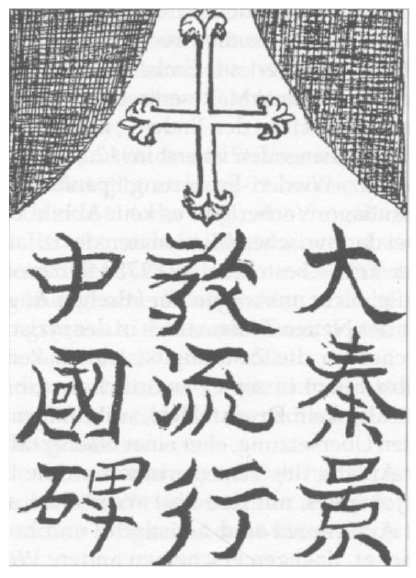
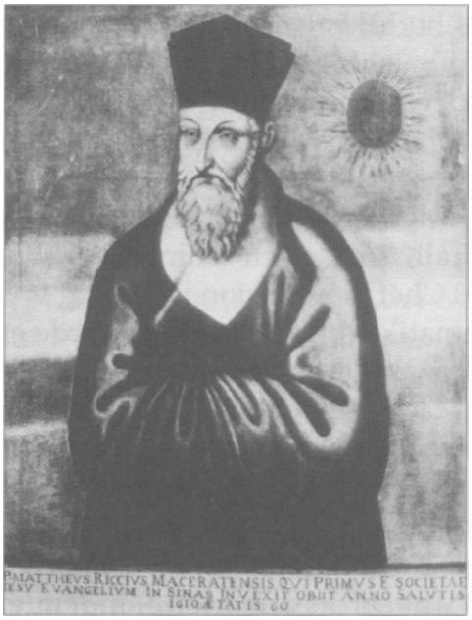
|
|
|
Sources
[web01] https://de.wikipedia.org/wiki/Gottfried_Wilhelm_Leibniz
[web02] https://media.ctsfw.edu/Item/GetFullText/4690
[web03] https://de.wikipedia.org/wiki/Xi'an
[web04] https://de.wikipedia.org/wiki/Athanasius_Kircher
[web05] https://de.wikipedia.org/wiki/Nicolas_Trigault
[web06] https://de.wikipedia.org/wiki/Johannes_Schreck
[web07] https://fr.wikipedia.org/wiki/Stanislas_Julien
[web08] https://en.wikipedia.org/wiki/Edward_E._Salisbury
[web09] https://fr.wikipedia.org/wiki/Ernest_Renan
[web10] https://de.wikipedia.org/wiki/Johannes_Kepler
[web11] https://de.wikipedia.org/wiki/Martino_Martini
[web12] https://fr.wikipedia.org/wiki/Antoine_Gaubil
[web13] https://fr.wikipedia.org/wiki/Philippe_Couplet
[web14] https://fr.wikipedia.org/wiki/Jean_de_Launoy
[web15] https://en.wikipedia.org/wiki/Jean_de_Launoy
[web16] https://de.wikipedia.org/wiki/Paläografie
[web17] https://de.wikipedia.org/wiki/De_civitate_Dei
[web18] https://de.wikipedia.org/wiki/Piccolomini
[web19] https://de.wikipedia.org/wiki/Leopold_von_Ranke
[web20] https://de.wikipedia.org/wiki/Johann_Joachim_Winckelmann
[web21] https://de.wikipedia.org/wiki/Tartu
[web22] https://de.wikipedia.org/wiki/Abtei_Tongerlo