Kontakt / contact     Hauptseite / page
                    principale / pagina principal / home     zurück / retour / indietro / atrás / back
<<       >>

Encyclopaedia Judaica

Jews in Lithuania 02: WW I - Belorussian Lithuania - Polish Lithuania - State of Lithuania 1919-1939

Expulsion of Jews - Jews in Belorussian and in Polish parts of Lithuania 1919-1939 - schooling - discrimination of Jews and dictatorship in independent Lithuania - emigration and nationalism

Encyclopaedia Judaica (1971): Lithuania,
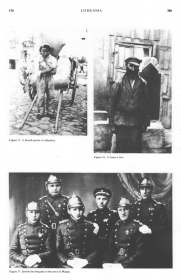
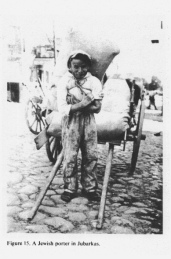
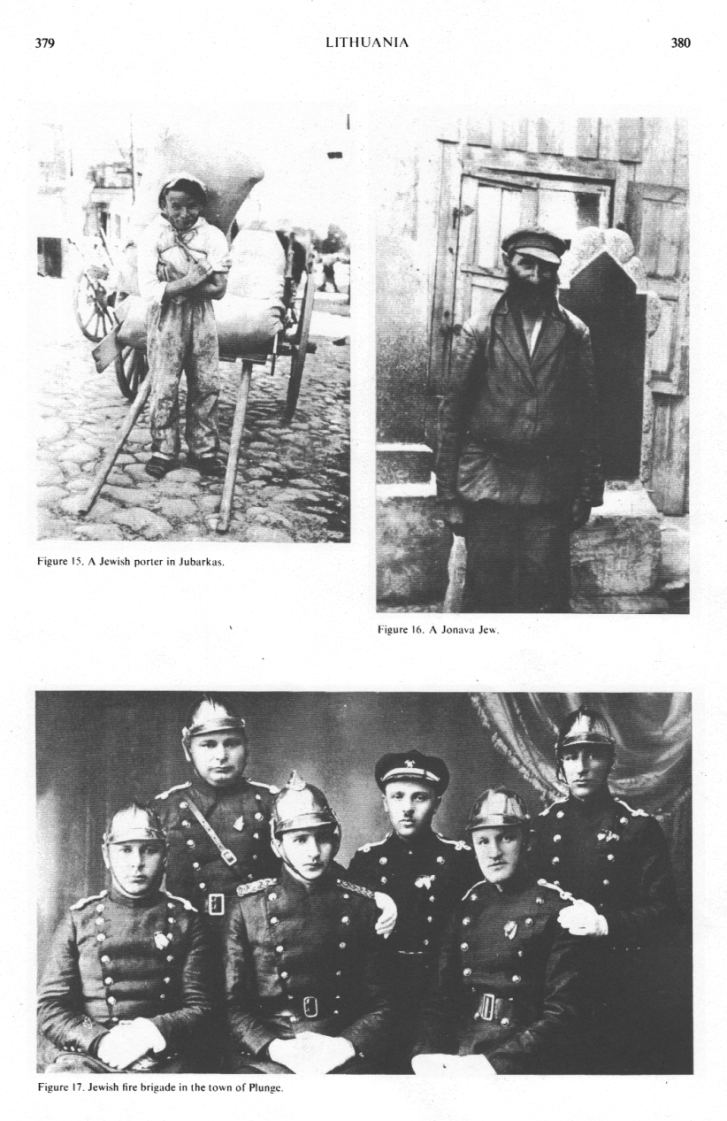
                          vol. 11, col. 379-380, photo 1: a Jewish
                          porter in Jubarkas with hand car
Encyclopaedia Judaica (1971): Lithuania, vol. 11, col. 379-380, photo 1: a Jewish porter in Jubarkas with hand car
Encyclopaedia Judaica (1971):
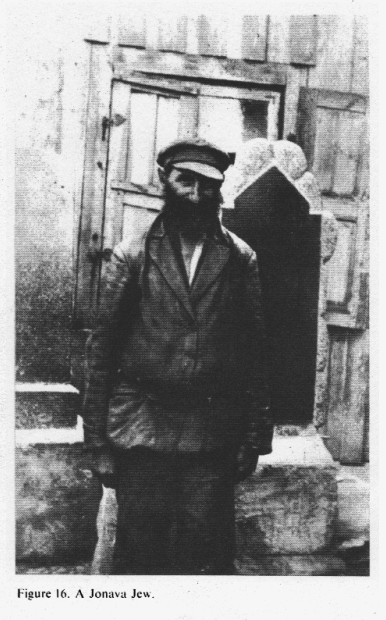
                            Lithuania, vol. 11, col. 379-380, photo 2: a
                            Jonava Jew
Encyclopaedia Judaica (1971): Lithuania, vol. 11, col. 379-380, photo 2: a Jonava Jew
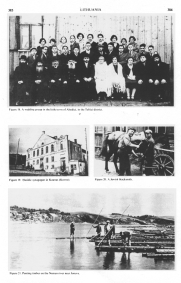
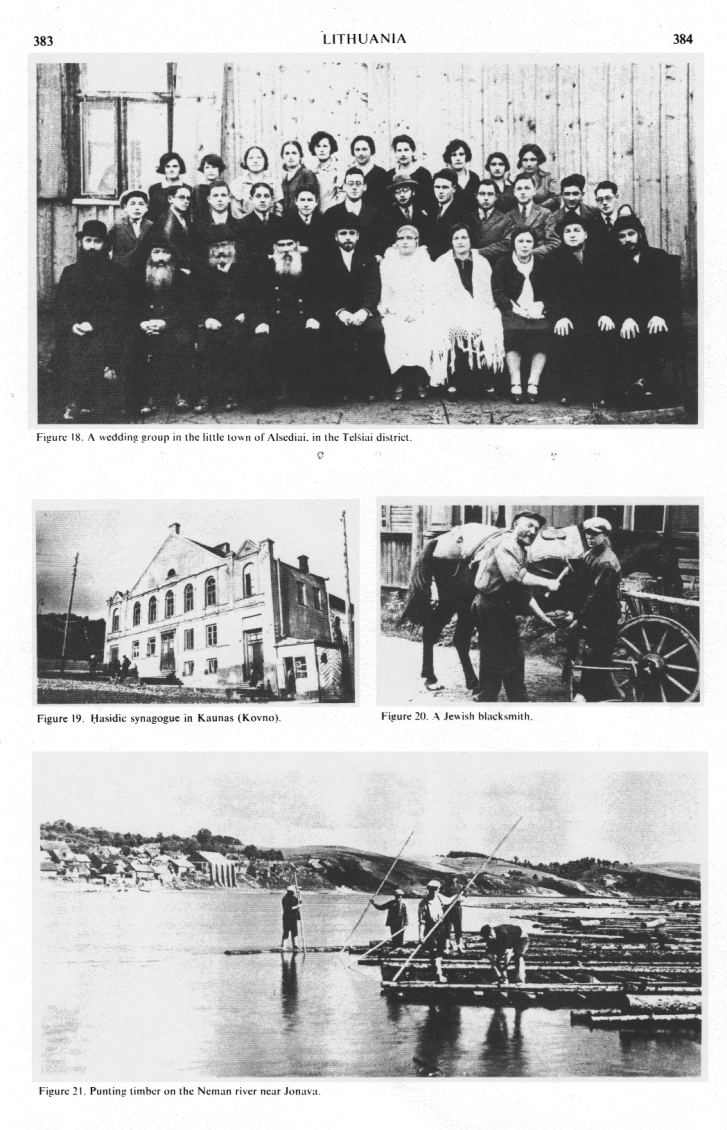
Encyclopaedia Judaica (1971):
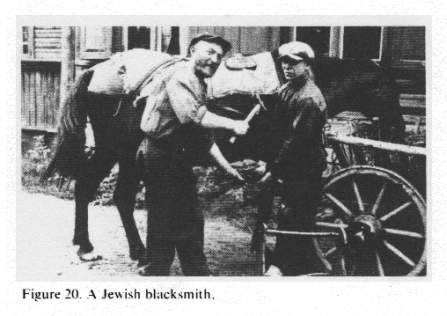
                            Lithuania, vol. 11, col. 383-384, photo 3, a
                            Jewish blacksmith
Encyclopaedia Judaica (1971): Lithuania, vol. 11, col. 383-384, photo 3, a Jewish blacksmith

from: Lithuania; In: Encyclopaedia Judaica 1971, vol. 11

presented by Michael Palomino (2008)

Teilen / share:

Facebook


[First World War: expulsion of the Jews]

Lithuanian Jewry was particularly oppressed during World War I. The attitude of the Russian military authorities toward the Jews was one of suspicion and hostility; rumors were spread that they were traitors, and the army therefore perpetrated pogroms against them. In the spring of 1915 expulsions of Jews from the provinces of *Suwalki, Kovno (*Kaunas), *Courland, and *Grodno began. During the fall of the same year, northern and western Lithuania were occupied by the German army. The population suffered from lack of food and unemployment. Limited aid arrived from the Jews of Germany and the United States and a ramified Jewish assistance organization was set up (col. 361)

Lithuanian Jewry was severely affected by World War I and the revolutions and border changes which ensued, bringing dissolution and economic and spiritual chaos. When the Jews were expelled from Kovno province, many communal leaders and activists there left for the interior of Russia, where they continued their activities (col. 372).

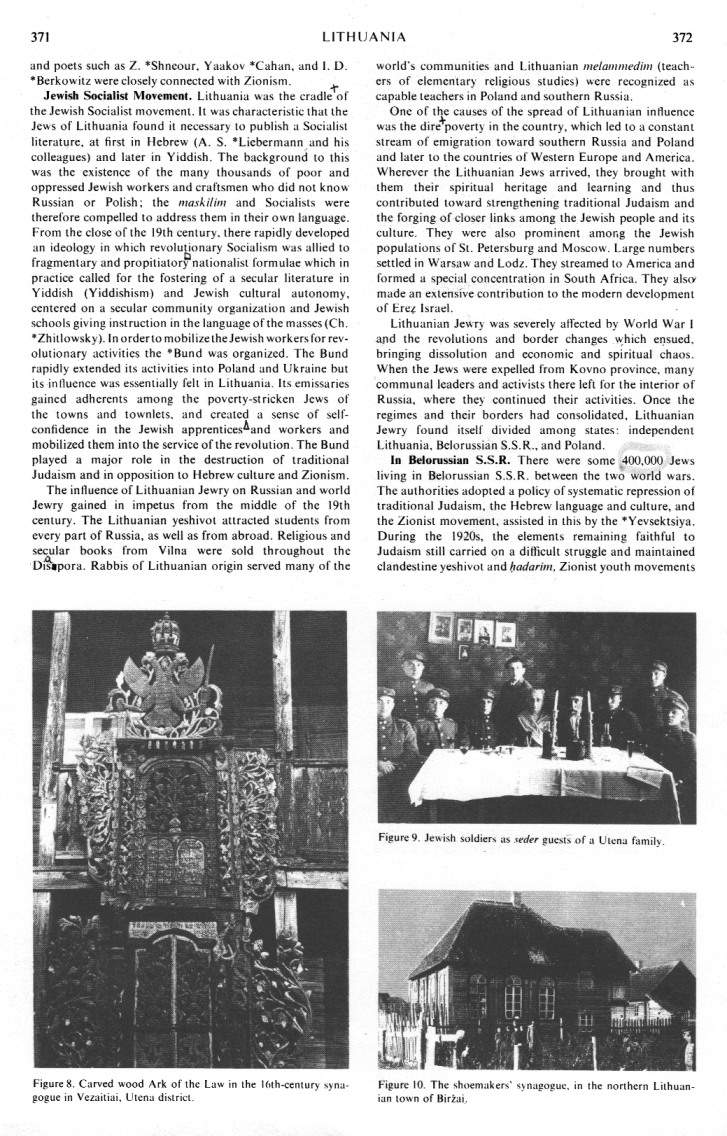
[[see also: Joint]]. A network of Hebrew and Yiddish schools, including secondary schools, was established [[by racist Zionist organizations]].

[Split Lithuania since 1919]

After the end of World War I, a considerable number of refugees returned to their former places of residence. Lithuanian Jewry was henceforward divided among three states: independent Lithuania, Belorussian S.S.R. (see *Belorussia), and Poland. (col. 361)

Once the regimes and their borders had consolidated, Lithuanian Jewry found itself divided among states: independent Lithuania, Belorussian S.S.R., and Poland. (col. 372)

In Belorussian S.S.R. [Communist sovietization against Hebrew and against racist Zionism]

There were some 400,000 Jews living in Belorussian S.S.R. between the two world wars. The authorities adopted a policy of systematic repression of traditional Judaism, the Hebrew language and culture, and the [[racist]] Zionist movement, assisted in this by the *Yevsektsiya. During the 1920s, the elements remaining faithful to Judaism still carried on a difficult struggle and maintained clandestine yeshivot [[religious Torah schools]] and hadarim (ḥadarim) [[small Jewish schools]].

[[Racist]] Zionist youth movements (col. 372)

and *Hehalutz (Heḥalutz) organizations. The Jewish Communists endeavored to provide a substitute for Jewish culture. In Belorussia there even existed a trend among the Yevsektsiya which attempted to consolidate the national position of the Jews in this region by promoting Yiddish schools. Jewish publishing houses and newspapers, and the establishment of a higher institute for Jewish studies in Minsk which engaged in research on the history of the Jews in Lithuania, their dialect, and their popular culture. These experiments flickered out and were liquidated during the 1930s because the [[communist]] authorities did not support them and the Jewish masses were indifferent to them.

[[The Jewish masses did not want to be torn into another World War with the Arabs in the Middle East by the racist and fanatical Zionists]].

In Poland. [Hebrew schooling, Yiddish schooling, Torah schooling and racist Zionist movement allowed]

[[Vilna was part of Poland 1919-1940 and not part of Lithuania]].

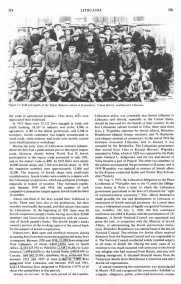
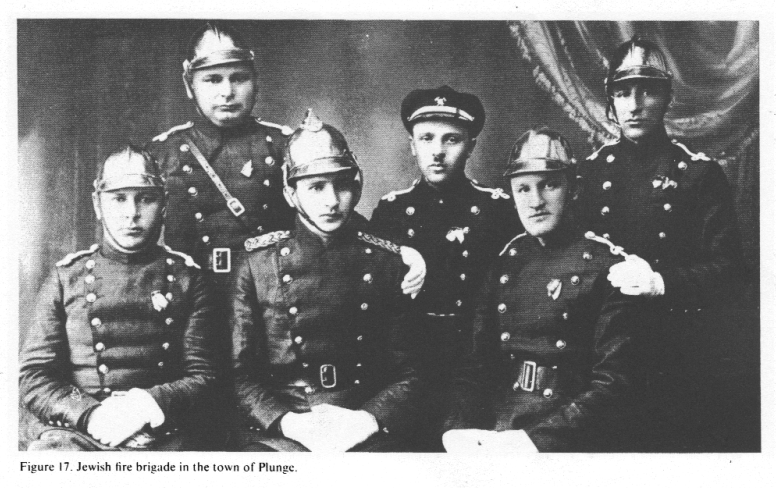
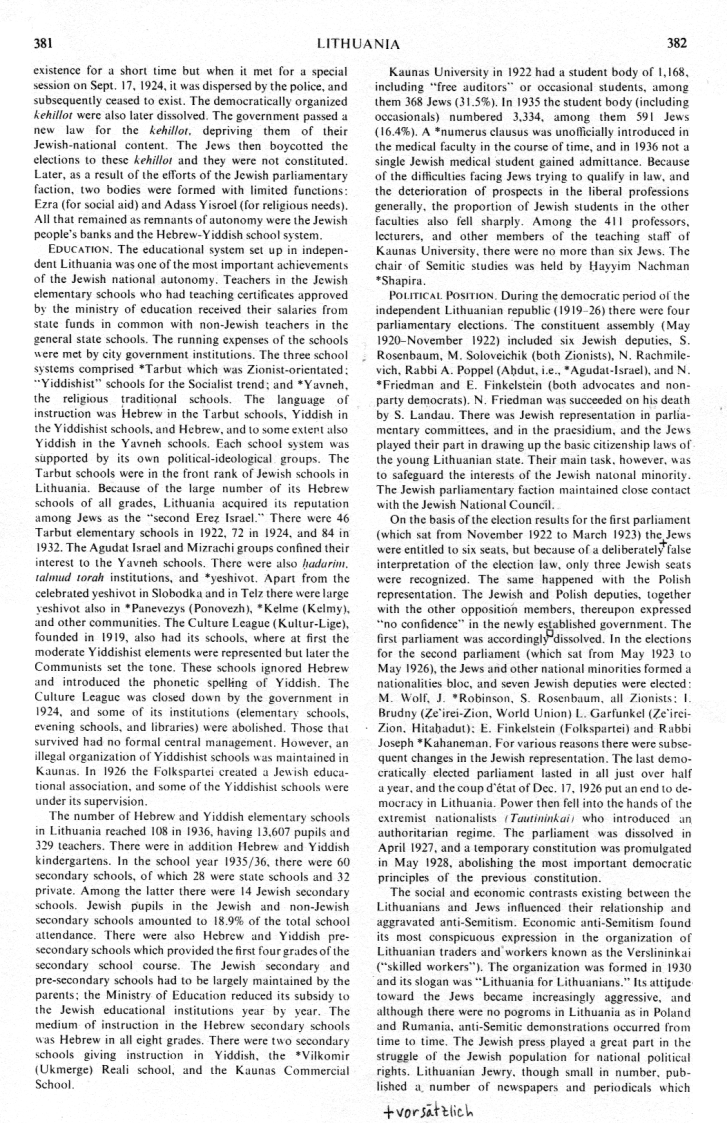
Encyclopaedia Judaica (1971): Lithuania, vol. 11,
                  col. 379-380, photo 3: Jewish fire brigade in the town
                  of Plunge
Encyclopaedia Judaica (1971): Lithuania, vol. 11, col. 379-380, photo 3: Jewish fire brigade in the town of Plunge

After World War I the majority of the former Lithuanian Jews came within the boundaries of newly independent *Poland on the border strip extending from the north of Vilna to the Polesye marshes. They continued to develop independent cultural activities in every sphere. Yeshivot florished in this region (among them, the great yeshivah of *Mir with its hundreds of students, and those of Radun, *Slonim, *Lomza, *Kletsk, etc.). Hebrew schools including secondary schools and excellent training colleges for teachers, founded by the *Tarbut organization were concentrated there.

The network of Yiddish schools of the *Central Yiddish School Organization (CYSHO) was also developed in this area, and in 1925 the Institute for Jewish Research (Yiddisher Visenshaftlicher Institut), *YIVO) was founded in Vilna. It became a world center for research into the Yiddish language and the history of the Jews and their culture in Eastern Europe. The Vilna theatrical company (Di Vilner Trupe) was established and a Yiddish press and literature florished (the Yung Vilner group of poets included Chaim *Grade and A. *Suzkever).

[Sovietization and destruction of the Jewish institutions]

The [[racist]] Zionist and pioneer youth movement expanded in this region. When both independent and Polish Lithuania were annexed by Russia in 1939-40, the Jewish institutions were rapidly liquidated. The German invasion of June 1941 brought the physical annihilation of Lithuanian Jewry.

[Y.S.]

[[The flight movements of 1939-1941 are not mentioned, the Stalin deportations 1940-1941 and the Big Flight from Barbarossa before June 1941 are later mentioned in the article]].

In independent Lithuania. [The Vilna congress and the Jews 1917-1939 - Jewish nationalism in Lithuania]

About a year before the end of World War I, on Sept. 18-23, 1917, precisely two years after the capture of Vilna by the Germans, the Lithuanians were given permission by the German occupation force to hold a congress in Vilna to consider the future political fate of Lithuania. The congress put forward the demand for an independent Lithuanian state within its ethnographic boundaries with Vilna as the capital.

The Vilna congress (col. 373)

also elected a national council. Lietuvos Taryba, which on Feb. 16, 1918, proclaimed Lithuania an independent state. The Germans maintained their occupation of Lithuania until the end of 1918.

POPULATION.

According to the census held on Sept. 17, 1923, the Jewish population numbered 153,743 (7.5% of the total), and was the largest national minority. They formed just under one-third of the total population of the larger towns, 28.7% of the small-town population, and only 0.5% of the village inhabitants. In the following five towns the census showed the Jewish population to be:

Table 1 [Jewish population in town of the State of Lithuania in 1923]

Jewish population
% total population
Kaunas (Kovno)
25,044xxxxxxxxxxxxx
27.1%
Panevezys (Ponevezh)
6,845xxxxxxxxxxxxx 35.6%
Siauliai (Shavli)
5,338xxxxxxxxxxxxx 24.9%
Ukmerge (Vilkomir)
3,885xxxxxxxxxxxxx 37.5%
Vilkaviskis (Volkovyshki)
3,206xxxxxxxxxxxxx 44.1%
from: Lithuania; In: Encyclopaedia Judaica 1971, vol. 11, col. 374

[Jews in Memel (Klaipeda)]

In *Memel (Klaipeda), which with its district belonged to Lithuania from 1923 to 1939 as an autonomous region, there were 2,470 Jews in 1929. Their number in the Memel region rose as a result of migration from other parts of Lithuania. At the beginning of 1939, shortly before the seizure of Memel by Germany, the territory had about 9,000 Jewish inhabitants.

[Jews in the State of Lithuania in 1937]

Statistics of 1937 show 157,527 Jews (75,538 males, 81,989 females; or 98% of the total) as having declared their nationality as Jewish, an indicator of the strength of Jewish consciousness among the Jews of Lithuania and the slight influence of assimilation.

Jews mainly spoke Yiddish among themselves, but a number of professional intelligentsia used Russian. Although in time practically all Jews were able to speak Lithuanian, this did not become their regular spoken language.

[Professions of the Jews in the State of Lithuania 1919-1939 - the national policy with privileged Lithuanian cooperatives against Jewish business positions]

ECONOMIC POSITION.

The agrarian reforms which the Lithuanian constituent assembly adopted in 1922 also affected the few Jewish owners of farms of over 80 hectares in extent. The Lithuanian government, however, did little to satisfy the claims of Jews who had any rights to the ownership of land. The agrarian reforms only partly satisfied the land hunger of the poor peasants, and in addition to emigration abroad there was also a considerable migration from the rural districts to the towns. This general process of urbanization came into conflict with the long-established economy of the Jewish inhabitants of the town and stetl.

In this growing economic competition, the administration of the young Lithuanian republic actively took the part of the Lithuanians. To develop agrarian economy, the government assisted in the formation of cooperatives, which accumulated control of the entire export trade, including (col. 374)

the trade in agricultural products. Thus many Jews were deprived of their livelihood.

In 1923 there were 25,132 Jews engaged in trade and credit banking, 18,107 in industry and crafts, 4,996 in agriculture, 4,180 in the liberal professions, and 2,348 in transport. Jewish commerce was largely concentrated in small trade, while industry and crafts were mainly carried on in small factories or workshops.

During the early years of Lithuanian national independence the Jews had a predominant part in the export-import trade. However, shortly before World War II Jewish participation in the export trade amounted to only 20%, and in the import trade to 40%. In 1923 there were nearly 14,000 Jewish shops and 2,160 non-Jewish shops; in 1936 the respective numbers were approximately 12,000 and 10,200. The majority of Jewish shops were small-scale establishments. Jewish traders were unable to compete with the Lithuanian cooperatives, which enjoyed great privileges especially in respect of taxation [[policy of anti-Semitism]]. They increased rapidly and, between 1919 and 1925, the number of such competitive enterprises ranged against Jewish trade doubled in number.

About one-third of the Jews earned their livelihood in crafts. There were Jews also in the professions, but their numbers continually decreased, and their places were taken by Lithuanians. At the beginning of 1931 there were 88 Jewish cooperative people's banks having more than 20,000 members and functioning in conjunction with an association of Jewish people's banks. The Jewish people's banks owned a portion of the working capital of the central bank for the support of Jewish cooperatives.

[Jewish emigration movements from independent Lithuania 1919-1939]

EMIGRATION.

Both open and unofficial measures aiming at ousting Jews from their economic positions led many Jews to emigrate. Between 1928 and 1939, 13,898 Jews emigrated from Lithuania, of whom

-- 4,860 (35%) went to South Africa
-- 3,541 (25.5%) to Palestine
-- 2,548 (18.3%) to Latin America
-- 1,499 (10.8%) to the United States
-- 648 (4.6%) to Canada
-- and 602 (5.8%) elsewhere.

It is estimated that between 1923 and 1927 at least 6,000 to 7,000 Jews emigrated from Lithuania, and between 1919 and 1941, 9,241 Lithuanian Jews emigrated to Palestine (3.07% of all those who settled there in that period).

[Jewish deputies, Jewish organizations and Jewish nationalism in the State of Lithuania]

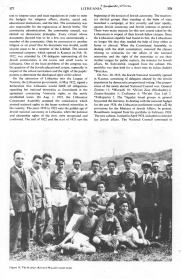
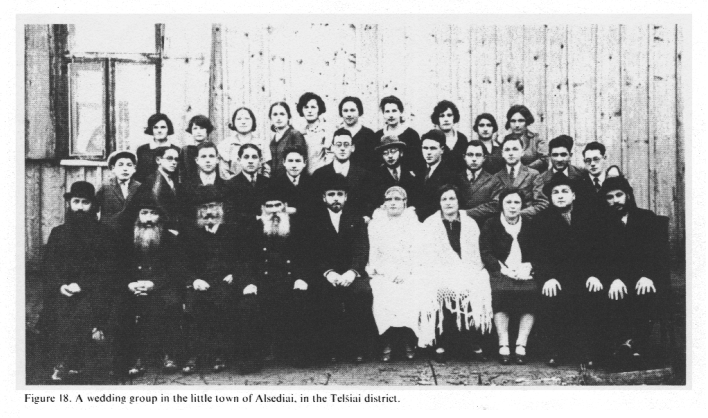
Encyclopaedia Judaica (1971): Lithuania,
                          vol. 11, col. 383-384, photo 1: a wedding
                          group in the little town of Alsediai, in the
                          Telsiai (Tel¹iai) district
Encyclopaedia Judaica (1971): Lithuania, vol. 11, col. 383-384, photo 1: a wedding group in the little town of Alsediai, in the Telsiai (Tel¹iai) district
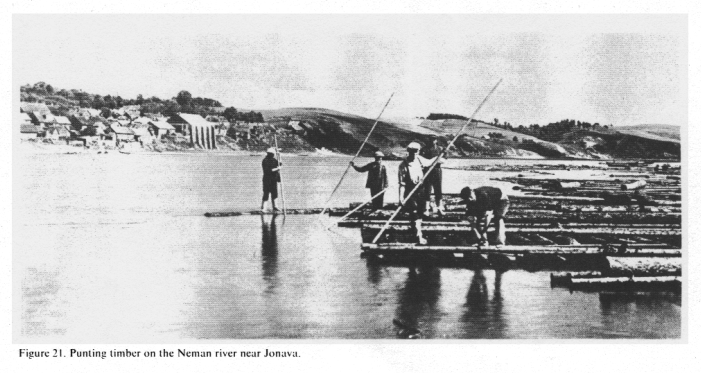
Encyclopaedia Judaica (1971): Lithuania,
                          vol. 11, col. 383-384, photo 4, punting timber
                          on the Neman river near Jonava
Encyclopaedia Judaica (1971): Lithuania, vol. 11, col. 383-384, photo 4, punting timber on the Neman river near Jonava


JEWISH AUTONOMY.

In the early period of the republic, (col. 375)

Lithuanian policy was concerned that Jewish influence in Lithuania and abroad, especially in the United States, should be exercised for the benefit of their country. In the first Lithuanian cabinet formed in Vilna, there were three Jews. J. Wygodsky (minister for Jewish affairs), Shimshon Rosenbaum (deputy foreign minister), and N. Rachmilevich (deputy minister of commerce). At the end of 1918 the Germans evacuated Lithuania, and in January it was occupied by the Bolsheviks. The Lithuanian government then moved from Vilna to Kaunas (Kovno). Wigodsky remained in Vilna, which in 1920 was captured by the Poles under General L. Zeligowski, and the city and district of Vilna became a part of Poland. The other two members of the cabinet accompanied the government to Kaunas, and in 1919 Wygodsky was replaced as minister of Jewish affairs by the Kaunas communal leader and [[racist]] Zionist Max Soloveichik (*Solieli).

On Aug. 5, 1919, the Lithuanian delegation to the Peace Conference at *Versailles sent to the *Comité des Délégations Juives [[Jewish Delegations Committee]] in Paris a letter in which the Lithuanian government guaranteed to the Jews of Lithuania the "right of national-cultural autonomy". This official declaration made possible the rise and development in Lithuania of institutions of Jewish national autonomy. As a result there arose a widespread system of legally recognized *communities (kehillot).

On Jan. 5, 1920, the first communal conference was held in Kaunas with the participation of 141 delegates. A Jewish National Council was appointed and given the task, in conjunction with the Ministry of Jewish Affairs, of administering the Jewish autonomous institutions. Shimshon Rosenbaum was elected head of the Jewish National Council. The minister for Jewish affairs received directives from the National Council and was responsible to it.

The National Council conducted widely ramified activity in all areas of Jewish life. During the early years of its existence it was much occupied with assistance to the Jewish war refugees who had returned from Russia, and also with helping immigrants. It obtained financial means from the *American Jewish Joint Distribution Committee and other Jewish aid organizations [[with their centers and collections in the racist "United States"]].

[The community law - the Jewish community in the State of Lithuania 1919-1922 under autonomy law]

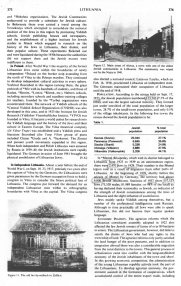
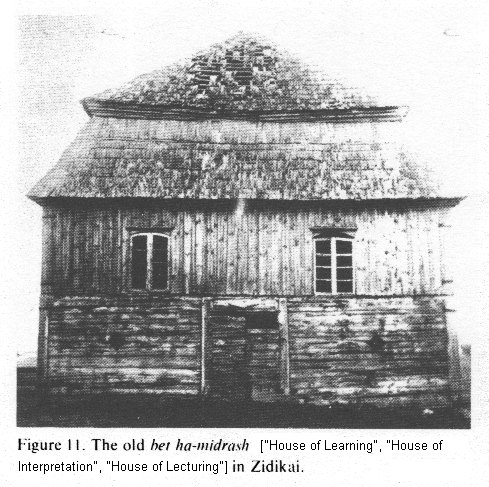
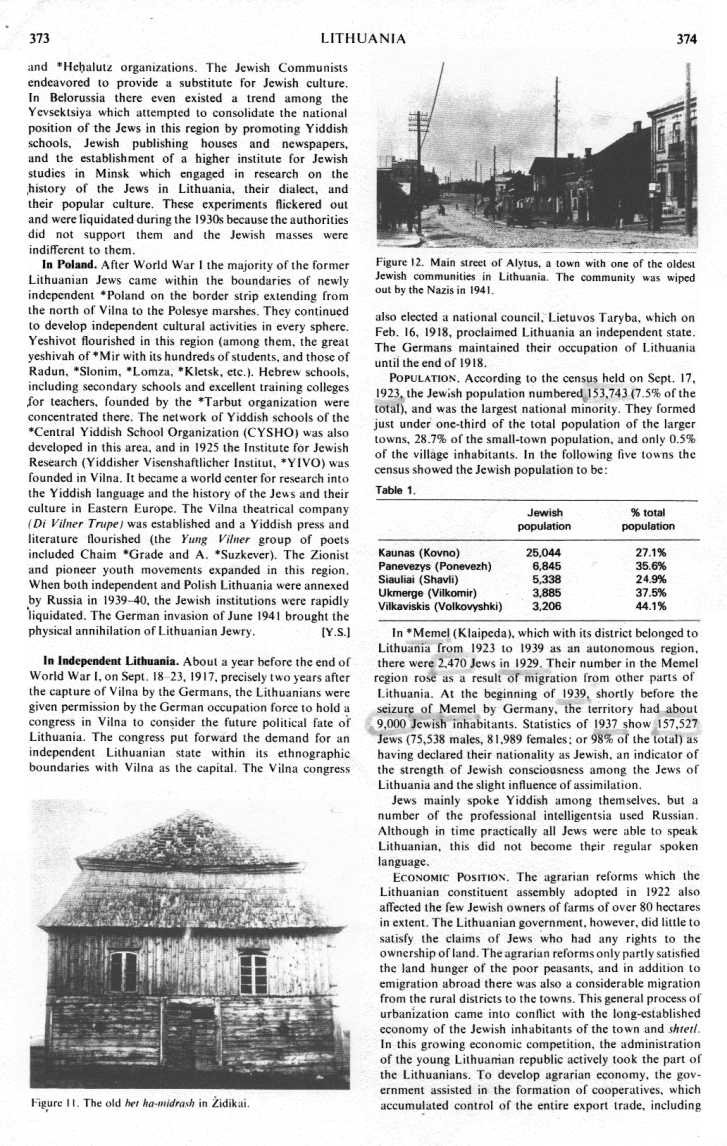
Encyclopaedia Judaica (1971): Lithuania,
                          vol. 11, col. 373-374, photo 1: The old bet
                          ha-midrash in Zidikai (®idikai)
Encyclopaedia Judaica (1971): Lithuania, vol. 11, col. 373-374, photo 1: The old bet ha-midrash in Zidikai (®idikai)
Encyclopaedia Judaica (1971): Lithuania,
                          vol. 11, col. 373-374, photo 2: main street of
                          Alytus, a town with one of the oldest Jewish
                          communities in Lithuania. The community was
                          wiped out by the Nazis [[and their
                          collaborators]] in 1941
Encyclopaedia Judaica (1971): Lithuania, vol. 11, col. 373-374, photo 2: main street of Alytus, a town with one of the oldest Jewish communities in Lithuania. The community was wiped out by the Nazis [[and their collaborators]] in 1941

A statute concerning the communities was promulgated in March 1920 and recognized the community (kehillah) as a regular, obligatory, public, authorized institution, competent (col. 376)

to impose taxes and issue regulations in order to meet the budgets for religious affairs, charity, social aid, educational institutions, and the like. The community was also responsible for the registration of Jewish births. The community administration, the community council, was elected on democratic principles. Every citizen whose documents showed him to be a Jew was automatically a member of the community. Only by conversion to another religion or on proof that his document was invalid, could anyone cease to be a member of the kehillah.

The second communal congress, which opened in Kaunas on Feb. 14, 1922, was attended by 130 delegates representing all the Jewish communities in the towns and small towns in Lithuania. One of the focal problems of the congress was the question of the Jewish educational system, especially in respect of the school curriculum and the right of the pupils' parents to determine the ideological spirit of the school.

On the admission of Lithuania into the League of Nations, the Lithuanian government, in May 1922, signed a declaration that Lithuania would fulfill all obligations regarding her national minorities as formulated in the agreement concerning *minority rights in the newly established states. On Aug. 1, 1922, the Lithuanian Constituent Assembly accepted the constitution which assured national rights to the larger national minorities in the country.

The years 1919 to 1922 were the golden age of Jewish national autonomy in Lithuania, when the political and citizenship right of the Jews were recognized and confirmed. (col. 377)

[Restriction of autonomy law since 1923]

The end of 1922 and the start of 1923 saw the (col. 377)

beginning of the erosion of Jewish autonomy. The reactionary clerical groups then standing at the helm of state launched a campaign, at first covertly and later openly, against Jewish autonomy and Jewish interests in general. There were many reasons for this new course taken by the Lithuanians in respect of their Jewish fellow citizens. Once the Lithuanian republic had found its feet, the Lithuanians no longer felt that they needed the help of Jews either at home or abroad. When the Constituent Assembly, in dealing with the draft constitution, removed the clauses relating to ministries for the affairs of the national minorities and the right of the minorities to use their mother tongue for public matters, the minister for Jewish affairs, M. Soloveichik, resigned from the cabinet. His portfolio was then held for a short time by Julius (Judah) *Brutzkus.

[The Jewish National Council of 1923]

On Nov. 20, 1923, the Jewish National Assembly opened in Kaunas, consisting of delegates elected by the Jewish population by democratic proportional voting. The composition of the newly elected National Council was:

-- General [[racist]] Zionists 11
-- *Mizrachi 10
-- *Ze'irei Zion (Hitahadut, Hitaḥadut) 6
-- Zionist-Socialist 5
-- Craftsmen 4
-- *Po'alei Zion Left 2
-- *Folkspartei 2.

The *Agudat Israel groups in general boycotted the elections.

[Financial restrictions since 1924 - cabinet without minister for Jewish affairs - Jewish National Council dispersed - Jewish congregations dissolved and de-nationalized - banks and schools remain]

In dealing with the national budget for the year 1924, the Lithuanian parliament struck out the provisions for the Ministry of Jewish Affairs. In protest, Rosenbaum resigned from his portfolio in February 1924. The new cabinet, formed in April 1924, included no minister for Jewish affairs. The National Council continued in (col. 378)

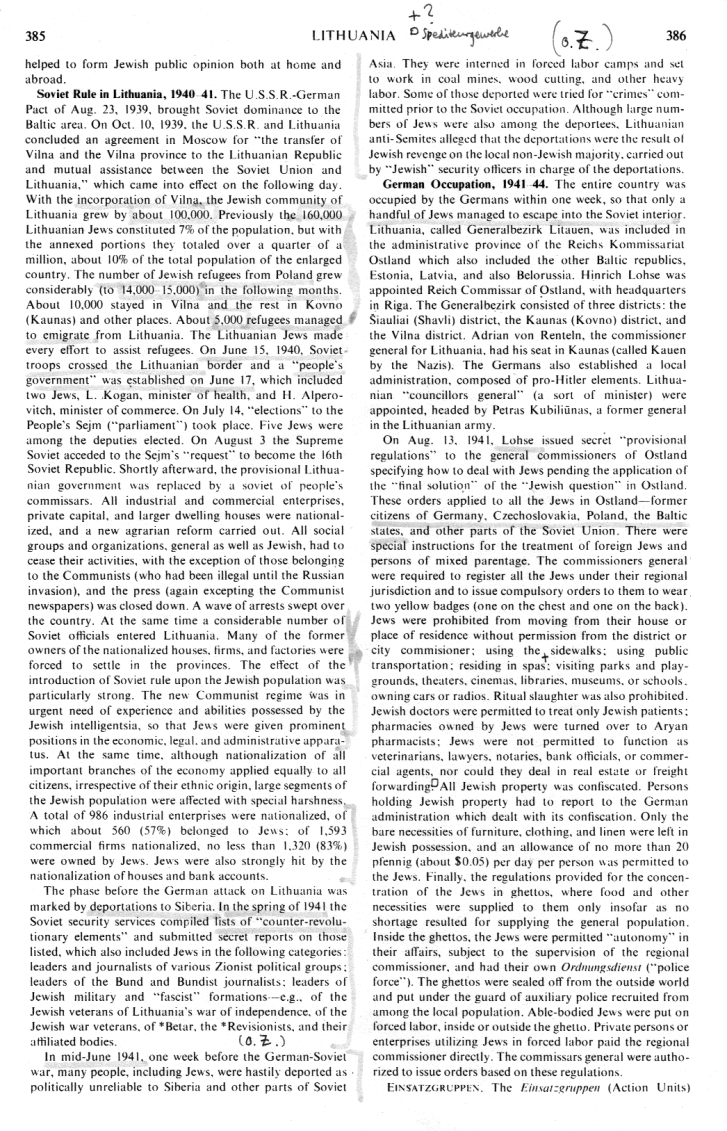
existence for a short time but when it met for a special session on Sept. 17, 1924, it was dispersed by the police, and subsequently ceased to exist. The democratically organized kehillot [[congregations]] were also later dissolved. The government passed a new law for the kehillot, depriving them of their Jewish-national content. The Jews then boycotted the elections to these kehillot and they were not constituted.

Later, as a result of the efforts of the Jewish parliamentary faction, two bodies were formed with limited functions: Ezra (for social aid) and Adass Yisroel (for religious needs). All that remained as remnants of autonomy were the Jewish people's banks and the Hebrew-Yiddish school system.

[Jewish schools in independent Lithuania]

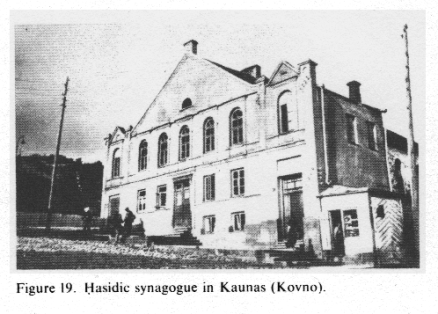
Encyclopaedia Judaica (1971): Lithuania, vol. 11,
                  col. 383-384, photo 2: hasidic (ḥasidic) synagogue in
                  Kaunas (Kovno)
Encyclopaedia Judaica (1971): Lithuania, vol. 11, col. 383-384, photo 2: hasidic (ḥasidic) synagogue in Kaunas (Kovno)

EDUCATION.

The educational system set up in independent Lithuania was one of the most important achievements of the Jewish national autonomy. Teachers in the Jewish elementary schools who had teaching certificates approved by the ministry of education received their salaries from state funds in common with non-Jewish teachers in the general state schools. The running expenses of the schools were met by city government institutions. The three school systems comprised

-- *Tarbut which was [[racist]] Zionist-orientated
-- "Yiddishist" schools for the Socialist trend
-- and *Yavneh, the religious traditional schools.

The language of instruction was Hebrew in the Tarbut schools, Yiddish in the Yiddishist schools, and Hebrew, and to some extent also Yiddish in the Yavneh schools. Each school system was supported by its own political-ideological groups. The Tarbut schools were in the front rank of Jewish schools in Lithuania. Because of the large number of its Hebrew schools of all grades, Lithuania acquired its reputation among Jews as the "second Erez Israel" (Ereẓ Israel).

There were 46 Tarbut elementary schools in 1922, 72 in 1924, and 84 in 1932. The Agudat Israel and Mizrachi groups confined their interest to the Yavneh schools. There were also hadarim [[small Jewish schools]], talmud torah institutions, and *yeshivot [[religious Torah schools]]. Apart from the celebrated yeshivot in Slobodka and in Telz there were large yeshivot also in "Panevezys (Ponovezh), *Kelme (Kelmy), and other communities. The Culture Leage (Kultur-Lige), founded in 1919, also had its schools, where at first the moderate Yiddishist elements were represented but later the Communists set the tone. These schools ignored Hebrew and introduced the phonetic spelling of Yiddish.

The Culture League was closed down by the government in 1924, and some of its institutions (elementary schools, evening schools, and libraries) were abolished. Those that survived had no formal central management. However, an illegal organization of Yiddishist schools was maintained in Kaunas. In 1926 the Folkspartei created a Jewish educational association, and some of the Yiddishist schools were under its supervision.

The number of Hebrew and Yiddish elementary schools in Lithuania reached 108 in 1936, having 13,607 pupils and 329 teachers. There were in addition Hebrew and Yiddish kindergartens. In the school year 1935 / 36, there were 60 secondary schools, of which 28 were state schools and 32 private. Among the latter there were 14 Jewish secondary schools.

Jewish pupils in the Jewish and non-Jewish secondary schools amounted to 18.9% of the total school attendance. There were also Hebrew and Yiddish pre-secondary schools which provided the first four grades of the secondary school course.

The Jewish secondary and pre-secondary schools had to be largely maintained by the parents; the Ministry of Education reduced its subsidy to the Jewish educational institutions year by year. The medium of instruction in the Hebrew secondary schools was Hebrew in all eight grades. There were two secondary schools giving instruction in Yiddish, the *Vilkomir (Ukmerge) Reali school, and the Kaunas Commercial School. (col. 381)

[Jews at Kaunas University 1922-1939 - unofficial numerus clausus in medicine studies]

Kaunas University in 1922 had a student body of 1,168, including "free auditors" or occasional students, among them 368 Jews (31.5%). In 1935 the student body (including occasionals) numbered 3,334, among them 591 Jews (16.4%). A *numerus clausus was unofficially introduced in the medical faculty in the course of time, and in 1936 not a single Jewish medical student gained admittance. Because of the difficulties facing Jews trying to qualify in law, and the deterioration of prospects in the liberal professions generally, the proportion of Jewish students in the other faculties also fell sharply. Among the 411 professors, lecturers, and other members of the teaching staff of Kaunas University, there were no more than six Jews. The chair of Semitic studies was held by Hayyim Nachman *Shapira.

[Jewish deputies - Lithuanian tricks against Jewish and Polish delegates 1919-1926]

POLITICAL POSITION.

During the democratic period of the independent Lithuanian republic (1919-26) there were four parliamentary elections. The constituent assembly (May 1920-November 1922) included six Jewish deputies,

-- S. Rosenbaum
-- M. Soloveichik (both [[racist]] Zionists)
-- N. Rachmilevich
-- Rabbi A. Poppel (Ahdut (Aḥdut), i.e., *Agudat-Israel)
-- and N. *Friedman
-- and E. Finkelstein (both advocates and non-party democrats).

N. Friedman was succeeded on his death by S. Landau. There was Jewish representation in parliamentary committees, and in the praesidium, and the Jews played their part in drawing up the basic citizenship laws of the young Lithuanian state. Their main task, however, was to safeguard the interests of the Jewish national minority. The Jewish parliamentary faction maintained close contact with the Jewish National Council.

On the basis of the election results for the first parliament (which sat from November 1922 to March 1923) the Jews were entitled to six seats, but because of a deliberately [[planned and wanted]] false interpretation of the election law, only three Jewish seats were recognized. The same happened with the Polish representation. The Jewish and Polish deputies, together with the other opposition members, thereupon expressed "no confidence" in the newly established government.

The first parliament was accordingly [[in the consequence]] dissolved. In the elections for the second parliament (which sat from May 1923 to May 1926), the Jews and other national minorities formed a nationalities bloc, and seven Jewish deputies were elected:

-- M. Wolf
-- J. *Robinson
-- S. Rosenbaum, all [[racist]] Zionists
-- I. Brudny (Ze'irei-Zion (Ẓe'irei-Zion), World Union)
-- L. Garfunkel (Ze'irei-Zion (Ẓe'irei-Zion), Hitahadut (Hitaḥadut)
-- E. Finkelstein (Folkspartei)
-- and Rabbi Joseph *Kahaneman.

For various reasons there were subsequent changes in the Jewish representation. The last democratically elected parliament lasted in all just over half a year, and the coup d'état of Dec. 17, 1926 put an end to democracy in Lithuania. Power then fell into the hands of the extremist nationalists (Tautininkai) who introduced an authoritarian regime.

[Dictatorship and anti-Semitism in independent Lithuania 1926-1939]

The parliament was dissolved in April 1927, and a temporary constitution was promulgated in May 1928, abolishing the most important democratic principles of the previous constitution.

The social and economic contrasts existing between the Lithuanians and Jews influenced their relationship and aggravated anti-Semitism. Economic anti-Semitism found its most conspicuous expression in the organization of Lithuanian traders and workers known as the Verslininkai ("skilled workers"). The organization was formed in 1930 and its slogan was "Lithuania for Lithuanians". [[As the Jewish organizations considered themselves a "Jewish nation" the Jews could easily be attacked by simple nationalism]].

Its attitude toward the Jews [[who were considered a foreign nation]]  became increasingly aggressive, and although there were no pogroms in Lithuania as in Poland and Rumania, anti-Semitic demonstrations occurred from time to time. The Jewish press played a great part in the struggle of the Jewish population for national political rights. Lithuanian Jewry, though small in number, published a number of newspapers and periodicals which (col. 382)

helped to form Jewish public opinion both at home and abroad. (col. 385)

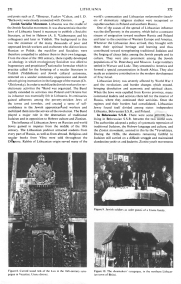
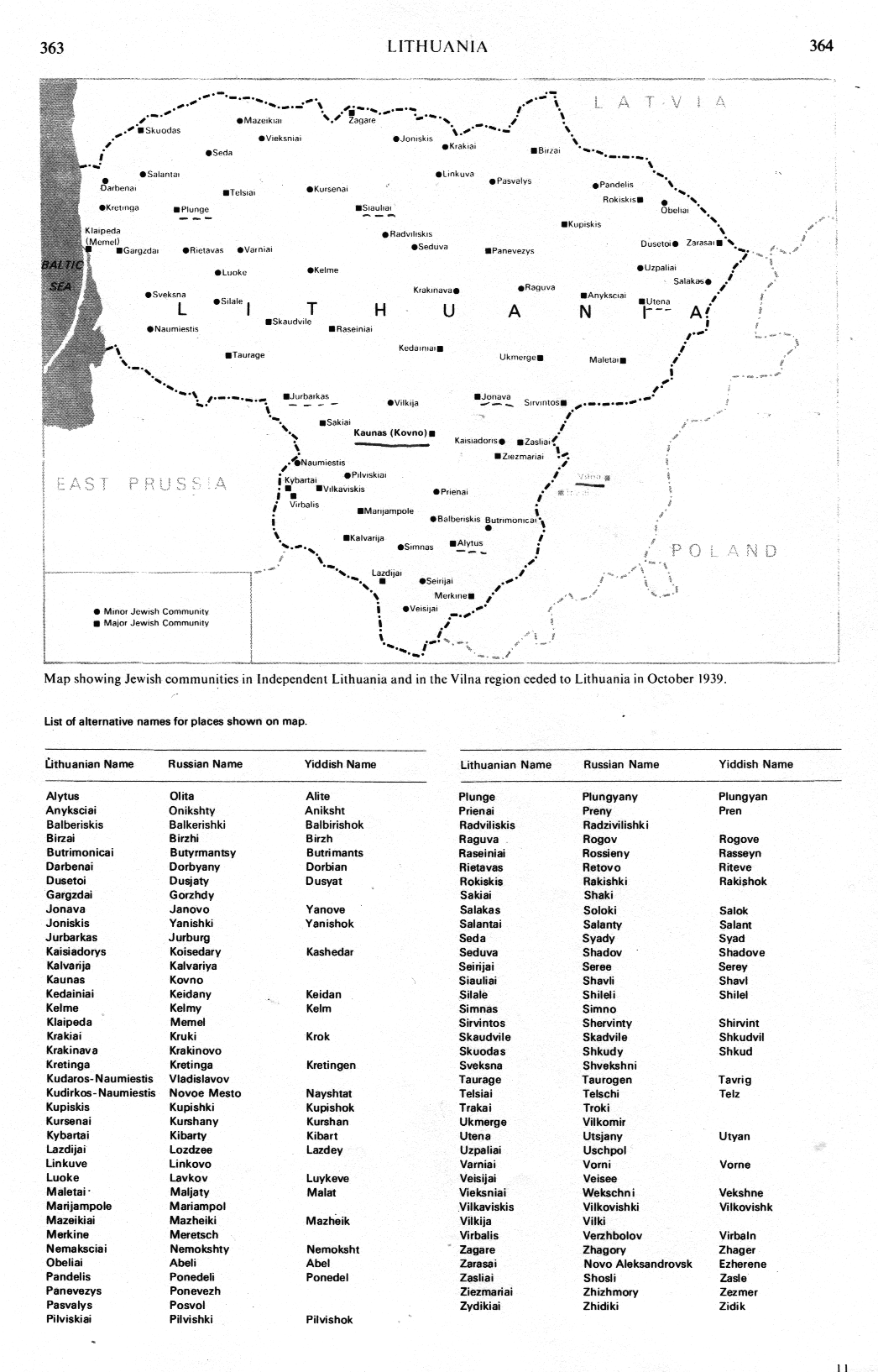
Map showing Jewish communities in Independent LIthuania and in the Vilna region ceded to Lithuania in October 1939
(col. 363-364)

Encyclopaedia Judaica (1971): Lithuania, vol. 11,
                  col. 363-364, map showing Jewish communities in
                  Independent Lithuania and in the Vilna region ceded to
                  Lithuania in October 1939
Encyclopaedia Judaica (1971): Lithuania, vol. 11, col. 363-364, map showing Jewish communities in Independent Lithuania and in the Vilna region ceded to Lithuania in October 1939

List of alternative names for places shown on the map
Lithuanian Name
Russian Name
Yiddish Name
Alytus
Olita
Alite
Anyksciai
Onikshty
Aniksht
Balberiskis
Balkerishki
Balbirishok
Birzai
Birzhi
Birzh
Butrimonicai
Butyrmantsy
Butrimants
Darbenai
Dorbyany
Dorbian
Dusetoi
Dusjaty
Dusyat
Gargzdai
Gorzhdy

Jonava
Janovo
Yanove
Joniskis
Yanishki
Yanishok
Jurbarkas
Jurburg

Kaisiadorys
Koisedary
Kashedar
Kalvanja
Kalvariya

Kaunas
Kovno

Kedainiai
Keidany
Keidan
Kelme
Kelmy
Kelm
Klaibeda
Memel

Krakiai
Kruki
Krok
Krakinava
Krakinovo

Kretinga
Kretinga
Kretingen
Kudaros-Naumiestis
Vladislavov

Kudirkos-Naumiestis
Novoe Mesto
Nayshtat
Kupiskis
Kupishki
Kupishok
Kursenai
Kurshany
Kurshan
Kybartai
Kibarty
Kibart
Lazdijai
Lozdzee
Lazdey
Linkuve
Linkovo

Luoke
Lavkov
Luykeve
Maletai
Maljaty
Malat
Marijampole
Mariampol

Mazeikiai
Mazheiki
Mazheik
Merkine
Meretsch

Nemaksciai
Nemokshty
Nemoksht
Obeliai
Abeli
Abel
Pandelis
Ponedeli
Ponedel
Panevezys
Ponevezh

Pasvalys
Posvol

Pilviskiai
Pilvishki
Pilvishok
Plunge
Plungyany
Plungyan
Prienai
Preny
Pren
Radviliskis
Radzivilishki

Raguva
Rogov
Rogove
Raseiniai
Rossieny
Rasseyn
Rietavas
Retovo
Riteve
Rokiskis
Rakishki
Rakishok
Sakiai
Shaki

Salakas
Soloki
Salok
Salantai
Salanty
Salant
Seda
Syady
Syad
Seduva
Shadov
Shadove
Seirijai
Seree
Serey
Siauliai
Shavli
Shavl
Silale
Shileli
Shilel
Simnas
Simno

Sirvintos
Shervinty
Shirvint
Skaudvile
Skadvile
Shkudvil
Skuodas
Shkudy
Shkud
Sveksna
Shvekshni

Taurage
Taurogen
Tavrig
Telsiai
Telschi
Telz
Trakai
Troki

Ukmerge
Vilkomir

Utena
Utsjany
Utyan
Uzpaliai
Uschpol

Varniai
Vorni
Vorne
Veisijai
Veisee

Vieksniai
Wekschni
Vekshne
Vilkaviskis
Vilkovishki
Vilkovishk
Vilkija
Vilki

Virbalis
Verzhbolov
Virbaln
Zagare
Zhagory
Zhager
Zarasai
Novo Aleksandrovsk
Ezherene
Zasliai
Shosli
Zasle
Ziezmariai
Zhizhmory
Zezmer
Zydikiai
Zhidiki
Zidik
from: Lithuania; In: Encyclopaedia Judaica 1971, vol. 11, col. 363-364

Teilen / share:

Facebook


Sources
Encyclopaedia Judaica (1971): Lithuania,
                          vol. 11, col. 361-362
Encyclopaedia Judaica (1971): Lithuania, vol. 11, col. 361-362
Encyclopaedia Judaica (1971): Lithuania,
                          vol. 11, col. 371-372
Encyclopaedia Judaica (1971): Lithuania, vol. 11, col. 371-372
Encyclopaedia Judaica (1971): Lithuania,
                          vol. 11, col. 373-374
Encyclopaedia Judaica (1971): Lithuania, vol. 11, col. 373-374
Encyclopaedia Judaica (1971): Lithuania,
                          vol. 11, col. 375-376
Encyclopaedia Judaica (1971): Lithuania, vol. 11, col. 375-376
Encyclopaedia Judaica (1971): Lithuania,
                          vol. 11, col. 377-378
Encyclopaedia Judaica (1971): Lithuania, vol. 11, col. 377-378
Encyclopaedia Judaica (1971): Lithuania,
                          vol. 11, col. 379-380, photos
Encyclopaedia Judaica (1971): Lithuania, vol. 11, col. 379-380, photos
Encyclopaedia Judaica (1971): Lithuania,
                          vol. 11, col. 381-382
Encyclopaedia Judaica (1971): Lithuania, vol. 11, col. 381-382
Encyclopaedia Judaica (1971): Lithuania,
                          vol. 11, col. 383-384, photos
Encyclopaedia Judaica (1971): Lithuania, vol. 11, col. 383-384, photos
Encyclopaedia Judaica (1971): Lithuania,
                          vol. 11, col. 385-386
Encyclopaedia Judaica (1971): Lithuania, vol. 11, col. 385-386


<<       >>

È  Ḥ  ©  Ẓ  ®
ā  ḥ  ī  ¹  ū  ẓ

^