|
|
|


IT'S ALL A LIE
- Uwe Topper: The Big Action 10: The crown witnesses (the
FAKE religious books OT+NT)
The criminal gay drug Vatican is also a faking company
The criminal gay drug Vatican is also a faking company
Commented edition10.1. FAKE Bible: John's FAKE Revelation
10.1.5. The split of the Jesus Fantasy Church (schism) in 1056
10.1.6. The Bible madness with the Many "books"
10.2. The Torah [the Masoretic Torah with pioneer Hebrew - and the Samaritan Torah]
10.3. The Roles of Qumran ["found" hidden in a cave with a Fantasy God - with some Islam in it]
10.4. Septuagint [the Greek Fantasy Bible written by 70 Fantasy men from Alexandria (today Egypt)]
10.5. Maccabees - [Fantasy books with a Fantasy God]
10.6. [Fantasy] Gospel [with the Fantasy Jesus]
10.7. Gospel Harmony [the unified FAKE gospel by FAKE Tatian with commentary by a FAKE Ephraim and other gospel harmonies existed BEFORE 4 different FAKE gospels were installed]
10.8.1. In the Orient [the Fantasy Jesus as a FAKE Bible in Asia Minor]
10.8.2. In Africa [the Fantasy Jesus as a FAKE Bible in North Africa]
10.8.3. Bible Latin [the FAKE Latin Bibles "Itala" and "Vulgate"]
10.9. Canon formation [the Catholic Church established the biblical canon in 1443 only]
10.10. Manuscripts: 1. Inclusions - 2. Didache - 3. Greek Codex - 4. Jerusalem Codex - 5. Latin Didache - 6. ALL letters FORGED - 7. Arabic numerals as an indicator from the 12th century - 9. FAKE-Judas and FAKE-Jesus, modeled after the persecutions of Jews in the 11th century - 10. Mutual FAKE quotes
from: The Big Action. Europe's invented history. The Systematic Falsification of Our Past from Antiquity to the Enlightenment --
orig. German: Die Grosse Aktion. Europas erfundene Geschichte. Die planmässige Fälschung unserer Vergangenheit von der Antike bis zur Aufklärung --
Edition Grabert -- ISBN 3-87847-172-6 -- Tübingen 1998; 2nd edition 2000
presented by Michael Palomino (2025 - translation 2025)
| Share: |
Facebook |
|
Twitter
X |
|
|
|
Erwähnte Literatur
Bücher:
-- Buch von Johannes Leipoldt: Der Tod bei Griechen und Juden; Leipzig 1942
-- Buch von Ernst Windisch: Der Heiland und seine Quellen; Leipzig 1868
-- Buch von Uwe Topper: Das letzte Buch. Bedeutung der Offenbarung des Johannes; München 1993
-- Buch von Günter Lüling: Über den Urqur'an; 2. Auflage Erlangen 1993
-- Buch von Günter Lüling: Die Wiederentdeckung des Propheten Muhammad; Erlangen 1981
-- Buch von Bruce Metzger: The Early Versions of the New Testament; Oxford 1977
-- Buch von Bruce Metzger: Der Kanon des Neuen Testaments (Übersetzung aus dem Engl.); Düsseldorf 1993
-- Buch von Herbert Hunger: Geschichte der Textüberlieferung, Band 1: Antikes und mittelalterliches Buch- und Schriftwesen, Überlieferungsgeschichte der antiken Literatur; Vorwort von Martin Bodmer; Atlantis Verlag, Zürich 1961
-- Buch von R. Kittel: Biblia Hebraica; Stuttgart 1929-1937
-- Buch von Hermann Rönsch: Itala und Vulgata. Das Sprachidiom der urchristlichen Itala und katholischen Vulgata; Marburg 1875; Nachdruck München 1965
-- Buch von Bernhard Bischoff: Paläographie [Alte-Schriften-Wissenschaft] des römischen Altertums und des abendländischen Mittelalters; Berlin 1979
Artikel:
-- Artikel von Uwe Topper: Entstehung des Slawentums; In: Zeitensprünge VII (4), S.461-482; Gräfelfing 1995
Kapitel 10: Die Kronzeugen [die FAKE-Religionsbücher]
10.1. FAKE-Bibel: Die FAKE-Offenbarung des Johannes
10.1.1. Die FAKE-Offenbarung: Stilistische Fragen - 3 Autoren - 3 Bearbeiter
-- die FAKE-Offenbarung hebt sich stilistisch total von den anderen FAKE-Bibelbüchern des FAKE-NT ab (S.211)
-- gemäss Leipoldt und Windisch soll die FAKE-Offenbarung den ganzen Bibelkanon wie ein "frühes Programm" enthalten (S.211)
-- gemäss Uwe Topper wurde die FAKE-Offenbarung des Johannes von 3 Verfassern geschrieben - und weitere Zusätze stammen "von einem dazwischenliegenden
Mitarbeiter und einem Schlussbearbeiter und einem Nachbearbeiter" (S.211)
Topper Zitat:
"Hervorheben möchte ich noch einmal die bemerkenswerte Tatsache, dass die Überlieferung der Offenbarung des Johannes sehr verschieden von der der übrigen Schriften des Neuen [FAKE]-Testamentes ist. Mit Leipoldt* und Windisch**
Chapter 10: The Key Witnesses [the FAKE Religion Books]
10.1. FAKE Bible: John's FAKE Revelation
10.1.1. The FAKE Revelation: Stylistic Questions - 3 Authors - 3 Editors
-- the FAKE revelation stands out stylistically totally from the other FAKE Bible books of the FAKE-NT (p.211)
-- according to Leipoldt and Windisch the FAKE revelation is supposed to contain the whole Bible canon like an "early program" (p.211)
-- according to Uwe Topper the FAKE revelation of John was written by 3 authors - and further additions come "from an intermediate
and a final processor and a post-processor" (p.211)
Topper Quote:
"I would like to emphasize once again the remarkable fact that the tradition of the [Fantasy] Revelation of [Fantasy] John is very different from that of the other writings of the New [FAKE] Testament. With Leipoldt* and Windisch**
*Book by Johannes Leipoldt: Der Tod bei Griechen und Juden; Leipzig 1942
**Book by Ernst Windisch: Der Heiland und seine Quellen; Leipzig 1868
we can assume that [Fantasy] Revelation anticipates the biblical [Fantasy] canon because it contains it like an early [Fantasy] program. In my critical review of the visions of John (The last book, written in 1981, not published until 1993)*
*Book by Uwe Töpper: The Last Book. Significance of the Revelation of John; Munich 1993
I had found that the core text I had re-indexed had been multiplied by almost as many foreign verses, and I worked out three main authors: the [Fantasy] author John from the island of Patmos, enriched 30 years later by the "second author", a churchman from the nearby mainland of Asia Minor, another 15 years later reworked and provided with many [Fantasy] additions (for example the seven [Fantasy] "letters") by the "editor", who already sees the church in the making. Other [Fantasy] additions come from an intermediate employee and a final processor and a post-processor." (p.211)
*Buch von Johannes Leipoldt: Der Tod bei Griechen und Juden; Leipzig 1942
**Buch von Ernst Windisch: Der Heiland und seine Quellen; Leipzig 1868
können wir annehmen, dass die Offenbarung den Bibelkanon vorwegnimmt, weil sie ihn wie ein frühes Programm enthält. In meiner kritischen Sichtung der Visionen des Johannes (Das letzte Buch, geschrieben 1981, erschienen erst 1993)*
*Buch von Uwe Topper: Das letzte Buch. Bedeutung der Offenbarung des Johannes; München 1993
hatte ich festgestellt, dass der von mir rückerschlossene Kerntext um fast ebenso viele fremde Verse vermehrt worden war, und habe hauptsächlich drei Verfasser herausgearbeitet: den Urheber Johannes von der Insel Patmos, 30 Jahre später durch den „zweiten Verfasser“, einen Kirchenmann vom nahen Festland Kleinasien bereichert, weitere 15 Jahre später umgearbeitet und mit vielen Zusätzen versehen (zum Beispiel die sieben „Briefe“) durch den „Herausgeber“, der schon die entstehende Kirche vor sich sieht. Weitere Zusätze stammen von einem dazwischenliegenden Mitarbeiter und einem Schlussbearbeiter und einem Nachbearbeiter." (S.211)
Fantasy Painting: The FAKE Apostle John Writes the FAKE Apocalypse [chap5 photo11]
See pages 106 and 211: "The [Fantasy] Evangelist John, Writing the [Fantasy] Apocalypse," Irish miniature from the 8th century (Abbey Library of St. Gallen) (p.100)
FAKE manuscript painting of a FAKE apocalypse [chap9 photo11]
On page 211: The [Fantasy] illustrations of the [Fantasy] Apocalypse are the oldest [Fantasy] Christian manuscript paintings: the four [Fantasy] creatures before the [Fantasy] throne of [Fantasy] Christ; Beatus of Liébana, Spain, late 10th century. (p.191)
10.1.2. Die FAKE-Offenbarung: Die "Urfassung" mit archaischen Inhalten, liedhaft, ohne die Aktionen des Fantasie-Jesus - Name wurde nachträglich eingefügt - Entstehungszeit kurz vor 1000 nach 0
-- die "Urfassung" der FAKE-Offenbarung ist zuerst geschrieben worden und erst danach kommen die FAKE-Bücher des FAKE-NT (S.211)
-- die FAKE-Offenbarung zeigt "archaische Gedankengänge" und hat einen "liedhaften Aufbau" (S.211)
-- in der FAKE-Offenbarung ist nie von einem FAKE-Kreuzestod die Rede, auch der Fantasie-Jesus fehlt total - und sein FAKE-Name wurde nachträglich in die FAKE-Offenbarung eingefügt (S.211)
-- die Entstehungszeit der FAKE-Offenbarung ist gemäss Topper kurz vor 1000 nach 0 anzusetzen (S.211-212)
Topper Zitat:
"An den archaischen Gedankengängen und dem liedhaften Aufbau ist erkennbar, dass die Urfassung der Offenbarung längere Zeit vor allen anderen Büchern des Neuen Testaments geschrieben wurde und diesen zum Teil als Vorbild diente. Als wichtigste Merkmale des grossen Abstands und der Ursprünglichkeit will ich erwähnen, dass es in der Offenbarung noch keinen Kreuzestod gibt, auch keine „Naherwartung“ der Wiederkehr Jesu, kein Abendmahl und keine Evangelien, und dass die Namen Jesus und Christus klar erkennbar erst nachträglich eingefügt wurden. (s. auch Abbildungen, S. 100 u. 191) Entgegen meiner um 1980-1981 entwickelten Meinung über die Jahre, in denen ich die Entstehung der verschiedenen Phasen der Apokalypse sah – eng angelehnt an die in der theologischen Forschung vorgeschlagenen Jahreszahlen –, muss ich jetzt, da feststeht, dass das erste Jahrtausend sein Jahreszahlengerüst völlig verloren hat (S.211), meine Datierungen zurücknehmen und kann nur ganz grob „(kurz) vor 1000 n. [Fantasie]-Chr.“ als Entstehungszeit angeben." (S.212)
10.1.2. The FAKE revelation: The "original version" with archaic content, song-like, without the actions of the fantasy Jesus - name was added later - time of origin shortly before 1000 after 0
-- the "original version" of the FAKE revelation was written first and only after that the FAKE books of the FAKE-NT come (p.211)
-- the FAKE revelation shows "archaic trains of thought" and has a "song-like structure" (p.211)
-- in the FAKE revelation there is never any mention of a FAKE death on the cross, also the fantasy Jesus is totally missing - and his FAKE name was added to the FAKE revelation afterwards (p.211)
-- the time of origin of the FAKE revelation is according to Topper to be set shortly before 1000 after 0 (p.211-212)
Topper Quote:
"From the archaic trains of thought and the song-like structure, it can be seen that the original version of Revelation was written for a long time before all the other books of the New Testament and served in part as a model for them. As the most important characteristics of the great distance and originality, I would like to mention that there is still no death on the cross in Revelation, nor is there any "imminent expectation" of the return of Jesus, no Lord's Supper and no Gospels, and that the names of Jesus and Christ were clearly recognisable only added later. (see also illustrations, pp. 100 and 191) Contrary to my opinion developed around 1980-1981 about the years in which I saw the origin of the different phases of the Apocalypse – closely based on the dates proposed in theological research – I have to retract my dates now [year 2000], since it is certain that the first millennium has completely lost its year structure (p.211), and can only give very roughly "(short) before 1000 A.D." as the time of origin." (p.212)
10. 1. 3. The FAKE revelation was created at the same time as the FAKE Koran
-- many passages of the FAKE revelation are similar to in the FAKE Koran - the FAKE Koran lets the fantasy Jesus die by the lance and NOT by the fantasy cross - the Eastern Church therefore refused the FAKE revelation for a long time in order not to irritate the FAKE Islam (p.212)
-- the FAKE gospels combine the fantasy Jesus on the cross with a lance thrust - this is a failed compromise (p.212)
-- FAKE revelation and FAKE Koran have strong similarities with the emphasis on 1) the book form, 2) on the "divine [FAKE] message", 3) on the "enormous power of the [FAKE] angels", 4) on the "power of the Last [FAKE] Judgment" (p.212)
Topper Quote:
10.1.3. Die FAKE-Offenbarung entstand gleichzeitig mit dem FAKE-Koran
-- viele Stellen der FAKE-Offenbarung sind ähnlich wie im FAKE-Koran - der FAKE-Koran lässt den Fantasie-Jesus durch die Lanze sterben und NICHT am Fantasie-Kreuz - die Ostkirche verweigerte deswegen lange die FAKE-Offenbarung, um den FAKE-Islam nicht zu reizen (S.212)
-- die FAKE-Evangelien kombinieren den Fantasie-Jesus am Kreuz mit Lanzenstich - das ist ein missglückter Kompromiss (S.212)
-- FAKE-Offenbarung und FAKE-Koran haben starke Gemeinsamkeiten mit dem Betonung auf 1) die Buchform, 2) auf die "göttliche Botschaft", 3) auf die "enorme Gewalt der Engel", 4) auf die "Macht des Jüngsten Gerichts" (S.212)
Topper Zitat:
"Die Gleichzeitigkeit mit der Koranentstehung ist an vielen Stellen auffällig und mag ebenfalls dazu beigetragen haben, dass die Offenbarung sich in der Ostkirche, die den Koran fürchten lernte, nicht leicht durchsetzte. In der Offenbarung stirbt Jesus noch den Lanzentod, wie ein germanischer Held – im Koran wird ausdrücklich verneint, dass Jesus durch Kreuzigung starb. Die Darstellung des Kreuzestodes mit Lanzenstich in den Evangelien ist eine missglückte Kompromisslösung. Des weiteren sind die neuartige und besondere Betonung des Buchcharakters der göttlichen Botschaft, die enorme Gewalt der Engel und die alles überschattende Macht des Jüngsten Gerichtes die wichtigsten gemeinsamen Merkmale von Koran und Offenbarung. (Für die Einzelheiten verweise ich auf mein Buch.)" (S.212)
The simultaneity with the emergence of the Koran is striking in many places and may have also contributed to the difficulty of the revelation taking hold in the Eastern Church, which learned to fear the Koran. In the revelation, Jesus still dies the death of a lance, like a Germanic hero – the Koran explicitly denies that Jesus died by crucifixion. The depiction of the crucifixion death with a lance stab in the Gospels is a failed compromise. Furthermore, the novel and special emphasis on the book character of the divine message, the enormous power of the angels, and the all-encompassing authority of the Last Judgment are the most important common features of the Koran and the revelation. (For details, I refer to my book.)
10.1.4. Der Streit um die Willensfreiheit
Topper Zitat:
"Das Hin und Her im Theologenstreit um die freie Entscheidungsmöglichkeit des Menschen, der in der islamischen Diskussion allerhärteste Form annahm („Muta'zila“), hat auch die Offenbarung geprägt. Auf Johannes, der für die Willensfreiheit eintrat, folgte der „ zweite Verfasser“, der sich dagegen aussprach, und auf ihn der „Herausgeber, der sie einschränkend wieder befürwortete." (S.212)
10.1.4. The Dispute about Free Will
Topper quote:
"The back and forth in the theological dispute about the human capacity for free choice, which took on the most severe form in the Islamic discussion (‘Muta'zila’), has also shaped revelation. Following John, who advocated for free will, came the 'second author' who spoke against it, and then the 'editor' who restrictively re-supported it." (p. 212)
10.1.5. Die Kirchenspaltung von 1056
10.1.5. Die Kirchenspaltung von 1056 mit der byzantinischen Kirche [wegen der Ablehnung der Fantasie des Fegefeuers und des Scheiterhaufens]
-- die Kirchenspaltung ereignet sich im Jahre 1056 mit der Entwicklung der brutalen "katholischen Kirche" [mit Fegefeuer-Fantasie und Scheiterhaufen-Massenmord] - Byzanz bleibt bei alten Überzeugungen [OHNE Fegefeuerfantasie und OHNE Scheiterhaufen-Massenmorde] und trennt sich von den katholischen Massenmördern (S.212)
[siehe das Kapitel "Die Geburt des Fegefeuers" Link]
-- ab der Kirchenspaltung von 1056 bemühte sich die brutale Scheiterhaufen-Kirche in Rom, die FAKE-Evangelien vor die FAKE-Offenbarung zu setzen und so entstand das "Neue Fantasie-Testament", der auch als kirchlicher [Fantasie]-"Kanon" bezeichnet wird - dabei fanden auch klare Abgrenzungen zum FAKE-Islam statt (S.212)
-- gleichzeitig fand im FAKE-Islam-Bereich ebenfalls eine "Aktion" statt, siehe die Bücher von Lüling 1974 und 1981 (S.212)
*Buch von Günter Lüling: Über den Urqur'an (2. Auflage Erlangen 1993)
**Buch von Günter Lüling: Die Wiederentdeckung des Propheten Muhammad (Erlangen 1981)
10.1.5. The split of the Fantasy Church (schism) in 1056
10.1.5. The schism of 1056 with the Byzantine Church [because of the rejection of the fantasy of purgatory and the stake]
-- the schism of the church is taking place in the year 1056 with the development of the brutal "Catholic Church" [with purgatory fantasy and mass murder at the stake] - Byzantium is sticking to old convictions [WITHOUT purgatory fantasy and WITHOUT mass murders at the stake] and is separating itself from the Catholic mass murderers (p.212)
[see the chapter "The Birth of Purgatory" Link]
-- since the schism of the church in 1056 the brutal church at the stake in Rome tried to put the FAKE gospels before the FAKE revelation and so the "New Fantasy Testament" came into being, which is also called as the ecclesiastical FANTASY "canon" - there were also clear demarcations from FAKE Islam (p.212)
-- at the same time there was also an "action" taking place in the FAKE-Islam area, see the books of Lüling in 1974 and 1981 (p.212)
*Book by Günter Lüling: Über den Urqur'an (2nd edition Erlangen 1993)
**Book by Günter Lüling: The Rediscovery of the Prophet Muhammad (Erlangen 1981)
Topper Quote:
"With the schism of the Christian [FANTASY] Church into a Byzantine and a Roman [FANTASY] Church in 1056, the real beginning of the Catholic [FANTASY] Church can be placed, although not yet in Rome, but probably in southern France [Avignon], Paris and in the Visigoth Empire. Following the [FANTASY] Revelation and building on the early [FANTASY] Gospel harmonies, the canon (= "standard", the list of books of the New [FANTASY] Testament regarded as God's word) was now established and gradually demarcated, again parallel to the Islamic development, which was conducted much more harshly. There it was already about the determination of the [FANTASY] Koran as uncreated, existing with [FANTASY] God from [FANTASY] eternity. I do not want to examine the [FANTASY] "action" that was going on in [FANTASY] Islam at that time (I refer to Lüling 1974* and 1981).**"
*Book by Günter Lüling: Über den Urqur'an (2nd edition Erlangen 1993)
**Book by Günter Lüling: The Rediscovery of the Prophet Muhammad (Erlangen 1981)
Topper Zitat:
"Mit der Spaltung („Schisma“) der christlichen Kirche in eine byzantinische und eine römische im Jahre 1056 ist der echte Beginn der katholischen Kirche anzusetzen, wenn auch noch nicht in Rom, sondern vermutlich in Südfrankreich [Avignon], Paris und im Westgotenreich. Anschliessend an die Offenbarung und aufbauend auf die frühen Evangelienharmonien, wurde nun der Kanon (= „Massstab“, die Liste der als Gottes Wort angesehenen Bücher des Neuen Testamentes) aufgestellt und schrittweise abgegrenzt, wiederum parallel zur islamischen Entwicklung, die viel härter geführt wurde. Dort ging es bereits um die Festlegung des Korans als unerschaffen, von Ewigkeit an mit Gott vorhanden. Die damals im Islam laufende „Aktion“ will ich hier nicht untersuchen (ich verweise auf Lüling 1974* u. 1981).**"
*Buch von Günter Lüling: Über den Urqur'an (2. Auflage Erlangen 1993)
**Buch von Günter Lüling: Die Wiederentdeckung des Propheten Muhammad (Erlangen 1981)
10.1.6. Der Bibelwahn mit den vielen "Büchern"
10.1.6.A. Bibelwahn: Alle 3 1-Gott-Religionen entstanden in etwa gleichzeitig - Ordnung der FAKE-Bücher nach Grösse
-- die einzelnen Entwicklungsschritte der 3 "Buchreligionen" kann man analysieren und man sieht dann klar, sie entstanden gleichzeitig oder dicht hintereinander (S.212)
-- die grossen FAKE-Bücher kommen zuerst, die kleinen zuletzt (S.212)
Topper Zitat:
"Die gegenseitige Beeinflussung aller drei Buchreligionen lässt die zeitliche Nähe der einzelnen Entwicklungsschritte deutlich erkennen. Ähnlich wie das Misch-na (aber auch Weden und Palikanon) sind die Bücher des Neuen Testamentes jeweils innerhalb der Gruppen nach der Länge geordnet, die längsten Texte kommen zuerst; im Koran ist das mit grösster Strenge durchgeführt. Die Reihenfolge — und die Abweichung von diesem Muster — spielt demnach eine bedeutende Rolle.
In einigen frühen Manuskripten (12. und 13. Jahrhundert) folgt die Offenbarung direkt auf die Evangelien, was bezeugt, wie wichtig dieses Buch zu jenem Zeitpunkt noch war. Sogar in der ersten gedruckten Ausgabe des äthiopischen Neuen Testaments (Rom 1549) ist diese Stellung eingehalten, was für die Halsstarrigkeit der Kirche von Axum spricht (Metzger S. 277).*"
* Buch von Bruce Metzger: Der Kanon des Neuen Testaments (Übersetzung aus dem Engl.); Düsseldorf 1993
10.1.6. The Bible [Fantasy] madness with the many [Fantasy] "books"
10.1.6.A. Bible madness: All 3 1-god religions are originated (invented) at about the same time - classification of the FAKE books by size
-- the individual development steps of the 3 "religions of the book" can be analyzed and then one can clearly see that they arose at the same time or in close succession (p.212)
-- the big FAKE books come first, the small ones last (p.212)
Topper Quote:
"The mutual influence of all three religions of the book clearly shows the temporal proximity of the individual developmental steps. Similar to the Mish-na (but also Veden and Pali Canon), the books of the New Testament are arranged by length within the groups, the longest texts come first; in the Koran this is carried out with the greatest severity. The order — and the deviation from this pattern — therefore plays an important role.
In some early manuscripts (12th and 13th centuries), Revelation follows directly after the Gospels, which testifies to how important this book was at that time. Even in the first printed edition of the Ethiopian New Testament (Rome 1549) this position is observed, which speaks for the stubbornness of the church of Axum (Metzger p. 277).*"
* Book by Bruce Metzger: The Canon of the New Testament (translation from the English); Düsseldorf 1993
10. 1. 6. B. Bible delusion: The fake Gospels are older, the FAKE Acts of the Apostles and the FAKE letters are younger - Egypt+Ethiopia with more "books"
-- the FAKE gospels are old - the FAKE Acts and the FAKE letters are younger (p.213)
-- the FAKE letter of James is still "strongly Judaizing" (p.213)
-- in the FAKE-Paulusepistles discussions about the dogmas of the catholic church in the 13th century are carried out among the church theorists ("scholastics") (p.213)
Topper Quote:
"[Fantasy] Acts and [Fantasy] epistles are significantly younger than the [Fantasy] Gospels. The [Fantasy] letter of [Fantasy] James could have made the beginning, it is still strongly Judaizing. The Pauline [Fantasy] epistles reflect the disputes of the Catholic [Fantasy] dogmatists in the 13th century, the struggles of the scholastics among themselves." (p.213)
10.1.6.B. Bibelwahn: Die Fake-Evangelien sind älter, die FAKE-Apostelgeschichte und die FAKE-Briefe jünger - Ägypten+Äthiopien mit mehr "Büchern"
-- die FAKE-Evangelien sind alt - die FAKE-Apostelgeschichte und die FAKE-Briefe sind jünger (S.213)
-- der FAKE-Jakobusbrief ist noch "stark judaisierend" (S.213)
-- in den FAKE-Paulusbriefen werden Diskussionen um die Dogmas der kath. Kirche im 13.Jh. unter den Kirchentheoretikern ("Scholastikern") ausgetragen (S.213)
Topper Zitat:
"Apostelgeschichte und Briefe sind bedeutend jünger als die Evangelien. Der Jakobusbrief könnte den Anfang gemacht haben, er ist noch stark judaisierend. In den Paulusbriefen spiegeln sich die Streitigkeiten der katholischen Dogmatiker im 13. Jahrhundert, die Kämpfe der Scholastiker untereinander." (S.213)
-- die Jesus-Fantasie-Kirchen in Ägypten und Äthiopien tolerieren mehr FAKE-Bücher in ihrer FAKE-Bibel (S.213)
-- the Jesus Fantasy churches in Egypt and Ethiopia tolerate more FAKE books in their FAKE Bible (p.213)
Topper Quote :
"In Egypt, even in the 13th and 14th centuries, the [Fantasy] canon of the [Fantasy] Bible is not yet clearly established. In Ethiopia, it is even more difficult to make certain statements. They used 54 [Fantasy] books of the Old [Fantasy] Testament and half as many, 27, of the New [Fantasy] Testament, making a total of 81 books. In some [Fantasy] Bibles, however, there are seven (or even eight) [Fantasy] books more. [Fantasy] Enoch and anniversaries, synodos and letters of [Fantasy] Clement are part of the Holy [Fantasy] Scriptures. (For comparison: [Fantasy] Josephus knew only 22 [Fantasy] books, today's [Fantasy] canon has 39 plus 27 = 66 [Fantasy] books.)." (p.213)
Topper Zitat :
"In Ägypten liegt der Kanon der Bibel selbst im 13. und 14. Jahrhundert noch nicht eindeutig fest. In Äthiopien ist es noch schwieriger, sichere Aussagen zu machen. Man benutzte dort 54 Bücher des Alten Testamentes und halb so viele, 27, des Neuen Testamentes, zusammen also 81 Bücher. In einigen Bibeln sind es jedoch sieben (oder auch acht) Bücher mehr. Da gehören Henoch und Jubiläen, Synodos und Klemensbriefe zur Heiligen Schrift. (Zum Vergleich: Josephus kannte nur 22 Bücher, der heutige Kanon hat 39 plus 27 = 66 Stück.)." (S.213)
-- die äthiopische Chronologie ist anders und alle Konzilien, die den "einheitlichen Kanon" festlegen, haben viel später stattgefunden (S.213)
Topper Zitat:
"Die Verbindung zu diesen ältesten Zentren der Christenheit in Afrika ist ja auch früh abgerissen, darum zeigt die äthiopische Chronologie so völlig andere Daten. Zumindest soviel geht daraus hervor: Wenn der Bibelkanon im 2. oder 3. Jahrhundert oder wenig später schon festgelegen hätte, wie aus den Kirchenvätern herausgelesen wird, dann würden wohl alle christlichen Bibeln denselben aufweisen. Die Unterschiede deuten auf den späten Abfassungszeitraum hin." (S.213)
-- the Ethiopian chronology is different and all councils which establish the "unified canon" took place much later (p.213)
Topper quote:
The connection to these oldest centers of [Fantasy] Christianity in Africa was also broken early on, which is why the Ethiopian [Fantasy] chronology shows such completely different dates. At the very least, it can be deduced that if the biblical [Fantasy] canon had already been established in the 2nd or 3rd century, or shortly thereafter, as can be read from the [Fantasy] Church Fathers, then all Christian Bibles would probably have the same content. The differences suggest a late period of composition.
10.1.6.C. Das FAKE-NT mit einheitlichen Abkürzungen - scheinbar wurde das FAKE-NT in "einem Guss" von demselben Fälscher geschrieben
Topper Zitat:
"Und andererseits ist diese Abfassung in kurzer Zeit erfolgt: In den Handschriften des Neuen Testamentes gibt es eine standardisierte Übereinkunft für gebräuchliche Abkürzungen heiliger Namen (Gott, Jesus, Christus usw.), insgesamt 14, die in allen Abschriften dermassen gleichmässig eingehalten ist, dass eine einheitliche Vorlage und kurze Entstehungszeit angenommen werden muss (Metzger 1993, S. 284, Fussnote).*" (S.213)
* Buch von Bruce Metzger: Der Kanon des Neuen Testaments (Übersetzung aus dem Engl.); Düsseldorf 1993
10.1.6.C. The FAKE-NT with uniform abbreviations - it seems that the FAKE-NT was written "in one go" by the same faker
Topper quote:
"On the other hand, this text was produced in a short time: In the manuscripts of the New Testament, there is a standardized agreement for common abbreviations of holy names (God, Jesus, Christ, etc.), totaling 14, which are so consistently adhered to in all copies that a uniform template and short creation time must be assumed (Metzger 1993, p. 284, footnote).*" (p.213)* Book by Bruce Metzger: The Canon of the New Testament (translated from the English); Düsseldorf 1993
10.2. Die Thora [die Masoreten-Thora mit Pionier-Hebräisch - und die Samaritaner-Thora]
10.2.1. Die "Masoreten" schreiben zwischen 950 und 1000 in Tiberias die erste komplette Thora im Pionier-Hebräisch
-- eine jüdische Gruppe von Sprachanalytikern - die "Masoreten" - sollen die endgültige Thora geschrieben haben (S.214)
[-- MoSSad-Wikipedia meint: Die "Masoreten" sollen zwischen 780 und 930 in Tiberias (am See Genezareth [web02]) aus mündlichen Überlieferungen und aus Bibeltexten die Thora zusammengestellt haben, mit Vokalzeichen und mit Anmerkungen - über die Dichter und Fälscher "Masoreten" ist NICHTS bekannt, kein Name, kein Datum, nur Tiberias als Ort ist bekannt [web01]
[-- wenn Täter und Datum nicht bekannt sind, scheint auch jede Ortsangabe fraglich...]
-- es kann sein, dass die Arbeit in 50 Jahren beendet war - um das Jahr 1000 nach Fantasie-Jesus soll die Thora fertig gewesen sein - so wurde das "klassische Hebräisch" festgelegt, während in den jüdischen Gemeinden die lokalen Sprachen wie Aramäisch und Griechisch gesprochen wurden etc (S.214)
-- es soll auch Hebräisch in griechischer Schrift gegeben haben (S.214)
10.2. The Torah [the Masoretic Torah with pioneer Hebrew - and the Samaritan Torah]
10.2.1. The "Masoretes" write the first complete Torah in pioneer Hebrew in Tiberias between 950 and 1000
-- a Jewish group of language analysts - the "Masoretes" - are said to have written the final Torah (p.214)
[-- MoSSad-Wikipedia says: The "Masoretes" are said to have compiled the Torah between 780 and 930 in Tiberias (at the Sea of Galilee [web02]) from oral traditions and from Bible texts, with vowel signs and with annotations - about the poets and forgers "Masoretes" NOTHING is known, no name, no date, only Tiberias as a place is known [web01]
[-- if perpetrator and date are not known, any location seems questionable...]
-- it may be that the work was finished in 50 years - around the year 1000 according to Fantasy Jesus the Torah is said to have been finished - so the "classical Hebrew" was established, while in the Jewish communities the local languages like Aramaic and Greek were spoken etc (p.214)
-- there is also Hebrew in Greek script (p.214)
Topper Quote:
"Let's look back at the "Old Canon" again. (I quote from Hunger et al., esp. Stegmüller, 1975.)*
* Book by Herbert Hunger: Geschichte der Textüberlieferung, Band 1: Antikes und mittelalterliches Buch- und Schriftwesen, Überlieferungsgeschichte der antiken Literatur; Foreword by Martin Bodmer; Atlantis Verlag, Zürich 1961
The Jewish "Old [Fantasy] Testament" ([Fantasy] Torah) that is valid today [year 2000] was created by the [Fantasy] Masoretes in the Orient. It is not entirely clear when [their Fantasy] work began there, but there are said to have been beginnings as early as 750 AD (p. 154). The binding text was completed around the year 1000. Since there is often a gap of 300 years in these dates in the Orient between the Jewish and Byzantine world eras, the process probably shrinks to the last 50 years before 1000 AD, which is acceptable as a time of development. This is how Hebrew, which is considered classical today, came into being. In fact, it seems that no Hebrew of this kind was spoken before, for in the Jewish communities of the Orient either the common language Aramaic (like the ancient Israelites) or Greek was spoken. In the exile communities from Babylon to Egypt, this is almost a matter of course, but it is also said to have been the case in Palestine. As a transitional measure, there are also Torah texts in Greek letters with "Hebrew" wording. In the meantime, the modern Hebrew script was forming." (p.214)
Topper Zitat:
"Blicken wir noch einmal auf den „Alten Kanon“ zurück. (Ich zitiere aus Hunger u.a., bes. Stegmüller, 1975.)*
* Buch von Herbert Hunger: Geschichte der Textüberlieferung, Band 1: Antikes und mittelalterliches Buch- und Schriftwesen, Überlieferungsgeschichte der antiken Literatur; Vorwort von Martin Bodmer; Atlantis Verlag, Zürich 1961
Das heute gültige jüdische „Alte Testament“ (Thora) wurde von den Masoreten im Orient geschaffen. Wann man dort mit der Arbeit begann, ist nicht ganz erkennbar, es soll Ansätze schon um 750 n.Chr. gegeben haben (S. 154). Fertig wurde der verbindliche Text um das Jahr 1000. Da bei diesen Datierungen im Orient zwischen jüdischer und byzantinischer Weltära oft 300 Jahre klaffen, schrumpft der Vorgang wahrscheinlich auf die letzten 50 Jahre vor 1000 n.Chr., was als Entwicklungszeit annehmbar ist. Auf diese Weise entstand das heute als klassisch angesehene Hebräisch. Es scheint sogar, dass vorher gar kein Hebräisch dieser Art gesprochen wurde, denn in den jüdischen Gemeinden des Orients sprach man entweder die allgemeine Sprache Aramäisch (wie die alten Israeliten) oder Griechisch. In den Exilgemeinden von Babylon bis Ägypten ist das fast selbstverständlich, aber auch in Palästina soll es so gewesen sein. Übergangsmässig gibt es auch Thora-Texte in griechischen Buchstaben mit „hebräischem“ Wortlaut. Währenddessen bildete sich die moderne hebräische Schrift aus." (S.214)
10.2.2. Pionier-Religionsbücher haben schon oft neue Sprachen festgelegt
-- Beispiele sind das Sanskrit für die Weden, das Gotische in der FAKE-Gotenbibel, das Slawische für die FAKE-Mission der Slawen, der "kodifizierte (FAKE)-Koran", die FAKE-Bibel von Byzanz unter Konstantin VII., die Bollandisten mit den FAKE-Heiligenlegenden (S.214) [und auch die FAKE-Luther-Bibel mit dem Lutherdeutsch]
-- alle Vorstufen werden dann vernichtet, damit man nur noch die neue Sprache lese - in weit abgelegenen Gemeinden sind die Vorstufen aber wahrscheinlich erhalten geblieben (S.214)
Topper Zitat:
"Wir kennen das ja, dass für ein Heiliges Buch eine neue Sprache und Schrift geschaffen werden: Panini „erfand“ („um 400 v.Ztr.“) das Sanskrit für die Weden, Wulfila „um 380“ das Gotisch für seine Bibel, Method und Kyrill „erfanden“ um 900 Slawisch für ihre Mission (Topper 1995)*.
* Artikel von Uwe Topper: Entstehung des Slawentums; In: Zeitensprünge VII (4), S.461-482; Gräfelfing 1995
10.2.2. Pioneer religion books have often defined new languages
-- examples are the Sanskrit for the Vedas, the Gothic in the FAKE Gothic Bible, the Slavic for the FAKE mission of the Slavs, the "codified (FAKE) Koran", the FAKE Bible of Byzantium under Constantine VII., the Bollandists with the FAKE saint legends (p.214) [and also the Luther FAKE Bible with the Luther German]
-- all precursors are then destroyed so that only the new language can be read - but in far away communities the precursors have probably been preserved (p.214)
Topper Quote:
"We know that a new language and script are created for a holy book: Mr. Panini "invented" ("around 400 BC") Sanskrit for the Vedas, Mr. Wulfila "around 380" the Gothic for his Bible, Methodius and Cyril "invented" Slavic for their mission around 900 (Topper 1995)*.
* Article by Uwe Topper: Creation of Slavism (orig. German: Entstehung des Slawentums); In: Time Jumps (Zeitensprünge) VII (4), S.461-482; Gräfelfing 1995
After that, all precursors must always be incinerated. "In order to give their text exclusive validity [with their new language], they destroyed all the older manuscripts." (p. 154) We are only talking about our current topic, the Masoretes and their "Old [Fanatasy] Canon", but about the Caliph Osman, who codified the [Fantasy] Koran [in New Arabic], or Emperor Constantine VII of Byzantium [with a Byzantine Fantasy Bible in the new standard Greek?] (10th century) and others were told the same thing. All other writings were collected and burned. [With the FAKE legends the procedure was the same]: Also the Bollandists (who compiled the holy scriptures in the Renaissance [web03]) still proceeded in the same way when they rearranged the [FAKE] legends of [FAKE] saints. [The rabbis could not destroy so many texts]: However, in the case of the Jewish communities living in wide dispersion – from Morocco to China – such a centrally directed destruction of the texts must have been difficult. There were probably hardly any writings (p.214) before the Masoretic [Fantasy] Torah. When a supposedly pre-Masoretic manuscript of the Torah was found in China at the beginning of the 18th century, all theologians were of course enthusiastic, until it was discovered that the text corresponded exactly to the Amsterdam printed edition of the 16th century. After that, only the absolute believers were convinced that [FANTASY] God's word had survived unchanged through the millennia from Sinai to Amsterdam." (p.215)
-- the "humanists" are then publishing a new fantasy Bible in Hebrew (p.215)
"The Hebrew Bibles of the humanists were based on texts of the 13th and 14th centuries, and the Hebrew Bible (Kittel 1937)* also includes manuscripts of the 10th century." (p.215)
* Book by R. Kittel: Biblia Hebraica; Stuttgart 1929-1937
Danach müssen immer alle Vorstufen verbrannt werden. »Um ihrem Text ausschliessliche Geltung zu verschaffen, haben sie alle älteren Handschriften zerstört.« (S. 154) Hier ist nur von unserem augenblicklichen Thema, den Masoreten und ihrem „Alten Kanon“, die Rede, aber vom Kalifen Osman, der [auf Neu-Arabisch] den Koran kodifizierte, oder Kaiser Konstantin VII. von Byzanz [mit einer Byzanz-Bibel im neuen Standard-Griechisch?] (10. Jahrhundert) und anderen wurde dasselbe gesagt. Man sammelte alle anderslautenden Schriften ein und verbrannte sie. Auch die Bollandisten (die in der Renaissance die Heiligenschriften zusammenstellten [web03]) gingen noch so vor, als sie die [FAKE]-Heiligenlegenden neu ordneten. Bei den in weiter Zerstreuung – von Marokko bis China – lebenden jüdischen Gemeinden dürfte eine derartige zentral geleitete Vernichtung der Texte allerdings schwer gewesen sein. Es gab vermutlich kaum Niederschriften (S.214) vor der masoretischen Thora. Als man Anfang des 18. Jahrhunderts in China ein angeblich vormasoretisches Manuskript der Thora fand, waren natürlich alle Theologen begeistert, bis festgestellt wurde, dass der Text genau der Amsterdamer Druckausgabe des 16. Jahrhunderts entsprach. Danach waren nur noch die absolut Gläubigen davon überzeugt, dass Gottes Wort vom Sinai bis Amsterdam unverändert die Jahrtausende überstanden hatte." (S.215)
-- die "Humanisten" geben dann eine neue Fantasie-Bibel auf Hebräisch heraus (S.215)
"Die hebräischen Bibeln der Humanisten gingen auf Texte des 13. und 14. Jahrhunderts zurück, die heute modernste und am weitesten zurückreichende hebräische Bibel (Kittel 1937)* bezieht auch Manuskripte des 10. Jahrhunderts mit ein." (S.215)
* Buch von R. Kittel: Biblia Hebraica; Stuttgart 1929-1937
10.3. Die Rollen von Qumran [versteckt in einer Höhle "aufgefunden" mit einem Fantasie-Gott - mit etwas Islam drin]
10.3.1. Thora-Texte vor den Masoreten
-- Geniza-Manuskripte - ähnlich sind die Schriftrollen von Qumran - beide sind aus dem 10. bis 12. Jh. (S.215)
-- die theologische Mafia definierte die Rollen von Qumran aber aus ideologischen Gründen ins 2. Jh. vor Fantasie-Jesus bis zum Jahr 70 (Tempelzerstörung) oder 135 [Aufstand] oder 614 mit der FAKE-Invasion der Perser (S.215)
Topper Zitat:
"Ob es Bibelhandschriften aus vormasoretischer Zeit gab, bleibt offen. Man erwähnt da gern die Geniza-Texte aus Kairo und die Schriftrollen von Qumran. Die Geniza-Manuskripte des Alten Testaments, die wirklich ausserordentlichen Wert besitzen, stammen nach allgemeiner Ansicht, der ich mich anschliesse, aus dem 10. bis 12. Jahrhundert (Hunger nennt auf S. 158 die Jahreszahlen 929-1121). Und die Schriftrollen von Qumran sind ihnen äusserst ähnlich (bis auf die fehlenden Vokalpunkte), weshalb sie ihnen auch zeitlich nahestehen müssen. Für die Qumrantexte hat man sich allerdings durch eine katholische Übereinkunft auf die Zeit des 2. Jahrhunderts v.Chr. bis zur Zerstörung des Tempels von Jerusalem durch Titus, 70 n.Chr., geeinigt. Das wurde aus keiner archäologisch begründeten Aussage geschlossen, sondern nur durch Theologen vom Text-Inhalt abgeleitet. Gewiss ist die Zerstörung des Tempels in den Qumran-Texten ein wichtiges Thema, aber diese schriftlichen Zerstörungen von Jerusalem gab es mehrfach. Nach der von 70 fand eine weitere im Jahre 135 statt (einige Wissenschaftler legen die Grenze der Qumranrollen darum auf dieses Datum), und die eigentliche Zerstörung geschah erst „614“ durch die Perser, wodurch die Kreuzzüge ausgelöst wurden. Das kommt in die Nähe des Jahres 1000, wie ich im Kapitel »Der frühe Islam« erklären werde [Link]." (S.215)
[Also mein Gefühl sagt, die Qumranrollen sind alle schön gefälscht].
10.3. The Roles of Qumran ["found" hidden in a cave with a Fantasy God - with some Fantasy Islam in it]
10.3.1. Torah texts before the Masoretes
-- Geniza manuscripts - similar are the scrolls of Qumran - both are from the 10th to 12th century (p.215)
-- the theological mafia defined the roles of Qumran but for ideological reasons in the 2nd century before fantasy Jesus until the year 70 (destruction of the temple) or 135 [revolt] or 614 with the FAKE invasion of the Persians (p.215)
Topper Quote:
"Whether there were [Fantasy] Bible manuscripts from pre-Masoretic times remains open. People like to mention the Geniza texts from Cairo and the scrolls of Qumran. The Geniza manuscripts of the Old Testament, which are really of extraordinary value, date from the 10th to 12th centuries according to the general view, which I agree with (Hunger mentions the years 929-1121 on p. 158). And the Qumran Scrolls are extremely similar to them (except for the missing vowel dots), which is why they must also be close to them in time. For the Qumran texts, however, a Catholic agreement has agreed on the period from the 2nd century B [Fantasy] C to the destruction of the Temple of Jerusalem by Titus in 70 A [Fantasy] D. This was not concluded from any archaeologically based statement, but only deduced by theologians from the content of the text. Certainly, the destruction of the Temple is an important theme in the Qumran texts, but these written destructions of Jerusalem have occurred several times. After that of 70, another one took place in the year 135 (some scientists therefore place the boundary of the Qumran scrolls on this date), and the actual destruction did not happen until "614" by the Persians, which triggered the Crusades. This comes close to the year 1000, as I will explain in the chapter "Early Islam" [Link]." (p.215)
[So it's a real estimation that also the Qumran scrolls are all a beautiful fake].
10.3.2. Die Rollen von Qumran wurden in einer Höhle hingelegt
-- die Höhlen mit den Rollen von Qumran liegen NICHT neben einem Kloster, sondern neben einer "grossen Schmiede" (S.215-216)
-- die Rollen von Qumran sind ein Puzzle von Texten und Dichtern (S.216)
-- die Höhlen könnten ein Versteck der Rollen nach einer militärischen Niederlage gewesen sein (S.216)
Topper Zitat:
"Die Ruinen von Qumran in der Nähe der Höhlen, in denen die berühmten Schriftrollen gefunden wurden, lassen an ein wehrhaftes (S.215) Kloster denken, etwa wie ein islamisches Ribat (10./11. Jahrhundert) zur Ausbreitung des Glaubens. Dort gab es eine grosse Schmiede, aber keine Schreibstube oder Bibliothek. Der Zusammenhang dieser Ruinen mit den Rollen in den Höhlen ist an den Haaren herbeigezerrt. Diese Rollen sind auch ein kunterbuntes Gemisch verschiedenster
Texte, von vielen Schreibern in ganz unterschiedlichen Schriftzügen hergestellt, eher also ein Versteck wichtiger Bücher nach einer militärischen Niederlage." (S.216)
10.3.2. The scrolls of Qumran were placed in a cave
-- the caves with the scrolls of Qumran are NOT next to a monastery but next to a "big smithy" (p.215-216)
-- the scrolls of Qumran are a puzzle of texts and poets (p.216)
-- the caves could have been a hiding place of the rolls after a military defeat (p.216)
Topper Quote:
"The ruins of Qumran near the caves in which the famous scrolls were found remind us of a fortified (p.215) monastery, something like an Islamic ribat (10th/11th century) for the spread of the [Fantasy] faith. There was a large blacksmith's shop there, but no writing room or library. The connection of these ruins with the scrolls in the caves is dragged by the hair. These roles are also a motley mixture of different texts, produced by many scribes in very different lettering, [so Mr. Topper is concluding that this place of finding is] rather a hiding place for important books after a military defeat." (p.216)
-- die Rollen von Qumran enthalten auch islamische Elemente, Tochter heiratet Onkel ist nur im Islam erlaubt (S.216)
-- ein "Engel der Gerechtigkeit" und ein "Engel des Unrechts" sind typische Elemente des Islam (S.216)
-- wer der "Lügenpriester" sein soll, kann nur vermutet werden (S.216)
Topper Zitat:
"Wenn die Inhalte dieser Fragmente überhaupt Aufschluss geben, dann sollte man auch die zahlreichen Anklänge an den [Fantasie]-Koran berücksichtigen. Als Beispiel nenne ich die Vision Amrams, des Vaters Aarons. Moses kommt darin nicht vor, dieser Text ist also nicht jüdisch. Aarons Schwester Mirjam heiratete den jüngeren Bruder ihres Vaters, Usiel, was weder nach mosaischem noch nach paulinischem Gesetz rechtens gewesen wäre, den Moslems dagegen erlaubt. Der Text stammt demnach aus dem islamischen Umkreis. Da wird auch ein Engel der Gerechtigkeit gegen einen Engel des Unrechts eingesetzt, das sind typische Ausdrücke des jungen Islams. Und der vielzitierte „Lügenpriester“ könnte auf Mohammed selbst bezogen sein." (S.216)
-- the FAKE roles of Qumran also contain Islamic elements, daughter marries uncle is only allowed in Fantasy Islam (p.216)
-- a Fantasy "angel of justice" and a Fantasy "angel of injustice" are typical elements of Islam (p.216)
-- and there is a "lying priest" without definition of name, the interpretation is free (p.216)
Topper Quote:
"If the contents of these fragments provide any information at all, then one should also take into account the numerous echoes of the [Fantasy] Koran. As an example, I cite the vision of [Fantasy] Amram, the [Fantasy] father of [Fantasy] Aaron. [Fantasy] Moses does not appear in it, so this text is not Jewish. Aaron's [Fantasy] sister Miriam married her [Fantasy] father's younger [Fantasy] brother, Usiel, which would not have been legal under either Mosaic or Pauline law, but allowed by Muslims. The [Fantasy] text comes from the Islamic circle. A [Fantasy] angel of justice is also used against an [Fantasy] angel of injustice, these are typical expressions of young [Fantasy] Islam. And the much-quoted "lying priest" could be referring to [Fantasy] Muhammad himself." (p.216)
10.3.3. Die Bevölkerung der "Essener" - eine gemischte Stadt
-- die Theologen behaupten laufend, die Schriften von Qumran seien von den Essenern geschrieben worden (S.216)
-- Topper behauptet eine "Stadt des Bundes", der Verbindung wie "Messing" (S.216)
Topper Zitat:
"In diesem Zusammenhang möchte ich den Damaskus-Begriff der Essener vertiefen. Diese berühmte „Stadt des Bundes“ (die die Theologen gern auf Qumran selbst beziehen möchten) hat einen „sprechenden“ Namen: D-Messi(n)g, „(Ort) der Mischung, der Verbindung, der Einheit der Gläubigen (wie berberisch A-Masigh)." (S.216)
10. 3. 3. The population of the "Essenes" - a mixed city
-- the theologians are constantly claiming that the writings of Qumran were written by the Essenes (p.216)
-- Topper claims a "city of the League", the connection like "brass" (60% cupper + 40% zinq) (p.216)
Topper Quote:
"In this context, I would like to explain the term of Damascus of the Essenes. This famous "city of the covenant" (which theologians would like to refer to Qumran itself) has a "speaking" name [in German]: D-Messi(n)g (brass), "(place) of mixing, of connection, of unity of believers (like the Berber word: A-Masigh)." (p.216)
10.3.4. Muslim-Daten mit Faktor Damaskus: Die Muslim-Omayaden-Kalifen erwarteten einen "Weltrichter" aus Damaskus
-- die Omayaden (Kalifen-Dynastie) behaupteten, aus Damaskus (Dimaschk) solle ein neuer "Weltrichter" kommen (S.216)
Topper Zitat:
"Dimaschk nannten die Omayaden (7. Jh.) ihre Hauptstadt in Syrien, denn sie glaubten, dass der Weltrichter von dort kommen werde." (S.216)
10.3.4. Muslim data with factor Damascus: The Muslim Umayyad caliphs expected a "world judge" from Damascus
-- the Umayads (caliph dynasty) claimed that a new "world judge" should come from Damascus (Dimashk) (p.216)
Topper Quote:
"The Umayads (7th century) called Dimashk their capital in Syria, because they believed that the judge of the world would come from there." (p.216)
10.3.5. Muslim-Daten mit Faktor Damaskus: FAKE-Johannes von Damaskus berichtete als erster "Christ" vom FAKE-Islam
-- der FAKE-Johannes von Damaskus soll eine FAKE-Streitschrift geschrieben haben, angeblich im 7. Jh. geschrieben, aber real erst im 9.Jh. - mit über 700 Abschriften (S.216)
-- Topper meint, kombiniert mit den Daten der Omayaden-Kalifen kann die FAKE-Streitschrift nicht vor dem 10.Jh. geschrieben worden sein (S.216)
Topper Zitat
"Übrigens war der erste christliche Autor, der die neue Religion Arabiens erwähnt haben soll, ein gewisser Johannes von Damaskus (650-754), der als Mönch bei Jerusalem lebte und grossen Einfluss auf die Nachwelt ausübte. Seine Streitschrift ist in mehr als 700 Abschriften erhalten, allerdings keine vor dem 9. Jahrhundert. Die Verhältnisse (der Texte zueinander) sind, wie zu erwarten, äusserst kompliziert. Die Verlegung ihrer Entstehung ins 7. Jahrhundert ist bemerkenswert. Mir kommt es hier auf die Verbindung Essener-Omayaden-Johannes Damascenus an, die einen Zeitpunkt fordert, der nicht vor dem 10. Jahrhundert liegen kann. Die Erwähnungen dieser Stadt (S.216) hängen davon ab." (S.217)
10.3.5. Muslim data with factor Damascus: FAKE-John of Damascus was the first "Christian" to report on FAKE Islam
-- the FAKE John of Damascus is said to have written a FAKE polemic, supposedly written in the 7th century, but really only in the 9th century - with over 700 copies (p.216)
-- Topper thinks that combined with the data of the Umayyad caliphs the FAKE polemic cannot have been written before the 10th century (p.216)
Topper Quote
"Incidentally, the first Christian author who is said to have mentioned the new religion of Arabia was a certain John of Damascus (650-754), who lived as a monk near Jerusalem and exerted great influence on posterity. His polemic has survived in more than 700 copies, but none before the 9th century. The relationships (of the texts to each other) are, as expected, extremely complicated. The transfer of its origin to the 7th century is remarkable. What matters to me here is the connection between Essene, Umayyad and John Damascenus, which calls for a date that cannot be before the 10th century. The mentions of this city (p.216) depend on it." (p.217)
10.3.6. WANN wurden die Rollen von Qumran komponiert?
-- Topper meint, die Qumranrollen seien parallel zur Edition des Islams entstanden, also knapp vor dem Werk der Masoreten mit der Thora auf Pionier-Hebräisch (S.217)
-- einige Teile der Qumranrollen sollen aber älter sein - die Abweichung von der Masoreten-Thora ist aber "sehr gering" (S.217)
Topper Zitat:
"Wenn diese Gedanken richtig sind, gehören die Qumranrollen eher zum Beginn des Islams und sind knapp vormasoretisch oder parallel zu diesen Texten entstanden. Zahlreiche Bruchstücke sollen älter sein. Ihre Abweichung vom masoretischen Text ist aber sehr gering, entsprechend ist der Zeitabstand gering." (S.217)
10.3.6. WHEN were the rolls of Qumran composed?
-- Topper thinks that the Qumran scrolls were written parallel to the edition of Islam, i.e. just before the work of the Masoretes with the Torah in pioneer Hebrew (p.217)
-- some parts of the Qumran scrolls are said to be older - but the deviation from the Masoretic Torah is "very small" (p.217)
Topper Quote:
"If these thoughts are correct, the [Fantasy] Qumran scrolls belong more to the beginning of [Fantasy] Islam and were created just pre-Masoretic or parallel to these [Fantasy] texts. Numerous fragments are said to be older. However, their deviation from the Masoretic [Fantasy] text is very small, so the time interval is correspondingly small." (p.217)
10.3.7. Topper sagt klar: Die Samaritaner-Thora wurde VOR der Masoreten-Thora geschrieben - Indikator Textentwicklung
-- neben der Masoreten-Thora existiert auch eine Samariter-Thora (S.217), die von der Samariter-Gemeinde auf Samaritisch verfasst wurde und die Basis des Samaritanismus darstellt, nur die ersten 5 Bücher der hebräischen Bibel umfasst und ca. 6000 Abweichungen zur Masoreten-Thora aufweist - die Mainstream-Lehrmeinung behauptet, die Masoreten-Thora war zuerst [web04]
-- die Samaritaner leben auf dem Berg Garazim bei Nablus und in Cholon bei Tel Aviv: "Heute gibt es etwa 840 Samaritaner (Stand 2022).[1] Sie leben im Dorf Kiryat Luza auf dem Berg Garizim bei Nablus im Westjordanland und in der israelischen Stadt Cholon bei Tel Aviv.[2]" [web05]
-- nun meint Topper, die Samaritaner-Thora könnte VOR der Masoreten-Thora existiert haben (S.217)
10.3.7. Topper says clearly: The Samaritan Torah was written BEFORE the Masoretic Torah - indicator text development
-- Besides the Masoretic FANTASY Torah there is also a Samaritan FANTASY Torah (p.217) which was written by the Samaritan community in Samaritan and represents the basis of Samaritanism, only the first 5 FANTASY books of the Hebrew FANTASY Bible and has about 6000 deviations from the Masoretic FANTASY Torah - the mainstream doctrine claims that the Masoretic FANTASY Torah was first [web04]
-- The Samaritans live on Mount Garazim near Nablus and in Cholon near Tel Aviv: "Today there are about 840 Samaritans (as of 2022). [1] They live in the village of Kiryat Luza on Mount Gerizim (link) near Nablus (link) in the West Bank and in the Israeli city of Cholon (Holon - link) near Tel Aviv. [2]" [web05]
-- Now Topper thinks that the Samaritan FANTASY Torah could have existed BEFORE the Masoretic FANTASY Torah (p.217)
Topper Quote:
"Only the Samaritan [Fantasy] Torah offers a relatively independent wording. But when this manuscript was written is beyond any knowledge. I saw the [Fantasy] gem in Samaria-Sebaste (1960), but I am not competent to suggest a date. According to everything that can be read from the further development of the [Fantasy] text, it follows that the Samaritan [Fantasy] Torah must be the origin and all others are the successors." (p.217)
-- the "Samaritans" are waiting for a Fantasy "Messiah", that pleased the FAKE "Christians", but they were not so sympathetic to the Fantasy Moses Jews (p.217)
-- Now Topper thinks that the Masoretic Fantasy Torah was a reaction of defiance to the Samaritan Fantasy Torah (p.217)
Topper Quote:
"The Samaritans [with their Fantasy Moses] were agreeable to [Jesus Fantasy] Christians because of their similar [Fantasy] faith in the [Fantasy] Messiah (which is recorded in the [Fantasy] Gospel). The [Moses Fantasy] Jews, on the other hand, hated them; they called them Guthäer (= Goths, in the sense of "barbarians"). The composition of the Masoretic [Fantasy] text is probably a reaction of defiance against the older Samaritan [Fantasy] original." (p.217)
Topper Zitat:
"Nur die Samariter-Thora bietet einen relativ unabhängigen Wortlaut. Aber wann diese Handschrift abgefasst wurde, entzieht sich jeder Kenntnis. Ich sah das Prachtstück in Samaria-Sebaste (1960), bin aber nicht kompetent, um eine Datierung vorzuschlagen. Nach allem, was sich aus der weiteren Textentwicklung ablesen lässt, ergibt sich, dass die samaritanische Thora der Ursprung sein müsste und alle anderen die Nachfolger sind." (S.217)
-- die "Samaritaner" warten auf einen "Messias", das gefiel den FAKE-"Christen", den Fantasie-Moses-Juden aber waren sie nicht so sympathisch (S.217)
-- nun meint Topper, die Masoreten-Thora sei eine Trotzreaktion auf die Samaritaner-Thora gewesen (S.217)
Topper Zitat:
"Den Christen waren die Samariter angenehm wegen ihres ähnlichen Messiasglaubens (was im Evangelium vermerkt ist). Den Juden waren sie dagegen verhasst; sie nannten sie Guthäer (= Goten, im Sinne von „Barbaren“). Die Abfassung des masoretischen Textes ist vermutlich eine Trotzreaktion gegen die ältere samaritanische Vorlage." (S.217)
10.3.8. Übersetzungen der Fantasie-Thora
-- das Hebräisch der Masoreten-Thora wurde kaum gelehrt, also wurde die Thora in die Alltagssprachen übersetzt (S.217)
Topper Zitat:
"»Eine Übersetzung der Bibel wurde notwendig, sobald die Juden das Hebräische nicht mehr verstanden.« (S. 159) Das ist die typische Ausdrucksweise romanhafter Geschichtsdarstellung. Richtig ist, dass die archaisierende semitische Sprache, die von einigen Priestern (Masoreten) geschaffen wurde, erst mühsam erlernt werden musste. Es sind uns sogar „Übersetzungen“ ins Aramäische, die Einheitssprache des semitischen Orients, in Bruchstücken (aus dem „3. Jahrhundert“) erhalten. Allerdings handelt es sich um Stücke, die nur inhaltlich mit der jüdischen Bibel vergleichbar sind, doch im Text recht frei schalten. Von Übersetzungen kann nicht die Rede sein." (S.217)
10.3.8. Translations of the Fantasy Torah
-- The Hebrew of the Masoretic Fantasy Torah was hardly taught, so the Moses Fantasy Torah was translated into the everyday languages (p.217)
Topper Quote:
"A translation of the [Jesus Fantasy] Bible became necessary as soon as the [Moses Fantasy] Jews no longer understood Hebrew." (p. 159) This is the typical way of expressing a novelistic presentation of history. It is true that the archaizing Semitic language, which was created by some priests (Masoretes), first had to be laboriously learned. We have even preserved "translations" into Aramaic, the unified language of the Semitic Orient, in fragments (from the "3rd century"). However, these are pieces that are only comparable to the Jewish [Fantasy] Bible in terms of content, but are quite free in the text. There can be no question of translations." (p.217)
10.4. Septuagint [the Greek Fantasy Bible written by 72 Fantasy men from Alexandria (today Egypt)]
10.4.1. There were 72 Fantasy men in Alexandria - they created a Fantasy Bible in Greek around 250 before Fantasy Jesus - being called the Fantasy "Septuagint"
-- According to legend, 72 Fantasy men in Alexandria translated the Fantasy Bible [from Hebrew?] into Greek and this Fantasy Septuagint became a Fantasy "standard work" for the FAKE antiquity (p.217)
-- However, the Fantasy Septuagint was only known among the INVENTED writers of FAKE antiquity (p.217-218)
-- Jewish translators are said to have hardly participated, but the Moses Fantasy Judaism of FAKE antiquity is said to have used the Greek Fantasy Bible in synagogues as well (p.218)
Topper Zitat:
"Seit die 72 Männer in Alexandria um 250 v.Ztr. die Bibel ins Griechische übertrugen (Septuaginta = 70), wie die Legende es will, gibt es also dieses Standardwerk in der meistgelesenen Sprache der Antike. Ausser den von den Christen erfundenen Schriftstellern kannte niemand (S.217) diese Version. Und der Text ist eher eine freie Nacherzählung als eine Übersetzung. Es gibt leider nur christliche Manuskripte, die den Gebrauch für den Gottesdienst auch klar erkennen lassen. Zwei winzige Bruchstücke mit jeweils 2 und 5 Kapiteln des 5. Buches Mose sollen auch als jüdisch anerkannt worden sein, aber das ist gar zu wenig.
Es besagt nur: »Diese (griechische) Übersetzung erlangte bei den Juden überraschend schnell grosses Ansehen und wurde die offizielle Bibel des hellenistischen Judentums, die auch in den Synagogen Verwendung fand.« (S. 161). Ach so!" (S.218)
Topper quote:
"Since the 72 [Fantasy] men in Alexandria translated the [Jesus Fantasy] Bible into Greek around 250 B.C.E. (Septuagint = 70), as legend has it, this standard work has existed in the most-read language of antiquity. Apart from the writers invented by [Jesus Fantasy] Christians, no one (p. 217) knew this version. And the text is more a free retelling than a translation. Unfortunately, there are only Christian [Fantasy] manuscripts that clearly indicate its use for [Jesus Fantasy] worship. Two tiny fragments, each with 2 and 5 chapters of the 5th book of [Fantasy] Moses, are said to have been recognized as [Moses Fantasy] Jewish, but that is far too little.
It only states: 'This (Greek) [Fantasy] translation gained surprisingly quick great esteem among the [Moses Fantasy] Jews and became the official [Fantasy] Bible of Hellenistic [Moses Fantasy] Judaism, which was also used in [Moses Fantasy] synagogues.' (p. 161). Oh, really!” (p. 218)
[-- But antiquity is INVENTED and the 'ancient Greece' as well - see also Christoph Pfister: The Matrix of Ancient History]
-- According to Topper, the FAKE Septuagint was hardly ever used in Judaism (p.218)
Topper quote:
"After that, the Septuagint fell 'into discredit among the [Moses Fantasy] Jews', so 'that the Jews distanced themselves from the [Fantasy] Septuagint'. (ibid) As formee, I see clearly that this [Fantasy] Septuagint was never allowed in [Moses Fantasy] Jewish communities and that its use by [Jesus Fantasy] Christians was a thorn in the side of the Jews. Otherwise, we would probably have a large number of manuscripts of it. But, what could have been triggered by this Christian use of the Torah might be the creation of the Masoretic Text [of an own Jewish Moses Fantasy Thora]." (p.218)
10.4.2. Die Septuaginta gab es NIE - auch von einem FAKE-Origenes nicht
-- ein gewisser FAKE-Origenes soll FAKE-Bibeln verfasst haben (S.218)
-- der FAKE-Origenes hat gemäss FAKE-MoSSad-Wikipedia die FAKE-Geburt im Jahr 185 in Alexandria, den FAKE-Tod 253 oder 254 in Tyros - als Beruf wird "frühchristlicher Bibelkommentator und Platoniker" angegeben und er soll beim FAKE-Rom-Kaiser ein Philologe und Philosoph gewesen sein [web06]
-- leider ist von der FAKE-Septuaginta des FAKE-Origines das Original "verlorengegangen" und nur Bruchstücke in "Kopien und Zitaten" vorhanden (S.218)
10.4.2. The Septuagint NEVER existed - not even by a FAKE-Origenes
-- A certain FAKE Origenes is said to have written FAKE Bibles (p.218)
-- According to MoSSad-Wikipedia, the FAKE birth of FAKE Origenes was in 185 in Alexandria, with FAKE death in 253 or 254 in Tyros - his profession is listed as "early Christian biblical commentator and Platonist" and he is said to have been a philologist and philosopher at the FAKE Roman emperor's FANTASY court [web06]
-- Unfortunately, the original of the FAKE Septuagint from FAKE Origenes has been "lost" and only FAKE fragments exist in FANTASY "copies and quotations" (p.218)
Topper Zitat:
"Vermutlich ist aber die Septuaginta auch erst nach 1000 entstanden als ein dem Origenes untergelegtes Werk. Dieser Mann soll im 3. Jahrhundert gelebt und eine Bibel in sechs Versionen (Hexapla) verfasst haben. Drei der griechischen Übersetzungen, die darin gestanden haben sollen, sind nirgendwo sonst belegt und heute unwichtig (Aquila, Symmachos und Theodotion). Die 5. Spalte, die Septuaginta, ist immer noch von Interesse. Es gab jedoch leider wieder nur ein einziges Exemplar dieser kostbaren Riesenschrift, und das ist auch verlorengegangen, nur in bruchstückhaften Kopien und Zitaten erhalten. Die Zitate schenke ich mir, und die Bruchstücke sind auch keinen zweiten Blick wert." (S.218)
-- die spätere katholische Brutalo-Kirche [mit Fegefeuer-Fantasie und Scheiterhaufen-Massenmord] stellt den FAKE-Origenes dann als nichtswürdigen Abweichler dar (S.218)
Topper quote:
"However, it is likely that the [Fantasy] Septuagint was also created only after 1000 as a work submitted to [Fantasy] Origen (lat.: Origenes). This [FANTASY] man is said to have lived in the 3rd century and authored a [Fantasy] Bible in six versions (Hexapla). Three of the Greek translations that were supposedly included are recorded nowhere else and are considered unimportant today (Aquila, Symmachus, and Theodotion). The 5th column, the [Fantasy] Septuagint, is still of interest. However, unfortunately, there was only a single [Fantasy] copy of this precious large [Fantasy] manuscript, which has also been lost, preserved only in fragmentary [Fantasy] copies and [Fantasy] quotes. I will skip the [Fantasy] quotes, and the [Fantasy] fragments are not worth a second glance." (p.218)
-- the later Catholic brutal church [with purgatory fantasies and mass murder by torture and stakes] portrays the FAKE-Origen as a worthless deviator (p.218)
Topper Zitat:
"Die übrigen Schriften dieses berühmten Theologen, Origenes, der später von der katholischen Kirche unergründlicherweise als Ketzer verfemt wurde, sind erst aus dem 11.-13. Jahrhundert erhalten. Wir landen immer wieder in derselben Zeit, nach 1000 n.Chr." (S.218)
Topper quote:
"The remaining writings of this famous theologian, Origen, who was later inexplicably branded as a heretic by the Catholic Church, are only preserved from the 11th to the 13th century. We keep landing in the same era, after 1000 AD." (p. 218)
[When the Church needs money, it simply organizes defamation campaigns and pyres to systematically rob and expropriate people. Christians are simply the most criminal garbage on the planet].
10.5. Maccabees - [Fantasy books with a Fantasy God]
10.5.1. 4 Fantasy Maccabees Books in Judaism
-- The Maccabean FANTASY books are an intermediary step that glorifies an "independent [FANTASY] Israeli state" in the 2nd century before FANTASY Jesus (p.219)
-- Those old times were characterized by the FAKE Torah, and one must simply believe everything (p.219)
-- A first FANTASY book - a second FANTASY book "200 years later" - still "two more [FANTASY] Maccabees books" (p.219)
-- In the second FAKE book, the FAKE murder of a FAKE mother with seven FAKE sons [code 7] is described - this FANTASY scene becomes the FANTASY main content in the fourth FAKE book, and a FANTASY memorial day was introduced on August 1st - supposedly only around the 12th century (p.219)
Topper quote:
"Between the Old and New Testament lie worlds, but there are hinge pieces, fortunately. They are the apocryphal texts written only in Greek (= the inserted ones), and the most important among them are the [four] books of Maccabees, because they have something like a historiographical claim by glorifying an independent Israeli state in the 2nd century B [Fantasy] C. After the 900 years earlier legendary [FAKE] reign of kings David and Solomon, which one simply has to believe, there was (until 1948) only the autonomous state of Israel under the [FAKE] Hasmoneans or [FAKE] Maccabees in the 2nd century BC. Hence the importance of this document."
According to researchers, a second [FAKE] book was added 200 years after the first one, followed by two more Maccabean [FAKE] books. An [FANTASY] episode from the 2nd book became the centerpiece of the 4th [FANTASY book], namely the [FANTASY} murder of a mother with her seven [FANTASY] sons [code 7] which was further elaborated. Their [FANTASY] memorial day was celebrated on August 1st, which was customary around the 12th century, neither before nor long after." (p.219)
10.5.2. Die Fantasie-Makkabäerbücher 3 und 4 im Fantasie-byzantinischen Christentum - der Druck des 4. Makkabäerbuchs in Mantua 1476
-- die byzantinische Jesus-Fantasie-Kirche soll die Fantasie-Makkabäerbücher 3 und 4 verwenden (S.219)
-- das vierte Makkabäerbuch soll einem Josephus zugeordnet worden sein, dann einem anderen usw. (S.219)
10.5.2. The Fantasy Maccabees books 3 and 4 in the Fantasy Byzantine Christianity - the printing of the 4th Maccabees book in Mantua 1476
-- The Byzantine Jesus Fantasy Church is supposed to use the Fantasy Maccabees books 3 and 4 (p.219)
-- The fourth Maccabees book is said to have been attributed to a Josephus, then to another one, etc. (p.219)
Topper Zitat:
"Auch die beiden letzten Bücher waren in den meisten Ostkirchen anerkannte Teile der Heiligen Schrift. Das 4. Buch der Makkabäer wurde fälschlich dem Römerfreund Josephus, Freigelassener des Römers Flavius, zugeschrieben, später aber lieber einem anderen Josephus, den man dann von Gorion abstammen liess. Dieser war zur selben Zeit wie der vorgenannte Josephus der Befehlshaber der jüdischen Truppen beim Kampf gegen den Römer Titus (also auf der Gegenseite) gewesen, als dieser 70 n. Chr. den Tempel von Jerusalem zerstörte. Vermutlich hat man aus dem Schreibstil geschlossen, dass es sich um zwei Personen handeln sollte. Der zweite hatte im 10. Jahrhundert in Italien eine romanhafte Fortsetzung der Altertümer des Josephus Flavius verfasst. Diese heisst heute unter Gebildeten natürlich „Pseudo-Josephus“." (S.219)
Topper quote:
"The last two books were also recognized as parts of the Holy Scriptures in most Eastern churches. The 4th Book of Maccabees was incorrectly attributed to the Roman friend Josephus, freedman of the Roman Flavius, but later rather ascribed to another Josephus, whom they claimed to be a descendant of Gorion. This one was the commander of the Jewish forces against the Roman Titus (thus on the opposing side) at the time when Titus destroyed the Temple of Jerusalem in 70 AD. Presumably, the writing style led to the conclusion that there should be two persons. The second one had written a novelistic continuation of the Antiquities of Josephus Flavius in Italy in the 10th century. This is now, of course, referred to as 'Pseudo-Josephus' among the educated." (p.219)
-- The first printing of the 4th FANTASY Book of FANTASY Maccabees came in 1476 in Mantua as a FANTASY mixture of FAKE Bible, FAKE Strabo, FAKE Lucian, and FAKE Alexander legends [a typically 'humanistic' fiction of the forger Renaissance] (p. 219)
Topper quote:
"This [FANTASY] Josephus wrote in Latin, and his 4th [FANTASY] Book of [FANTASY] Maccabees is a [FANTASY] mixture of [FANTASY] Bible, [FANTASY] Strabo, [FANTASY] Lucian, and [FANTASY] Alexander legends and was first printed in Mantua in 1476. I will skip the other [FANTASY] apocrypha, as they are even more worthless, and finally come to the New [FANTASY] Testament." (p. 219)
10.6. [Fantasy] Gospel [with the Fantasy Jesus]
10.6.1. The forgers of the Vatican claim that the FAKE NT was always in Greek - the Greek of the FAKE Septuagint was a standard - versions in Aramaic or Hebrew supposedly NEVER existed
-- The FAKE-NT with the Fantasy Jesus is said to have been written in Greek from the beginning (p. 220) [so that it fits with FAKE Greece and the FAKE Roman Empire]
-- The forgers of the FAKE Vatican claim there COULD still be a Latin original of the FAKE NT (!) (p. 220)
-- The oldest forgeries are said to be some papyrus fragments in Greek (p. 220)
Topper quote:
"Allegedly, the New [FANTASY] Testament was written directly in Greek, a late Hellenistic Greek that was the Koine (common language) of the eastern Mediterranean at that time. There were no Semitic templates (Aramaic, Hebrew, Arabic, etc. [web07]). The Greek of the [FANTASY] Septuagint is said to have even set the tone. Nevertheless, a Latin original cannot be ruled out scientifically. Although the oldest [FANTASY] fragments are some [FANTASY] papyrus scraps in Greek from the '2nd-7th century', and the oldest [FANTASY] papyrus actually dates back to '120 AD', it only contains 14 [FANTASY] lines from the [FANTASY] Gospel of [a FANTASY] John, which is very little." (p.220)
10.6.2. Die neue Handschriftenkunde bestimmt das Alter von Abschriften und Urkunden
-- die Analyse sagt klar, dass das Fantasie-Evangelium des Johannes das älteste sein müsste (S.220)
-- die neue Forschung der "Handschriftenkunde" kann mit dem Vergleich von Handschriften das Zeitalter der Fälschung genau festlegen - da haben die alten Vatikan-Fälscher KEINE CHANCE MEHR (S.220)
Topper Zitat:
"Das [die 14 Zeilen auf dem FAKE-Johannes-Evangelium] reicht nicht einmal zu dem Beweis, dass entgegen aller katholischen Lehre und übereinstimmend mit den Erkenntnissen der Ketzer das Johannes-Evangelium das älteste wäre. Man müsste nämlich erst einmal fragen, an welchen Kriterien diese Altersbestimmungen vorgenommen wurden. Genaugenommen sind sie Studiensache, das heisst, sie liegen im Amtsbereich der Handschriftenkunde. Man hat da seit langer Zeit eine Entwicklung der Schriftarten aufgestellt und ordnet nun alle Texte entsprechend ein. Wie diese Voraussetzung ohne tatsächlich datierte Schriftstücke abgelaufen ist, gehört der Vergangenheit an. Seit sie sich festigte, bildet sie einen Massstab, den niemand mehr stürzen kann, der zur Zunft gehört. Es handelt sich also um ein Axiom (ein Grundsatz, der keines Beweises bedarf [web08]). Diese Zeitenfolge der Handschriften wurde vom Inhalt her erschlossen, wie man es ja auch heute noch bei den Qumranrollen macht, denn einen zweiten Anhaltspunkt haben wir nicht. Und damit hat sich die Schlange wieder einmal zum Kreis gerollt." (S.220)
10.6.2. The new paleography determines the age of transcriptions and documents
-- the analysis clearly states that the fantasy Gospel of John must be the oldest (p. 220)
-- the new research in "paleography" can accurately determine the age of forgery by comparing manuscripts - the old Vatican forgers have NO chance anymore (p. 220)
Topper quote:
"The [the 14 lines on the FAKE Gospel of John] aren't even sufficient to prove that, contrary to all Catholic teaching and in agreement with the findings of heretics, the Gospel of John would be the oldest. One would first need to ask what criteria were used for these age determinations. Strictly speaking, they are a matter of study, meaning they fall within the scope of manuscript studies. For a long time, a development of typefaces has been established there, and all texts are now classified accordingly. How this prerequisite unfolded without actually dated documents belongs to the past. Since it has become established, it forms a standard that no one from the guild can overturn. It is thus an axiom (a principle that requires no proof [web08]). This chronological sequence of manuscripts has been deduced from the content, as is still done today with the Qumran scrolls, because we have no second point of reference. And with that, the snake has rolled back into a circle once again." (p.220)
10.6.3. Biblical books "found": "Codex Sinaiticus" 1844 - all forged
-- In the year 1844, a Mr. Konstantin von Tischendorf "discovered" a FANTASY "Codex Sinaiticus" at the Catherine Monastery (on Sinai Peninsula, p.224-225), a Greek FANTASY Bible (p. 221)
-- Additionally two FANTASY apocrypha were found: a FANTASY letter of Barnabas and a FANTASY Shepherd of Hermas (p. 221)
-- The FANTASY "Codex Sinaiticus" is said to originate from the 4th century, was exhibited in Leipzig and then in Petersburg, before being sold for a large sum in London (p. 221)
Topper quote:
"Then there are the 'complete [FANTASY] Bibles' on parchment, which until a few generations ago were considered the only textual witnesses. These [FANTASY] codices, as they are called, already begin 'with the 4th century', and we have preserved three manuscripts in particular. I will briefly describe them. The oldest is the [FANTASY] Codex from Sinai, discovered in 1844 by one of the creators of the modern [FANTASY] Bible text (1869-1872), Konstantin von Tischendorf, in the Catherine Monastery [Sinai peninsula]. The [FANTASY] masterpiece was first brought to Leipzig and then to Petersburg, and later sold for an outrageous (p. 220) sum to London. Perhaps the Petersburgers had noticed the deception. The Londoners understandably still do not admit it to this day [year 2000]. The [FANTASY] codex contains the Old and New [FAKE] Testament in Greek, almost without gaps and in the current arrangement, as well as, as a special mark of its antiquity, the [FAKE] Epistle of Barnabas and the [FAKE] Shepherd of Hermas, both quite harmless [FAKE] apocrypha, which might have been intended to be included around 1840, but this did not succeed." (p.221)
10.6.4. Bible books "found": The Fantasy Shepherd of Hermas
-- The Fantasy book of the Shepherd of Hermas is said to have been written according to FAKE Origenes by the FAKE brother of the FAKE Pope Pius I (p. 221)
Topper quote:
"I give you her a small interim note on the [Fantasy] Shepherd of Hermas. There are supposed to be numerous [Fantasy] manuscripts, 'from the 2nd century' (see the book of Metzger, p. 70)* of it.
*Book by Bruce Metzger: The Canon of the New Testament (translated German: Der Kanon des Neuen Testaments - Düsseldorf 1993).
The [Fantasy] book is said to have been written around 140 in Rome by the [Fantasy] brother of [Fantasy] Pope Pius I, who is said to have still known [Fantasy] Paul (see [Fantasy] letter of [Fantasy] Romans 16:14), as [Fantasy] Origenes assumes, who lived a generation later. How could he make such a mistake of a whole century? Given the turbulent development the [Fantasy] Church was undergoing at that time, surely the educated [Fantasy] Origenes would have noticed a leap of 100 years! Such errors can only arise much later." (p. 221)
10.6.5. Bibelbücher "gefunden": Der "vatikanische FAKE-Kodex" aus dem 4. Jh. nach Fantasie-Jesus
-- im kr. Gay-Drogen-Vatikan liegt angeblich seit 1475 ein FAKE-Kodex der Fantasie-Bibel aus dem 4.Jh. - ohne Beschreibung, wo der Kodex vorher war - Vorgeschichte unbekannt (!) (S.221)
-- es fehlt aber die FAKE-Offenbarung des Johannes (S.221)
10.6.5. Books of the Bible "found": The "FAKE Vatican FAKE Codex" from the 4th century according to FAKE Jesus
-- In the current Gay-Drug-Vatican, there has allegedly been a FAKE Codex of the fantasy Bible from the 4th century since 1475 - without a description of where the Codex was before - background unknown (!) (p. 221)
-- however, the FAKE Revelation of John is missing (p. 221)
Topper quote:
"Then we have the Vatican Codex [of the fantasy Bible] from the same time ('4th century'), which has been in the Roman Curia [in the current Vatican in Rome] since 1475. How it got there remains a mystery. The only thing missing is the [FAKE] Revelation of [FAKE] John. It won't be older than 1475." (p. 221)
10.6.6. Biblical books "found": The "Alexandrian Codex" from 1098
-- An imaginary Bible is said to have been kept in Alexandria since 1098, the "Alexandrian Codex" - it has been kept in London since 1751 (p. 221)
-- The authorship date of 1100 is quite possible (p. 221)
Topper quote:
"The Alexandrian [FAKE] Codex, however, has been in Alexandria since 1098, if one can trust the library entries. There is no reason to date it younger, even though it only arrived in London in 1751. It could really have been written around 1100." (p. 221)
10.6.7. Diese 3 "gefundenen" Bibel-Fantasien wurden NIE kopiert - und weitere "Handschriften", angeblich aus dem 5.Jh.
-- diese drei FAKE-Bibeln sind "Mustervorlagen" für den kr. Fälscher-Vatikan: 1) "Kodex vom Sinai", 2) "Vatikanischer Kodex" und 3) "Alexandrinischer Kodex" (S.221)
-- sie sind offensichtlich nie kopiert worden bzw. es sind KEINE ebensolchen Abschriften mit den Fehlern aus diesen Kodexen irgendwo auffindbar (S.221)
-- es existieren 2 weitere "Handschriften" aus dem "5. Jh.", davon ist der "Kodex des Ephraim" erwähnenswert, heute liegt er in Paris (Stand 2000), wobei die Lederblätter für einige Texte des FAKE-Syrers Ephraim benutzt wurden, also abgewaschen und neu beschrieben wurden (S.221)
Topper Zitat:
"Ausser diesen drei Mustervorlagen, die nie kopiert wurden (soviel lässt sich feststellen an den Fehlern, die in den Abschriften wiederkehren müssten), gibt es noch zwei Handschriften des „5. Jahrhunderts“, die beide arg verdächtig sind. Ich erwähne nur den besseren, den Kodex des Ephraim, der heute in Paris liegt (veröffentlicht von Tischendorf 1843). Die Lederblätter mit der Heiligen Schrift („5. Jahrhundert“) wurden im 12. Jahrhundert abgewaschen (sic!) und mit einigen Texten des Syrers Ephraim (gestorben „373“) beschrieben, wodurch viele Blätter verlorengingen. Da erübrigt sich jeder Kommentar." (S.221)
10.6.7. These 3 "found" Bible fantasies were NEVER copied - and other "manuscripts" supposedly from the 5th century
-- These three FAKE Bibles are "model templates" for the crafty forger Vatican: 1) FANTASY "Codex Sinaiticus", 2) FANTASY "Vatican Codex" and 3) FANTASY "Alexandrian Codex" (p.221)
-- They have obviously never been copied or there are NO such copies with the errors from these codices to be found anywhere (p.221)
-- There exist 2 more FANTASY "manuscripts" from the "5th century", one of which is noteworthy is the FANTASY "Codex of Ephraim", which is currently in Paris (as of 2000), whereby the leather leaves were used for some texts of the FAKE Syrian Ephraim, meaning they were washed off and rewritten (p.221)
Topper quote:
"Besides these three template copies, which were never copied (this can be determined by the errors that must reappear in the transcripts), there are still two manuscripts from the '5th century' that are both highly suspicious. I will only mention the better one, the Codex of Ephraim, which is now located in Paris (published by Tischendorf in 1843). The leather pages containing the [FANTASY] Holy Scripture ('5th century') were washed off in the 12th century (sic!) and described with some texts of the [FANTASY] Syrian Ephraim (died '373'), resulting in the loss of many pages. Thus, any commentary is superfluous." (p.221)
10.7. Evangelienharmonie [das Einheits-FAKE-Evangelium vom FAKE-Tatian mit Kommentar eines FAKE-Ephraim und weitere Evangelienharmonien, BEVOR 4 verschiedene FAKE-Evangelien installiert wurden]
10.7.1. Evengelienharmonie=Einheitsevangelium ("Diatessaron") - ein Fälscher ERFINDET einen Tatian als FAKE-Autor und einen Ephraim als FAKE-Kommentator - angebliche Verbreitung durch den FAKE-Tatian in Kleinasien von Syrien bis Irak - die FAKE-Kirche lässt alles einsammeln+verbieten
-- Topper meint, irgendjemand habe ein UR-Evangelium (die "Evangelienharmonie") geschrieben, mit all den FAKE-Taten und FAKE-Sprüchen des Fantasie-Jesus in einem "harmonischen, ungeteilten Ablauf" (S. 222)
-- und dann habe ein Fälscher (vielleicht derselbe?) noch einen Kommentar zur FAKE-"Evangelienharmonie" geschrieben und behauptet seither, der FAKE-Ephraim habe den FAKE-Kommentar ins Armenische übersetzt (S.222)
-- diese FAKE-"Evangelienharmonie" soll das "wahre FAKE-Evangelium" sein - auch "Diatessaron" genannt - und von einem FAKE-Tatian geschrieben worden sein (S.222)
-- der FAKE-Tatian war aber nicht der einzige, sondern es gab viele Leute, die in ihrem Jesus-Wahn so ein FAKE-"Einheitsevangelium" fabriziert haben [web09]
-- die MoSSad-Wikipedia sagt: Dem FAKE-Tatian (lat. "Tatianus") wird kein Geburtsdatum, aber eine FAKE-Herkunft mit Ost-Syrien zugeordnet, deswegen "Tatian der Assyrer", dann ein FAKE-Tod 170 zugeordnet [web10] - [dabei soll er aber 172 nach Syrien zurückgereist sein und dort die "Evangelienharmonie" verbreitet haben - das geht also nicht auf]:
10.7. Gospel Harmony [the unified FAKE gospel by FAKE Tatian with commentary by a FAKE Ephraim and other gospel harmonies existed BEFORE 4 different FAKE gospels were installed]
10.7.1. Gospel Harmony = Unified Gospel ("Diatessaron") - a forger INVENTS a Tatian as a FAKE author and an Ephraim as a FAKE commentator - allegedly disseminated by the FAKE-Tatian in Asia Minor from Syria to Iraq - the FAKE Church collects and bans everything
-- Topper thinks that someone wrote a UR-Gospel (the "Gospel Harmony"), with all the FAKE deeds and FAKE sayings of the fantasy Jesus in a "harmonious, undivided sequence" (p. 222)
-- and then a forger (maybe the same one?) wrote a comment on the FAKE 'Gospel harmony' and has since claimed that the FAKE Ephraim translated the FAKE comment into Armenian (p. 222)
-- this FAKE 'Gospel harmony' is supposed to be the 'true FAKE Gospel' - also called 'Diatessaron' - and was written by a FAKE Tatian (p. 222)
-- but the FAKE Tatian was not the only one, as there were many people who fabricated such a FAKE 'unity gospel' in their Jesus delusion [web09]
-- the MoSSad-Wikipedia states: The FAKE Tatian (lat. 'Tatianus') has no birth date attributed to him, but a FAKE origin is associated with East Syria, hence 'Tatian the Assyrian', then a FAKE death is assigned to 170 [web10] - [although he is supposed to have returned to Syria in 172 and spread the 'Gospel harmony' there - so that doesn't add up]:
Topper Zitat:
"Dieser Ephraim wurde durch seinen ins Armenische übersetzten Kommentar zur Evangelienharmonie bekannt, und hier fängt die Geschichte an, spannend zu werden. Zuerst gab es nämlich gar nicht vier Evangelien, auch nicht zwanzig, sondern nur einen Text, der viele Aussprüche Jesu und Beschreibungen seiner Taten vereinigte. Diesen Text nennt man Evangelienharmonie, weil er im Gegensatz zu den späteren vier Evangelien noch einen harmonischen ungeteilten Ablauf darstellt. Ein gewisser Tatian soll der erste Autor dieses wahren Evangeliums gewesen sein, und wie sein Name und die wenigen erhaltenen Reste nahelegen, war es in Latein geschrieben." (S.222)
Topper quote:
"This[FANTASY] Ephraim became known through his [FANTASY] commentary on the [FANTASY] harmony of the Gospels translated into Armenian, and this is where the story begins to get exciting. At first, there were indeed not four [FANTASY] Gospels, not even twenty, but only one [FANTASY] text that united many sayings of [FANTASY] Jesus and descriptions of his deeds. This text is called the [FANTASY] harmony of the Gospels because, in contrast to the later four [FANTASY] Gospels, it still represents a harmonious undivided flow. A certain [FANTASY] Tatian is said to have been the first author of this true [FANTASY] Gospel, and as his name and the few remaining fragments suggest, it was written in Latin." (p.222)
-- The FAKE-Tatian is said to have traveled from the East of Syria to Rome, there being converted to FAKE-Christianity by the FAKE-martyr Justice, returned to Syria in the year 172, and is said to have founded the 'gnostic FAKE sect of the Enkratites,' for which he wrote the FAKE 'Gospel Harmony' by 'summarizing' the already existing four FAKE Gospels (p. 222)
-- The Jesus-Fantasy-Church is said to have ultimately been against this, having collected over 200 manuscripts in the Euphrates region and having destroyed everything in the year 453 [book burning] - thus the 'Gospel Harmony' of a fantasy Jesus could manipulate minds in Asia Minor for about 280 years (p. 222)
Topper Zitat:
"Die herumgebaute Legende sei kurz erwähnt: Der Ostsyrer Tatian sei in Rom durch Justin, den Märtyrer, zum Christentum bekehrt worden. Er kehrte dann im Jahre 172 nach Syrien zurück und gründete dort völlig unlogischerweise die gnostische Sekte der Enkratiten. Für diese schuf er seine Evangelienharmonie, indem er die damals angeblich schon existierenden vier Evangelien zu einem einzigen zusammenfasste. Nachdem die Kirche sich dagegenstellte, sammelte sie alle Handschriften ein (über 200 allein im Euphratgebiet im Jahre 453) und vernichtete sie. Zwischen Abfassung und Beginn der Vernichtungsaktion liegen demnach fast drei Jahrhunderte. In dieser Zeit hatte sich das Diatessaron, wie man das Buch nannte, im gesamten christlichen Bereich ausgebreitet, denn noch tausend Jahre später gibt es in fast allen Kultursprachen Übersetzungen davon. Soweit die Legende, die auch von modernen Theologen weiter ausgebaut wird." (S.222)
Topper quote:
"The constructed [FANTASY] legend is briefly mentioned: The East Syrian [FANTASY] Tatian was converted to [FANTASY] Christianity in Rome by [FANTASY] Justin, the martyr. He then returned to Syria in the year 172 and founded the gnostic [FANTASY] sect of the [FANTASY] Encratites there, entirely illogically. For this, he created his [FANTASY] Harmony of the Gospels by summarizing the four [FANTASY] gospels that supposedly already existed at that time into a single [FANTASY] work. After the [Jesus FANTASY] Church opposed this, they collected all the [FANTASY] manuscripts (over 200 alone in the Euphrates region in the year 453) and destroyed them. Thus, between the [FANTASY] writing and the [FANTASY] start of the destruction campaign there are almost three centuries. During this time, the [FANTASY] Diatessaron, as the book was called, spread throughout the [Jesus FANTASY] Christian world, for even a thousand [FANTASY] years later there are translations of it in almost all cultural languages. So much for the [FANTASY] legend, which is also further developed by modern [Jesus FANTASY] theologians." (p. 222)
[The 1000 years are INVENTED by the time jump by the Gregorian calendar with the trick "J" - "I" - "1"].
-- die Jesus-Fantasie wurde in Kleinasien angeblich ausschliesslich durch das FAKE-Einheitsevangelium von FAKE-Tatian verbreitet, in syrischer Übersetzung [Aramäisch oder Armenisch] - aber Abschriften gibt es KEINE mehr - komisch? Aber es existieren Übersetzungen auf Lateinisch und Syrisch (Armenisch) (S.222)
-- manche Analysten meinen, das Original des FAKE-Einheitsevangeliums sei auf Latein gewesen (S.111)
-- the Jesus fantasy is said to have been exclusively spread in Asia Minor through the FAKE Gospel of Unity by FAKE Tatian, in a Syriac translation [Aramaic or Armenian] - but there are no more copies of it - strange? However, there are translations in Latin and Syriac (Armenian) (p. 222) -- some analysts believe that the original of the FAKE Gospel of Unity was in Latin (p. 111)
Topper quote:
"The [FAKE] Gospel harmony of [FAKE] Tatian is said to have been exclusively in use in Syriac [FAKE] translation in all Christian [FAKE] services of the East until the 5th century (p. 184), meaning that other [FAKE] Christian texts were not suitable for worship at all. Unfortunately, there is no [FAKE] copy left. There are Latin and Syriac (actually Armenian) [FAKE] translations that are older than the non-existent Greek [FAKE] evidence, but all of them are very late [FAKE] documents. There are Latin and Syriac (actually Armenian) [FAKE] translations that are older than the Greek exhibit that has not survived, but these are all very late [FAKE] sheets. And there are also [Jesus Fantasy] scholars who reasonably claim that the [FAKE] original was written in Latin anyway." (p.222)
10.7.2. The "Codex of Fulda": Synopsis (Summary of the first 3 FAKE Gospels) with chapter references = Renaissance forgery
Topper quote:
"[Jesus Fantasy] theologians discovered that a certain [FAKE] Victor of Capua knew of such a [FAKE] Tatian manuscript in 544 and integrated it into his famous [FAKE] Bible codex. This [FAKE] codex later belonged to the no less famous [FAKE] missionary to all Germans, [FAKE] Boniface (lat. Bonifatius), and is now located in Fulda. Unfortunately, [FAKE] Victor at the last moment replaced the [FAKE] Tatian text of the harmony of the Gospels with the [FAKE] Vulgate text. And so we actually do not have it, because the [FANTASY] Codex of Fulda presents a synopsis, which is a retrospective summary of the first three [FANTASY] Gospels with exact chapter references, [and now falls also this Fantasy version]: and this partition into chapters came only in the Renaissance." (p. 223)
-- ein Otfried von Weissenburg (heute Wissembourg im Nord-Elsass, FAKE-Geburt um 790, FAKE-Tod 875 [web11]) soll ein Gedicht "Krist" als "Evangelienharmonie" geschrieben haben - ohne Datum - das erst 1831 von E.G. Graff herausgegeben wurde, Verlag "Gebrüder Bornträger", Königsberg 1831 (S.223, [web11])
-- die Daten der MoSSad-Wikipedia: "E.G. Graff: Krist. Das älteste von Otfrid im neunten Jahrhundert verfaßte, hochdeutsche Gedicht, nach den drei gleichzeitigen zu Wien, München und Heidelberg befindlichen Handschriften kritisch herausgegeben. Gebrüder Bornträger, Königsberg 1831." [web11]
-- irgendein Autor ohne Name soll ein in Sachsen ebenfalls eine "Evangelienharmonie", aber kunstvoll in Stabreimen geschrieben haben - seit 1830 wird das Werk von Johann Andreas Schmeller (Sprachforscher und Germanist in Bayern [web13]) "Heliand" genannt - ein "Grossepos" mit der Nacherzählung der FAKE-Taten des Fantasie-Jesus (S.223, web12]
-- die Daten der MoSSad-Wikipedia: Das Werk "Heliand ist ein frühmittelalterliches altsächsisches Großepos. In fast sechstausend (5983) stabreimenden Langzeilen wird das Leben Jesu Christi in der Form einer Evangelienharmonie nacherzählt. Den Titel Heliand erhielt das Werk von Johann Andreas Schmeller, der 1830 die erste wissenschaftliche Textausgabe veröffentlichte. Das Wort Heliand kommt im Text mehrfach vor (z. B. Vers 266) und wird als altniederdeutsche Lehnübertragung von lateinisch salvator („Erlöser“, „Heiland“) gewertet." [web12]
10.7.3. "Gospels Harmonies" in Old High German
-- an Otfried of Weissenburg (today Wissembourg in Northern Alsace, FAKE birth around 790, FAKE death 875 [web11]) is said to have written a poem 'Krist' as a 'Gospel Harmony' - without a date - which was only published in 1831 by E.G. Graff, published by 'Gebrüder Bornträger', Königsberg 1831 (p.223, [web11])-- the data from the MoSSad-Wikipedia: 'E.G. Graff: Krist. The oldest poem by Otfried written in the ninth century, critically published according to the three simultaneous manuscripts located in Vienna, Munich, and Heidelberg. Gebrüder Bornträger, Königsberg 1831.' [web11]
-- some author without name is said to have written a "Gospel Harmony" in Saxony as well, but artfully in staff rhymes - since 1830 the work of Johann Andreas Schmeller (linguist and Germanist in Bavaria [web13]) is called "Heliand" - a "great epic" with the retelling of the FAKE deeds of the fantasy Jesus (p.223, web12]
-- the data of the MoSSad-Wikipedia: The work "Heliand is an early medieval Old Saxon great epic. In almost six thousand (5983) stabrhyming long lines, the life of Jesus Christ is retold in the form of a gospel harmony. The title "Heliand" was given to the work by Johann Andreas Schmeller, who published the first scholarly text edition in 1830. The word Heliand appears several times in the text (e.g. verse 266) and is seen as an Old Low German loan transfer from Latin salvator ("redeemer", "saviour"). [web12]
Topper über diese beiden komischen Evangelienharmonien aus dem deutschen Sprachraum:
"Es gibt aber doch echte Evangelienharmonien [wirklich?], und zwar ausgerechnet bei uns, nämlich in Althochdeutsch: Da ist der Krist [ein Gedicht "Krist"] des Otfried von Weissenburg und der Heliand, beide im „9. Jahrhundert“ unter der Aufsicht des grossen Lehrers Hrabanus geschrieben. Der Heliand sei durch Ludwig den Frommen 830 angeregt worden, wie die nachträglich zugefügte lateinische Vorrede besagt; er sei in altsächsischer Mundart mit Anklängen an angelsächsische Epen abgefasst. Der Krist des Otfried aus dem Elsass sei erst 863-871 vollendet worden, und zwar in oberrheinisch-fränkischer Mundart, erstmals mit Endreim (!). Das Original von der Hand Otfrieds selbst liegt heute in Wien, eine kaum jüngere Abschrift in Heidelberg. Die Illustrationen des Originals: Sonne und Mond mit Tüchern zwecks Verdunkelung, dazu Blut, das aus den Fusswunden in einen Kelch fliesst, und das INRI über dem Kreuz, dessen Wortlaut nicht in den vorgegebenen Zeitraum passt, stehen dem Relief der Externsteine sehr nahe, nämlich dem oberen christianisierten Teil, während darunter der heidnische Kult mit Drache noch schwach erkennbar ist (s. Abb. S. 192). So sage ich mir, dass auch der Krist mehrere Jahrhunderte später (als behauptet) geschrieben und gemalt sein muss, vielleicht immer noch etwa gleichzeitig mit den lateinischen und orientalischen Fassungen. Das wäre im 13. Jahrhundert; da gibt es verschiedene italienische Evangelienharmonien, auch englische, sogar arabische und persische. An ihnen erkennt man den dogmatischen Streit um die zeitliche Begrenzung – ein oder mehrere Jahre – der Wirksamkeit Jesu." (S.222)
Toppers on these two peculiar gospel harmonies from the German-speaking region:
"But there are indeed real gospel harmonies [really?], and precisely from our country, namely in Old High German: There is the Krist [a poem 'Krist'] of Otfried of Weissenburg and the Heliand, both written in the 9th century under the supervision of the great teacher Hrabanus. The Heliand was reportedly inspired by Louis the Pious in 830, as indicated by the subsequently added Latin preface; it was composed in Old Saxon dialect with echoes of Anglo-Saxon epics. Otfried's Krist from Alsace was completed only between 863-871, specifically in Upper Rhine Franconian dialect, for the first time with end rhyme (!). The original in Otfried's own hand is now in Vienna, a scarcely younger manuscript is in Heidelberg. The illustrations of the original: sun and moon with cloths for darkening, plus blood flowing from the foot wounds into a chalice, and the INRI above the cross, the wording of which does not fit into the given period, are very close to the relief of the Columns Stones (German: Externsteine, stone formation in the Teutoburg Forest in central Germany [web16]), namely the upper Christianized part, while below the pagan cult with dragon is still faintly recognizable (see illustration p. 192). So I say to myself that Krist must also have been written and painted several centuries later (than claimed), perhaps still at about the same time as the Latin and Oriental versions. That would be in the 13th century; there are various Italian Gospel harmonies, also English, even Arabic and Persian. In them one recognizes the dogmatic dispute about the temporal limitation – one or more years – of Jesus' activity." (p.222)
FAKE-Jesus: FAKE-Kreuzabnahme [kap9 foto13]
Zu Seite 223: Das Relief der Kreuzabnahme an den Externsteinen. Die Irminsul ist gebrochen. Im unteren Teil erkennt man noch schwach eine heidnische Drachenszene. (Foto: U. Topper) (S.192)
FAKE Jesus: FAKE Deposition from the Cross [kap9 foto13]
To page 223: The relief of the Descent from the Cross on the Externsteinen. The Irminsul is broken. In the lower part you can still faintly see a pagan dragon scene. (Photo: U. Töpper) (p.192)
10.7.4. DIE FRAGE: WIESO hat die kr. kath. Fegefeuer-Scheiterhaufen-Kirche 4 verschiedene FAKE-"Evangelien" installiert? - die Erklärung des FAKE-I
Der kriminelle Vatikan verarscht die "Christen" systematisch:
-- die Verarschung durch mehrere Texte, die leicht voneinander abweichen, fasziniert die Massen mehr, das hat schon das Judentum mit doppelten Mose-Büchern, Richter-Könige-Büchern und Makkabäerbüchern so gemacht (S.224)
-- durch die kleinen Abweichungen werden sinnlos lange Diskussionen provoziert und erscheint der Masse ein Vorgang wahrscheinlicher (S.224)
"Interessant bleibt die Frage, warum in der Kirche schliesslich vier – stellenweise sich arg widersprechende – Evangelien eingeführt wurden, nachdem die Einfach-Fassungen doch schon so gut verbreitet (S.223) waren. Die Technik der widersprüchlichen Mehrfachbeschreibung eines Vorgangs war schon im Alten Testament erfolgreich durchprobiert worden (doppelte Mose-Bücher, Richter-Könige, Makkabäer)." (S.224)
10.7.4. THE QUESTION: WHY did the Catholic Church of the burning purgatory install 4 different FAKE "Gospels"? - the explanation of FAKE-I
The criminal Vatican systematically mocks "Christians":
-- the mockery through several Fantasy texts that deviate slightly from one another fascinates the masses more; Moses Fantasy Judaism already did this with the double books of Moses, the books of Judges and Kings, and the Maccabees - that's all Fantasy (p.224)
-- the minor deviations provoke senselessly long Fantasy discussions and make a process seem more likely to the masses (p.224)
Topper quote:
"The question remains interesting why the Church ultimately instituted four – sometimes drastically contradicting – Gospels, when the simple versions were already so well distributed (p.223). The technique of contradictory multiple descriptions of a process had already been successfully trialed in the Old Testament (double books of Moses, Judges-Kings, Maccabees)." (p.224)
"There are two or three accounts of the same 'historical' event, and precisely because of the differences, the content becomes more plausible. A single testimony must contain no errors, especially if it is to be the Word of God; but multiple writings can certainly differ from each other without being suspicious. They largely confirm each other and allow for various interpretations, which is advantageous in every respect." (p.224)
Topper Zitat:
"Da gibt es zwei- und dreifache Berichte desselben „geschichtlichen“ Vorgangs, und gerade durch die Verschiedenheit wird der Inhalt wahrscheinlicher. Ein einziges Zeugnis darf keine Fehler enthalten, schon gar nicht, wenn es das Wort Gottes sein soll; aber mehrere Niederschriften können durchaus voneinander abweichen, ohne verdächtig zu sein. Sie bestätigen sich grösstenteils gegenseitig und lassen verschiedene Auslegungen zu, was in jeder Hinsicht vorteilhaft ist." (S.224)
-- A FAKE "Church Father" Irenaeus of Lyon (with FAKE date of death 202 [web14]) explained in Latin why there are 4 FAKE Gospels [in fact, there are many more than just 4, but here the number '4' is explained]: The FAKE Ezekiel (I,10) and the FAKE Revelation (IV,7) always mention '4 creatures', and the FAKE evangelists are depicted with 4 heads: 3 animal heads and 1 human head (p.224)
[-- nothing of it is REAL, it is all a INVENTION] and the FAKE Bible was only written in the 12th century (p. 224)
-- the claim that the 4 FAKE Gospels were written in 4 different places by 4 FAKE Evangelists is not mentioned by FAKE Irenaeus (p. 224)
Topper Zitat:
"Warum man nun ausgerechnet vier Evangelien schuf, wo doch eine recht grosse Auswahl bestand, hat uns Irenäus („gest. 202“ in Südfrankreich; nur lateinisch erhalten) erklärt: Die vier [FAKE]-Tiere des [FAKE]-Hesekiel (I,10) und der [FAKE]-Offenbarung (IV,7) gaben den Anlass. Darum werden die [4 FAKE]-Evangelisten (schon ab 12. Jahrhundert?) ebenfalls mit drei [FAKE]-Tierköpfen und einem [FAKE]-Menschenkopf dargestellt. Historische Gründe für die vier Evangelien, etwa die naheliegende und heute allgemein geglaubte Behauptung, diese wären an verschiedenen Orten und zu verschiedenen Zeitpunkten entstanden und dort jeweils zuerst anerkannt worden, kennt Irenäus noch nicht. Ihm kommt es nicht auf geschichtliche Begründung an, sondern auf den theologischen Sinn, der in der Schaffung der vier Evangelien gesehen werden muss, nämlich der Bezug auf die [FAKE]-Offenbarung des Johannes." (S.224)
[Das Prinzip heisst: Variationen provozieren Diskussionen, so dass die Masse sich in Diskussionen verliert und das Wesentliche im Leben nicht mehr sieht: Mutter Erde - und es waren immer Götter].
Topper quote:
"Now, why exactly four gospels were created, when there was a considerable selection available, has been explained to us by Irenaeus ("died 202" in southern France; preserved only in Latin): The four [FAKE] animals of [FAKE] Ezekiel (I,10) and the [FAKE] revelation (IV,7) provided the occasion. Therefore, the [4 FAKE] evangelists (already from the 12th century?) are also depicted with three [FAKE] animal heads and one [FAKE] human head. Historical reasons for the four [FAKE] gospels, such as the plausible and now widely believed claim that these originated in different places and at different times, and were each first acknowledged there, are not known to Irenaeus. He does not care about historical justification, but about the theological meaning that must be seen in the creation of the four gospels, namely the reference to the [FAKE] revelation of John." (p.224)
[The principle is: Variations provoke discussions, so that the masses get lost in discussions and no longer see the essentials in life: Mother Earth - and there have always been gods].
10.8.1. Im Orient [der Fantasie-Jesus als FAKE-Bibel in Kleinasien]
10.8.1.A. Übersetzungen auf Aramäisch sind komischerweise NICHT vorhanden - Übersetzungen auf Syrisch
-- eine Fantasie-Bibel auf Aramäisch gab es nie [bzw. hat nicht überlebt - eine Bücherverbrennung durch den Islam nach den Kreuzzügen ist nicht unwahrscheinlich]
-- FAKE-Bibeln aus Syrien sind 1) die Alte Syrische aus dem Katharinenkloster vom Sinai, die aber Elemente der Evangelienharmonie enthält, also eher aus dem 12.Jh. ist (S.224-225)
-- die zweite FAKE-Bibel aus Syrien ist die "Peschitta" aus dem 12.Jh samt FAKE-Offenbarung des Johannes (S.225)
10.8.1. In the Orient [the Fantasy Jesus as a FAKE Bible in Asia Minor]
10.8.1.A. Translations in Aramaic are oddly NOT present - translations in Syriac
-- A Fantasy Bible in Aramaic never existed [or has not survived - a book burning by Islam after the Crusades is not unlikely]
-- FAKE Bibles from Syria are 1) the Old Syriac FAKE from the Catherine Monastery on Sinai, which contains elements of the Fantasy Gospel harmony, thus is more likely from the 12th century (pp. 224-225)
-- The second FAKE Bible from Syria is the "Peshitta" from the 12th century which contains also a FAKE Revelation of FAKE John (p. 225)
Topper Zitat:
"Obgleich natürlich alle ersten Christen Aramäisch gesprochen haben müssten, gab es doch nie eine aramäische Heilige Schrift dieses [Jesus-Fantasie]-Christentums. Seltsam. Aramäisch war durchaus eine weitverbreitete Literatursprache. [Bücherverbrennung durch den Islam nach den Kreuzzügen scheint nicht unwahrscheinlich].
Zu untersuchen wären nun einige orientalische Übersetzungen des Neuen Testaments, denn sie könnten ja einen „Punkt von ausserhalb“ bieten, einen Angriffspunkt, der die hier vertretenen Behauptungen aus den Angeln heben könnte.
Topper quote:
"Although of course all the first Christians must have spoken Aramaic, there has never been an Aramaic holy scripture of this [Jesus-fantasy] Christianity. Strange. Aramaic was indeed a widely used literary language. [Book burning by Islam after the Crusades does not seem unlikely - the first Coran is in Arameic].
Now, some Oriental translations of the New Testament should be examined, as they could provide a 'point from outside,' a point of attack that could challenge the claims presented here."
There is the Old Syrian [Fantasy Bible], preserved in two manuscripts, one of which is immediately excluded as a palimpsest (overwrite) from the well-known St. Catherine's Monastery (p. 224) on Sinai. There is no doubt that there was time to produce such things there. The two [Fantasy] manuscripts were initially dated 'around 150', but today they are rather classified 'around 300', and that is likely just as arbitrary as the first dating. They still contain echoes of the [Fantasy] harmony of the gospels, thus they are close to the 12th century.
The [FAKE] Peshitta is the official Syrian [FAKE] Bible, which was only missing four Catholic [FAKE] letters. The latter were added by a certain Philoxenus in his own translation from Greek. The oldest manuscript dates from the 12th century and already contains the [FAKE] Revelation of [FAKE] John. The process of [FAKE] canon formation can be read directly here." (p.225)
-- es soll laufend Übersetzungen ins Syrische gegeben haben (S.225)
Topper Zitat:
"Und die anderen Übersetzungen?
»In Palästina, das im 5. Jh. fast ganz christlich geworden war, war das Griechische die Kirchensprache. Da aber viele Christen diese Sprache nicht verstanden, wurden (laut Aetheria und Euseb) Schriftlesung und Predigt beim Gottesdienst ins Syrische übersetzt.« (bei Hunger, S. 186) Da waren wohl Simultanübersetzer zugange; was wir von Euseb zu halten haben, wurde schon erörtert.
Übersetzungen in das besondere palästinensische Syrisch liegen uns in drei Auszügen vor, die im 11. und 12. Jahrhundert angefertigt wurden. Sie lassen nach Ansicht der Fachleute sogar noch die Evangelienharmonie als Grundlage erkennen. (S.225)
-- there are supposed to have been ongoing translations into Syriac (p.225)
Topper quote:
"And the other translations?
'In Palestine, which had become almost entirely Christian by the 5th century, Greek was the language of the Church. However, since many Christians did not understand this language, (according to Aetheria and Eusebius) the reading of scriptures and sermons during the service were translated into Syriac.' (in Hunger, p. 186) There were probably simultaneous translators at work; what we think of Eusebius has already been discussed.
Translations into the particular Palestinian Syriac are available to us in three extracts that were made in the 11th and 12th centuries. Experts believe that these still reveal the harmony of the Gospels as the foundation. (p.225)
10.8.1.B. Übersetzungen auf Armenisch
-- und es soll auch Übersetzungen ins Armenische gegeben haben - und es soll auch eine "syrische Evangelienharmonie" in armenischen Kirchen gegeben haben wobei die FAKE-Offenbarung erst im 12.Jh. in den FAKE-Kanon aufgenommen worden sein soll (S.225)
10.8.1.B. Translations into Armenian
-- and there were also supposed to be translations into Armenian - and there was also supposed to be a 'Syrian gospel harmony' in Armenian churches, whereby the FAKE Revelation was only supposed to have been included in the FAKE canon in the 12th century (p. 225)
Topper Zitat:
"Nehmen wir die armenischen Übersetzungen aufs Korn. Die älteste Handschrift ist keine Evangelienharmonie, sondern eine Abschrift mit 4 Evangelien aus dem Jahre 887. Da die armenischen Datierungen nicht fehlerlos an unseren geeicht sind, ist es geraten, stets 38 bis 44 Jahre dazuzuzählen (Beginn des Julianischen Kalenders vor Ztr.). Das bringt uns gegen 930. Dass damals schon vier getrennte Evangelien existiert haben sollen, wäre bemerkenswert, aber es geht hier nicht darum, wer sich den Ruhm des Ersten aufs Haupt lädt, sondern, ob die völlig unhaltbare These von der Entstehung der Bibel im 2. Jahrhundert irgendeine Wahrscheinlichkeit hat. Bisher mussten wir immer fast ein Jahrtausend dazugeben. Grundlage auch dieser vier Evangelien war – nach Aussagen mehrerer Fachleute (5.187) – eine syrische Evangelienharmonie, die in den armenischen Kirchen »bis zum 7. Jahrhundert verwendet« wurde (S.225). Die Offenbarung nahm man dort leider erst im 12. Jahrhundert in den Kanon auf." (S.226)
Topper quote:
"Let's take a look at the Armenian translations. The oldest manuscript is not a harmony of the Gospels, but rather a copy of the four Gospels from the year 887. Since the Armenian datings are not infallibly aligned with ours, it is advisable to always add 38 to 44 years (the beginning of the Julian calendar before Ztr.). This brings us to around 930. That there were already four separate Gospels at that time would be remarkable, but the issue here is not who claims the glory of being the first, but whether the completely untenable thesis of the Bible's emergence in the 2nd century has any likelihood. So far, we have always had to add almost a millennium. The basis for these four Gospels was – according to the statements of several experts (5.187) – a Syrian Gospel harmony that was "used in the Armenian churches until the 7th century" (p. 225). Unfortunately, the Revelation was only included in the canon there in the 12th century." (p.226)
10.8.1.C. Übersetzungen auf Georgisch
Topper Zitat:
"Die Georgier schufen sich ihre Übersetzungen nach den armenischen Texten, die ältesten Handschriften stammen aus den Jahren 897, 913 und 955. Die Offenbarung wurde 978 übersetzt, aber nie in den Kanon aufgenommen." (S.226)
10.8.1.C. Translations into Georgian
Topper quote:
"The Georgians created their [Fantasy] translations based on the Armenian [Fantasy] texts, the oldest [Fantasy] manuscripts date from the years 897, 913, and 955. The [Fantasy] Revelation was translated in 978, but was never included in the [Fantasy] canon." (p.226)
10.8.2. In Afrika [der Fantasie-Jesus als FAKE-Bibel in Nordafrika]
10.8.2.A. Übersetzungen in Ägypten auf Koptisch
Zitat Topper:
"Ägypten ist schliesslich eines der ältesten christlichen Länder. Die früheste koptische Übersetzung in Nordägypten stammt von 889. Man muss auch hier meist 40 Jahre im Schnitt dazurechnen, um einigermassen Anschluss an die europäischen Jahreszahlen zu gewinnen. Das wäre etwa 930.
Aber die Wissenschaftler glaubten bis vor kurzem noch an Originale um 200-250, heute sind sie auf »das 5. und 7. Jahrhundert« (S.189) als Übersetzungszeit gekommen. Da haben sie noch einen weiten Weg zu echten Geschichte vor sich.
Die oberägyptischen Papyri-Bruchstücke sollen sogar die älteren sein, aber so genau weiss es keiner. Wie könnte man auch solche Bruchstücke datieren?"
[mit der Schriftanalyse].
10.8.2. In Africa [the Fantasy Jesus as a FAKE Bible in North Africa]
10.8.2.A. Translations in Egypt in Coptic
Topper quote:
"Egypt is ultimately one of the oldest Christian countries. The earliest Coptic translation in North Egypt dates back to 889. One must also add an average of 40 years here to somewhat connect with the European calendar years. That would be around 930."
But the scientists believed until recently in originals from 200-250; today they have reached "the 5th and 7th centuries" (p.189) as the time of translation. They still have a long way to go to real history.
The Upper Egyptian papyrus fragments are said to be older, but no one really knows for sure. How could one date such fragments?
10.8.3. Bibellatein [die FAKE-Latein-Bibeln "Itala" und "Vulgata"]
10.8.3.A. FAKE-Bibel auf Latein "Itala" aus Afrika (?!) - FAKE-Bibel auf Latein "Vulgata" von FAKE-Hieronymus
-- gemäss Topper ist die Latein-Bibel der FAKE-Urtext, in 2 Varianten vorhanden, FAKE-"Itala" (soll in Afrika (!) entstanden sein) und FAKE-"Vulgata" des FAKE-Hieronymus (S.226)
-- in der FAKE-Itala sollen "Einschübe" aus späteren Zeiten vorhanden sein (S.226)
-- die FAKE-Vulgata des FAKE-Hieronymus setzte sich durch, wurde laufend kopiert und variiert, so dass der FAKE-Hieronymus sich gegen die FAKE-Verfälschungen wehren musste (S.226), was auch dem FAKE-Cassiodor so erging (S.226-227)
-- schlussendlich redigierte die kr. katholische Kirche im 16.Jh. einen Latein-Bibeltext, der "vage und ungenau" ist, um jede Diskussion an strittigen Textstellen zu vermeiden (S.227)
10.8.3. Bible Latin [the FAKE Latin Bibles "Itala" and "Vulgate"]
10.8.3.A. FAKE Bible in Latin "Itala" from Africa (?!) - FAKE Bible in Latin "Vulgate" by FAKE Jerome (Hieronymus)
-- according to Topper, the Latin Bible is the FAKE original text, available in 2 variants, FAKE "Itala" (supposedly originated in Africa (!)) and FAKE "Vulgate" of FAKE Jerome (p. 226)
-- in the FAKE-Itala, there are supposed to be "insertions" from later times (p. 226)
-- the FAKE-Vulgate of FAKE Jerome prevailed, was continuously copied and varied, so that FAKE Jerome had to defend himself against the FAKE distortions (p. 226), which also happened to FAKE Cassiodorus (pp. 226-227)
-- ultimately, the Roman Catholic Church in the 16th century edited a Latin Bible text that is "vague and imprecise" to avoid any discussion on disputed passages (p. 227)
Topper Zitat:
"Von der lateinischen »Übersetzung« (S. 190) der Bibel, die meines Erachtens der Urtext ist, gibt es zwei Gestalten, die Itala (heute Vetus Latina = Alte Lateinische genannt), und die Vulgata des Hieronymus. Die ältere, Itala, ist in Afrika entstanden, »wohl noch vor 200« (S.191). Es gibt aber nur zwei Handschriften, in denen keine Zensur seitens der Vulgata erkennbar ist, nämlich den Kodex von Turin aus dem 5./6. Jahrhundert und den Kodex Palatinus aus dem 5. Jahrhundert, der seit 1919 in Trient aufbewahrt wird. Sie sind beide mit späten Einschüben vermengt, so dass die Datierung kaum haltbar scheint. Zu diesem Zeitpunkt hatte sich die Vulgata des Hieronymus bereits durchgesetzt, auch wenn er den Kampf seiner Übersetzung gegen die ältere Form in einem Brief an Papst Damasus schon »voraussah« (S. 193). Ausserdem wurde er schon zu Lebzeiten dermassen raubkopiert, dass er sich gegen allzu entstellende Varianten seiner Übersetzung heftig zur Wehr setzen musste. Und Cassiodor, der 570 (S.226) starb, hatte schon Mühe, den echten Vulgata-Text wieder zu rekonstruieren. (S. 194) Ob das nicht nachträgliche Gedanken sind? Aber auch heute ist man nicht sicher, wie der wirkliche Vulgata-Text aussah. Nur soviel ist sicher:
Der im 16. Jahrhundert durch die Kirche erstellte Text ist vage und ungenau, womit er an allen strittigen Stellen der Diskussion aus dem Wege geht. (Rönsch, S. 11)*"
* Buch von Hermann Rönsch: Itala und Vulgata. Das Sprachidiom der urchristlichen Itala und katholischen Vulgata; Marburg 1875; Nachdruck München 1965
Topper quote:
"From the Latin 'translation' (p. 190) of the Bible, which I believe to be the original text, there are two forms, the Itala (today referred to as Vetus Latina = Old Latin), and the Vulgate of Jerome (Hieronymus). The older, Itala, originated in Africa, 'probably before 200' (p.191). However, there are only two manuscripts in which no censorship from the Vulgate is recognizable, namely the Turin Codex from the 5th/6th century and the Palatinus Codex from the 5th century, which has been kept in Trento since 1919. They are both mixed with later additions, making dating seem hardly tenable. By that time, the Vulgate of Jerome (Hieronymus) had long since established itself, although he had already 'foreseen' the struggle of his translation against the older form in a letter to Pope Damasus (p. 193). Moreover, during his lifetime, it was pirated to such an extent that he had to vigorously defend himself against excessively distorted variants of his translation. And Cassiodorus, who died in 570, had trouble reconstructing the original Vulgate text. Are these not retrospective thoughts? But even today, one is not sure what the real Vulgate text looked like. Only this much is certain:
The text created by the church in the 16th century is vague and imprecise, thereby circumventing all contentious points of the discussion. (Rönsch, p. 11) *
* Book by Hermann Rönsch: Itala and Vulgate. The linguistic idiom of the early Christian Itala and Catholic Vulgate; Marburg 1875; Reprint Munich 1965
-- die "Itala" wurde im DEUTSCHEN Sprachraum geschrieben und sehr spät (S.227)
Topper Zitat:
"Die Itala, die als Einzelexemplar in Nordafrika entstanden war, lag jedenfalls davor. Sie wurde [dem FAKE]-Augustin zufolge schon vor 396 in die italienische Volkssprache übersetzt. Dass diese Itala fast nur in Palimpsesten ab dem 8. Jahrhundert erhalten ist und sogar noch später, im 13. Jahrhundert, abgeschrieben wurde (der Purpurkodex Gigas in Stockholm), steht in glattem Widerspruch zu der Behauptung, dass sich die Vulgata des Hieronymus – wenn auch unter Streitigkeiten – sehr schnell durchgesetzt habe. Die Rechtschreibung dieses Volkslateins ist auch eher germanisch als afrikanisch beeinflusst, aber darüber macht sich nur ein Fachmann Gedanken. Und diese ergeben, dass die Itala sehr spät geschrieben wurde." (S.227)
-- the 'Itala' was written in the GERMAN-speaking area and very late (p. 227)
Topper quote:
"The Itala, which was created as a unique specimen in North Africa, was certainly written before that. According to [the FAKE] Augustine, it was already translated into the Italian vernacular before 396. That this Itala has been preserved almost exclusively in palimpsests from the 8th century onwards and even copied later, in the 13th century (the Codex Gigas in Stockholm), contradicts the claim that the Vulgate of Jerome established itself very quickly – albeit amidst disputes. The spelling of this ecclesiastical Latin is more influenced by Germanic than African, but only a specialist reflects on this. And these experts conclude that the Itala was written very late." (p. 227)
10.8.3.B. Eine FAKE-Illustration der FAKE-Itala in Berlin - eingesehen am 9.6.1998 - mit Temperafarben...
-- gefunden als Rückenfutter für ein anderes Buch (??) - mit Temperafarben aus dem 19.Jh. (??) (S.227-228)
10.8.3.B. A FAKE illustration of the FAKE Itala in Berlin - viewed on June 9, 1998 - with tempera colors...
-- found as a back cover for another book (??) - with tempera colors from the 19th century (??) (p. 227-228)
Topper Zitat:
"Gerade will ich dieses Manuskript zum Druck geben, da erlebe ich etwas, was mich in Zweifel stürzt. Anlässlich der Wiedervereinigung der beiden Preussischen Staatsbibliotheken in Berlin gab man am 9. 6. 1998 einen Festakt, bei dem für zwei Stunden einige der kostbarsten Handschriften des Abendlandes ausgestellt waren. Die illustrierte Doppelseite aus der Itala (»4./5.Jahrhundert«, Ms. Theol. Lat. fol 485, 2 r) war 1986 in Ost-Berlin zuletzt gezeigt worden. Da sieht man Szenen aus dem Leben Sauls in einmaliger Meisterschaft dargestellt, typisch für das spätantike Rom, wie sie vielleicht auch in der Renaissance kein Maler hätte nachahmen können. Es gibt kein einziges paralleles Beispiel einer derart illustrierten alten Bibel im Abendland. Auf der Rückseite sind einige Zeilen des Itala-Textes erhalten. (Ausser diesem Bruchstück besitzt die Staatsbibliothek noch eine weitere Doppelseite.)
Topper quote:
"Just as I am about to send this manuscript to print, I experience something that plunges me into doubt. On the occasion of the reunification of the two Prussian State Libraries in Berlin, a celebration took place on June 9, 1998, during which some of the most precious manuscripts of the Western world were exhibited for two hours. The illustrated double page from the Itala ('4th/5th century', Ms. Theol. Lat. fol 485, 2 r) had last been shown in East Berlin in 1986. Here, scenes from the life of Saul are depicted with unparalleled mastery, typical of late antique Rome, as perhaps not even a painter in the Renaissance could have imitated. There is not a single parallel example of such an illustrated ancient Bible in the West. The reverse side contains some lines of the Itala text. (Aside from this fragment, the state library also possesses another double page.)
Meine Zweifel an der Datierung, die ich der zuständigen Dame sofort vorbrachte, wurden beiseite geschoben. Es gibt einen Berg von Werken über dieses einmalige Exemplar; drei Generationen von Wissenschaftlern haben sich damit beschäftigt und kennen jede Faser dieser beiden Pergamente. Sie wurden nämlich 1875 im Quedlinburger Dom als Einbandmaterial der Stiftsakten entdeckt und vorsichtig (S.227) abgelöst. Die in den Bildern lesbaren Bezeichnungen von Saul (nicht Saulus), dem Chor der Propheten, Soldaten und Hirten usw. werden als Anweisungen für den Maler erklärt. Sie seien also nicht nachträglich eingetragen, sondern vorher hingeschrieben und durch die schwachen Temperafarben nicht völlig verdeckt worden. Auch so kann man Zusätze deklarieren.
My doubts about the dating, which I immediately raised with the responsible lady, were brushed aside. There is a mountain of works about this unique specimen; three generations of scholars have dealt with it and know every fiber of these two parchment pieces. They were, in fact, discovered in 1875 in Quedlinburg Cathedral as binding material for the monastery's documents and were carefully (p. 227) detached. The inscriptions legible in the images from Saul (not Saul), the choir of prophets, soldiers, and shepherds, etc. are explained as instructions for the painter. Thus, they were not added later, but were written beforehand and not completely covered by the weak tempera colors. In this way, one can also declare additions.
So it seems to have been customary to use ancient texts as book covers or spine linings? "Not exactly, but it did happen." Monks in Quedlinburg, due to a shortage of parchment, had used an illustrated Bible manuscript, which was about a thousand years old at the time, for bookbinding, placing the illustrated side inward so that the holy words lay on the outside and became worn through frequent use, yet the few words that remained could still be recognized as Itala.
In view of the well-preserved tempera colors, I now wonder which 19th-century artist could have created such a perfect illustration." (p.228)
10.9. Canon formation [the Catholic Church was determinating the biblical canon in 1443 only]
-- The Roman Catholic Church only took a clear stance at the Council of Florence 1439-1443 on which fantasy books should be considered 'genuine' or 'FAKE' (p. 228)
-- Luther then set clear boundaries with his 'Luther Bible' (p. 229)
[but Luther was not clever enough to recognize the entire Bible-Torah-Quran-Gaga as a forgery], instead he was even 'more aggressive' with his 'scriptural faith' [and with his stakes] than the Catholic [stake] Church (p. 229)
Topper Zitat:
"Im Mittelalter (schreibt Metzger 1993, S. 228)*,
Buch von Bruce Metzger: Der Kanon des Neuen Testaments (Übersetzung aus dem Engl.); Düsseldorf 1993
Topper quote:
"In the Middle Ages (writes Metzger 1993, p. 228)*,
* Book by Bruce Metzger: The Canon of the New Testament (Translation from English); Düsseldorf 1993
»bleibt der Kanon an seinen Rändern in gewisser Weise elastisch«. Die gewundene Sprache dieses besten aller lebenden Kanon-Fachmänner zeigt schon, worauf es hinausläuft. »Erst auf dem Konzil zu Florenz (1439-1443) bezog Rom erstmalig zum Schriftkanon eindeutig Stellung.« Damals stand die Apostelgeschichte noch nach den Briefen vor der Offenbarung. Sie muss demnach sehr spät geschrieben sein; sie enthielt zunächst ein Zwölftel mehr Text als heute (S. 248). [Der FAKE]-Lukas, der sie verfasste, kannte zwar [den FAKE]-Paulus persönlich, aber nicht dessen Briefe. Diese haben auch ganz eigenartige Schicksale durchgemacht, wurden ständig hin- und hergeschoben und einmal geliebt, einmal abgelehnt. Der [FAKE]-Laodicäerbrief des [FAKE]-Paulus, der nach Fachleuten neun Jahrhunderte gleichermassen als [das Fantasie]-Wort [eines Fantasie]-Gottes gegolten hatte, wird nun aussortiert. Wieso nur neun Jahrhunderte, wenn er im 1. Jahrhundert (nämlich durch [FAKE]-Paulus) geschrieben wurde und im 15. aussortiert wird? Weil man ihn erst aus dem berühmten [FAKE]-Kodex von Fulda von 546 kennt (S.228). Und das besagt, dass auch dieser so wichtige Bibel-Kodex gefälscht ist.
Aufklärende Theologen wollten ja schon damals, im 15. Jahrhundert, die unlösbaren Probleme der Glaubenslehre vereinfachen, indem sie zahlreiche [FAKE]-Briefe des [FAKE]-Paulus aus dem Kanon ausschieden. Ich nenne nur Jakob Thomas von Gaeta und Erasmus von Rotterdam. Am Ende widerriefen sie ihre kühnen Entwürfe. Nicht aus besserer Einsicht, sondern aus Angst. (S. 230) Erst Luther nimmt sich da mehr Freiheiten heraus, wenn auch nicht allzu viele. Seine Schriftgläubigkeit [und sein Wahn mit Scheiterhaufen - er war auch Alkoholiker!] ist fast noch penetranter als die der römischen [Scheiterhaufen]-Kirche." (S.229)
"the canon remains elastic in some way at its edges." The convoluted language of this best of all living canon experts already shows where it leads. "Only at the Council of Florence (1439-1443) did Rome take a clear stance on the canon of scripture for the first time." At that time, the Book of Acts was still placed after the letters and before Revelation. Therefore, it must have been written very late; it originally contained a twelfth more text than it does today (p. 248). [The FAKE]-Luke, who wrote it, personally knew [the FAKE]-Paul, but not his letters. These letters have gone through very peculiar fates, constantly being moved back and forth, sometimes loved, sometimes rejected. The [FAKE]-Letter to the Laodiceans by [FAKE]-Paul, which was regarded by experts for nine centuries as the [fantasy]-word of a [fantasy]-God, is now being discarded. Why only nine centuries if it was written in the 1st century (namely by [FAKE] Paul) and is sorted out in the 15th? Because he is only known from the famous Codex of Fulda of 546 (p.228). And that means that this so important Bible code is also falsified.
Even then, in the 15th century, enlightened theologians wanted to simplify the insoluble problems of the doctrine of faith by removing numerous [FAKE] letters of the [FAKE] Paul from the canon. I only mention Jakob Thomas of Gaeta and Erasmus of Rotterdam. In the end, they revoked their bold designs. Not out of better insight, but out of fear [fear from the Vatican's stake]. (p. 230) Only Luther takes more liberties, even if not too many. His faith in the Scriptures [and his delusion with the stake - he was also an alcoholic!] is almost more penetrating than that of the Roman [stake] church." (p.229)
10.10. Handschriften
1. Einschübe - 2. Didache - 3. Griechischer Codex - 4. Jerusalemer Codex - 5. Lateinische Didache - 6. ALLE Briefe GEFÄLSCHT - 7. Arabische Ziffern als Indikator ab 12.Jh. - 9. FAKE-Judas und FAKE-Jesus, Vorbild Judenverfolgungen im 11.Jh. - 10. Gegenseitige FAKE-Zitate
10.10.1. Eingeschobene Texte in den FAKE-Bibelhandschriften, um neue Dogmen zu installieren
-- die "Technik", die alten FAKE-Texte mit neuen FAKE-Texten für neue Dogmen zu ergänzen, kommt erst ab der Renaissance auf (S.229)
"Eine auffällige Technik sind die zahlreichen Interpolationen, das sind eingeschobene Verse zum Zweck der Legitimierung neuer Dogmen. Sie sind schon in den ältesten Handschriften enthalten, also „schon lange vor dem Jahr 1000 bezeugt“, was nicht sein kann, weil die Motivierung zu diesen Einschüben erst viel später [wahrscheinlich in der Renaissance der Fälscher] auftrat. Die jeweiligen Handschriften können nicht älter sein als die notwendige Interpolation."
10.10. Manuscripts
1. Inclusions - 2. Didache - 3. Greek Codex - 4. Jerusalem Codex - 5. Latin Didache - 6. ALL letters FORGED - 7. Arabic numerals as an indicator from the 12th century - 9. FAKE-Judas and FAKE-Jesus, modeled after the persecutions of Jews in the 11th century - 10. Mutual FAKE quotes
10.10.1. Inserted texts in the FAKE-biblical manuscripts to install new dogmas
-- the "technique" of supplementing old FAKE texts with new FAKE texts for new dogmas only appears from the Renaissance onward (p. 229)
A striking technique are the numerous interpolations, which are inserted verses for the purpose of legitimizing new doctrines. They are already found in the oldest manuscripts, thus "attested long before the year 1000," which cannot be the case, because the motivation for these insertions only appeared much later [probably during the Renaissance of forgery]. The respective manuscripts cannot be older than the necessary interpolation.
10.10.2. FAKE-Bibelhandschrift "gefunden": Die "Didache" von 1056 wurde 1873 in Konstantinopel gefunden
Mossad-Wikipedia schreibt naiv: "Didache [...] ist eine frühchristliche Schrift, die von verschiedenen unbekannten Autoren wahrscheinlich in Syrien verfasst wurde. Es ist die wohl früheste Kirchenordnung der [Fantasie]-Christenheit, deren Entstehungszeit ins 1. Jahrhundert nach [Fantasie]-Christus angesiedelt wird." [web15]
Topper Zitat:
"Über diese uralten Manuskripte, die Kodizes, gibt es oft phantastische Auffindungsszenarien. Nehmen wir einmal die Didache, eine Art Vorschrift für die Kirchenbeamten (siehe Wengst 1984), die zwar heute nicht mehr zum Bibelkanon gehört, aber doch bis zum ausgehenden Mittelalter davon nicht ausgeschlossen war. Mehrere „Kirchenväter“ – und das heisst stets: in den Anfängen der Kirche, „2. bis 5. Jahrhundert“ – haben sie zumindest als Titel erwähnt. Der heute benutzte einzige erhaltene Text, der Jerusalemer, ist angeblich 1056 geschrieben und 1873 in Konstantinopel gefunden und vier Jahre später nach Jerusalem (daher der Name des Kodex) gebracht worden. Ich denke, dass die Didache vor dem Zeitpunkt ihrer Niederschrift (11. Jahrhundert) noch gar nicht existierte. Durch interne Kirchenkämpfe wurde sie im 15. Jahrhundert wieder aussortiert." (S.229)
10.10.2. FAKE Bible Manuscript "found": The "Didache" from 1056 was found in Constantinople in 1873
Mossad Wikipedia writes in a childish way (translation): "Didache [...] is an early Christian writing, probably composed in Syria by various unknown authors. It is probably the earliest church law of [Fantasy] Christianity, whose time of origin is placed in the 1st century AD [Fantasy] Christ." [web15]
Topper quote:
"There are often fantastic discovery scenarios about these ancient manuscripts, the codices. Let’s take the Didache as an example, a sort of instruction for church officials (see Wengst 1984)*,
* Book by Klaus Wengst: Didache, Letter of Barnabas, 2nd Letter to Clement, and writing to Diognetus; Munich 1984
which, although no longer part of the Bible canon today, was not excluded from it until the late Middle Ages. Several 'Church Fathers' – which always means: in the early days of the church, '2nd to 5th century' – at least mentioned it by title. The only surviving text used today, the Jerusalem one, is said to have been written in 1056 and found in Constantinople in 1873, then brought to Jerusalem four years later (hence the name of the codex). I think that the Didache didn't even exist before the time of its documentation (11th century). Due to internal church conflicts, it was set aside again in the 15th century.
10.10.3. FAKE-Bibelhandschrift "gefunden": Der "griechische Kodex" aus einer Fischhandlung in Konstantinopel - dann im Elsass - dann in Strassburg verbrannt - nur einige Kopien haben überlebt
-- ein Fälscher erfand einen "griechischen [Fantasie]-Kodex" und erfand dazu, ihn in einer [Fantasie]-Fischhandlung gefunden zu haben (S.229-230)
-- so einen Schmarren, heilige Papyri zum Einwickeln von Fisch zu verwenden, kann wirklich nur ein Mönch erfinden, der noch nie in einem Fischladen gearbeitet hat (S.230)
10.10.3. FAKE Bible manuscript "found": The "Greek Codex" from a fish shop in Constantinople - then in Alsace - then burned in Strasbourg - only a few copies have survived
-- a forger invented a "Greek Codex" and made up having found it in a fish shop (p. 229-230)
-- such nonsense, using holy papyri to wrap fish, can really only be invented by a monk who has never worked in a fish shop (p. 230)
Topper Zitat:
"Zur Stützung der Echtheit soll auch ein griechischer [Fantasie]- Kodex aus dem 13. /14. Jahrhundert in der ersten Hälfte des 15. Jahrhunderts in Konstantinopel (S.229) gefunden worden sein, und zwar in einer [Fantasie]-Fischhandlung, wo die [Fantasie]-Blätter als [Fantasie]-Einwickelpapier für die Fische verwendet wurden (was erklärt, warum nicht mehr alle Seiten des Kodex vorhanden sind).
Muss ich jetzt anführen, dass einfache Leute wie [Fantasie]- Fischverkäufer eine grenzenlose Hochachtung vor dem geschriebenen [Fantasie]-Wort hatten und dass man Papyrus oder Pergament niemals zum Einwickeln von Alltagsgegenständen verwendete, weil es dafür nicht geeignet ist, oder soll ich diese Lüge in anderer Hinsicht lächerlich machen?" (S.230)
Topper quote:
"To support the authenticity, a Greek codex from the 13th/14th century is said to have been found in Constantinople in the first half of the 15th century (p. 229), specifically in a fish shop, where the pages were used as wrapping paper for fish (which explains why not all pages of the codex are still present).
Do I need to mention that common people like fishmongers had an immense respect for the written word and that papyrus or parchment was never used to wrap everyday objects because it is not suitable for that purpose, or should I ridicule this lie in some other way?" (p. 230)
-- der "griechische [Fantasie]-Kodex" hat auch eine unmögliche [Fantasie]-"Auffindung": Das Original ist verbrannt und nur Kopien haben überlebt - das ist eben der Standard der kriminell-katholischen [Fantasie]-Scheiterhaufen-Kirche (S.230)
"Etwa mit der seltsamen Begleitgeschichte dieses Kodex: Er gelangte über mehrere [Fantasie]-Stationen 1580 ins Kloster Maursmünster im Elsass (ich würde sagen: Dort wurde er hergestellt), kam dann 1793 oder 1795 in die Staatsbibliothek Strassburg, verbrannte dort 1870 beim Preussensturm (zum Glück, sonst hätte man inzwischen die Fälschung erkannt), konnte aber dennoch [Fantasie]-gedruckt werden, da schon 1843 in Jena eine erste gedruckte [Fantasie]-Auflage erschienen war (wieso eigentlich so spät?). Es soll aber auch drei humanistische [Fantasie]-Abschriften von 1579 an gegeben haben, und sogar einen [Fantasie]-Druck 1592. Mit den Nachweisen hapert es leider." (S.230)
-- the 'Greek Codex' also has an impossible 'finding': the original has burned and only copies have survived - this is indeed the standard of the criminal-Catholic bonfire church (p. 230)
'About the strange accompanying story of this codex: it arrived via several stations in 1580 at the monastery of Maursmünster in Alsace (I would say: it was produced there), then came to the State Library of Strasbourg in 1793 or 1795, burned there in 1870 during the Prussian storm (thankfully, otherwise the forgery would have been recognized by now), but could still be printed, as a first printed edition had already appeared in Jena in 1843 (why so late?). However, there are said to have also been three humanistic copies from 1579, and even a print from 1592. Unfortunately, the evidence is lacking.' (p. 230)
10.10.4. FAKE Bible manuscript found: The "Jerusalem Codex" from 1873 - supposedly written in the 11th century
-- the Jerusalem [Fantasy] Codex even lacks the place of discovery (p. 230)
"This Jerusalem [Fantasy] Codex from 1873, which is supposed to have been written in the 11th century, also contains the [Fantasy] Epistle of [Fantasy] Barnabas. This is otherwise only available in the [Fantasy] Codex Sinaiticus, which has already been branded as suspicious. There are also some fragments of the same [Fantasy] letter that are said to be correspondingly old. The best [Fantasy] fragment contains 6 [Fantasy] verses from [Fantasy] chapter 9; even [Fantasy] Clement of Alexandria is said to have quoted it, but we already know this [Fantasy] monk as a fictional [Fantasy] novel character." (p. 230)
10.10.5. The Latin Didache
Mossad Wikipedia indicates in a childish way (translation): "Didache [...] is an early Christian writing, probably composed by several unknown authors in Syria. It is probably the oldest ecclesiastical ordinance of [Fantasy] Christianity, whose date of origin is placed in the 1st century after [Fantasy] Christ." [web15]
Topper quote:
"Then there are modernizing Latin translations of the [Fantasy] Didache from the 10th century in Northern France [monastery of Corbie?], but if one could examine these documents, they would surely soon be descovered as a forgery.
The [Fantasy] Didache is familiar with the [Fantasy] Gospel of [Fantasy] Matthew, which was probably not written before 1050. Therefore, the date in the Jerusalem Codex, which results in 1056 AD, is certainly acceptable." (p.230)
10.10.6. All "letters" are fabricated and completely INVENTED - the FAKE Paul claims to have written in FAKE capital letters.
Topper quote:
"The other 'non-canonical' [Fantasy] writings, the 2nd [Fantasy] Letter of [Fantasy] Clement, which [Fantasy] Eusebius already 'attested', and the [Fantasy] Letter to [Fantasy] Diognetus, are even more readily identifiable as products of the 11th century. There is also a 3rd [Fantasy] Letter of [Fantasy] Clement, which was written in 1170 in Syria and added to the [Fantasy] Gospel.
Since the 17th century, it has been known in theological circles that the [FANTASY] letters of [FANTASY] Ignatius and Clement, etc. are forgeries. Nevertheless, they are advertised in books for laypeople as divinely inspired devotional writings (see also Detering, p. 91 f.).
["Inspiration" comes from "holy wine" - it's all about alcohol, nothing more].
These [Fantasy] "letters" are actually [Fantasy] sermons; they also contain additions from a foreign [Fantasy] hand to make them appear more genuine. But in terms of form alone, neither those in the [Fantasy] Revelation nor all the others mentioned, nor even those of [Fantasy] Paul, can be considered actual letters.
Mr. [Fantasy] Paul is the maximum of lies faking his authenticity: In his [Fantasy] letter to the [Fantasy] Galatians (6:11), he insists that he has written the text with "capital letters,” that is, in uppercase letters, to underscore the authenticity. But the most important [Fantasy] Church writer of the second half of the 2nd century, [Fantasy] Justin, knows nothing of the Pauline [Fantasy] letters. Therefore, it is irrelevant whether they are written in uppercase or lowercase.
10.10.7. Faktor arabische Ziffern als Indikator
[-- die arabischen Ziffern kamen mit den Kreuzzügen nach Europa]
-- es existieren in Europa Texte mit arabischen Ziffern, die ins 10.Jh. datiert werden, das ist UNmöglich (S.231)
Topper Zitat:
"Einen Anhaltspunkt kann das Schriftbild ausnahmsweise doch einmal geben: Wir wissen, dass die arabischen Ziffern erst im 12. Jahrhundert in Europa verwendet werden, dennoch gibt es lateinische Manuskripte mit westarabischen Ziffern, die ins 10. Jahrhundert datiert werden (Bischoff 1979).*
* Buch von Bernhard Bischoff: Paläographie [Alte-Schriften-Wissenschaft] des römischen Altertums und des abendländischen Mittelalters; Berlin 1979
Wenn wir Geschichte schreiben wollen, müssen wir die Datierung dieser Manuskripte in Frage stellen." (S.231)
10.10.7. Factor Arabic Numerals as an Indicator
[-- the Arabic numerals came to Europe with the Crusades]
-- there are texts in Europe with Arabic numerals that are dated to the 10th century, which is impossible (p. 231)
Topper quote:
"A clue can exceptionally be provided by the script: We know that Arabic numerals were not used in Europe until the 12th century, yet there are Latin manuscripts with Western Arabic numerals that are dated to the 10th century (Bischoff 1979).*
* Book by Bernhard Bischoff: Paleography [Science of Ancient Writing] of Roman Antiquity and Western Medieval Times; Berlin 1979
If we want to write history, we must question the dating of these manuscripts." (p. 231)
[Inventing an earlier date of creation causes that the value of the document is rising – the falsification of the date of creation is thus capitalism of the corrupt monks...]
10.10.8. Ein "einmaliges Exemplar" aus der Ausstellung in Berlin - unglaubwürdig
Topper Zitat:
"Auf der vorhin erwähnten Festausstellung in Berlin lag neben der Itala-Seite ein Pergamentblatt von Vergils Georgica, in Monumentalschrift (»5. Jahrhundert«), die »nur kurze Zeit für Bücher verwendet wurde, sonst nur auf Steininschriften«. Wiederum handelt es sich um ein einzigartiges und einmaliges Exemplar. Abgesehen von derartig seltsamen Anstosspunkten sollte eine vernünftige Kritik möglichst vom Inhalt ausgehen, wenn man ein Manuskript einordnen will." (S.231)
10.10.8. A "one-of-a-kind specimen" from the exhibition in Berlin - unbelievable
Topper quote:
"At the previously mentioned exhibition in Berlin, next to the Itala page, there was a parchment leaf from Virgil's Georgics, in monumental script ("5th century"), which "was only used for a short time for books, otherwise only on stone inscriptions". Again, it is a unique and one-of-a-kind specimen. Aside from such strange points of contention, a reasonable critique should ideally start from the content when one wants to classify a manuscript." (p. 231)
10.10.9. Der FAKE-Judas steht für "alle Juden" - und der Fantasie-Mord am Fantasie-Jesus - ERFiNDUNG ab den ersten Judenverfolgungen ab dem 11.Jh. mit
Topper Zitat:
"Hierzu noch ein Beispiel: An der Gestalt des Judas Ischariot lässt sich viel über die Mentalität der Autoren ablesen. Judas wird stellvertretend eingesetzt für alle Juden, die den [Fantasie]-Gottessohn ermordet haben. Dabei spielen Opfersprüche eine Rolle, wie der, dass es besser sei, wenn einer stirbt, als dass das ganze Volk verdirbt. Der auserwählte [Fantasie]-Gottessohn ist eine Art Tageskönig, eine (S.231) theatralische Gestalt, dem wie ein Opferbegleiter Judas beigegeben wird. Hier ist die Übernahme orientalischen Gedankengutes und zugleich die Abgrenzung dagegen zur Dramatik hochstilisiert. Aus dem klassischen Opferbegleiter wird das Begleitopfer skythischer Totenrituale, aus dem Judas des Kusses wird Judas, der Selbstmörder. Wenn wir den soziologischen Hintergrund des 11. Jahrhunderts heranziehen, die ersten Judenverfolgungen in den rheinischen Städten, wird das makabre Judas-Drama durchsichtig." (S.232)
10.10.9. The FAKE-Judas stands for "all Jews" - and the fantasy murder of the fantasy Jesus - INVENTION starting from the first persecutions of Jews from the 11th century with
Topper's quote:
"Here is another example: Much can be read about the mentality of the authors from the figure of Judas Iscariot. Judas is used as a representative for all Jews who murdered the [fantasy] Son of God. Victim sayings play a role here, such as that it is better for one to die than for the whole people to perish. The chosen [fantasy] Son of God is a kind of daily king, a (p.231) theatrical figure, to whom Judas is added as a victim's companion. Here, the adoption of oriental thought is simultaneously stylized and demarcated to drama. From the classic victim's companion, the accompanying sacrifice of Scythian funeral rituals emerges, from the Judas of the kiss, Judas becomes the suicide. If we take the sociological background of the 11th century, the first persecution of the Jews in the Rhine cities, the macabre Judas drama becomes transparent." (p.232)
[In other words:
1. The FANTASY of a FANTASY Jesus, who suffers a FANTASY murder on a FANTASY cross, probably only came into being through the persecution of the Moses Fantasy Jews in Germany; AND:
2. The first persecutions of Jews in Europe were provoked by the Jesus Fantasy Crusades: because the Christians claimed that the Moses Fantasy Jews had to pay the costs of the Jesus Fantasy Crusades - but the Muhammad Fantasy Muslims had done NOTHING to the Moses Fantasy Jews...].
10.10.10. Was die Fälscher-Mönche alles zustandebringen: FAKE-Handschriften mit gegenseitigen FAKE-Zitaten
-- die kriminellen Fälscher-Mönche liessen es sich nicht nehmen, sich gegenseitig aus ihren Fälschungen auch noch zu zitieren, um ihre Fälschungen als "echt" wirken zu lassen (S.232)
-- die Fälscher liessen auch Lücken stehen (Leerstellen), um die Personen später einzutragen - aber manche Leerstelle wurde nie ausgefüllt (!)
Topper Zitat:
"Ausser den schon genannten Manipulationen ist noch eine weitere sehr auffällig: die gegenseitigen Zitierungen. Gerade das nämlich, dass ein antiker Autor einen anderen kannte, ihn fortsetzte und über ihn schrieb, ist die Ausnahme in der echten Literatur, soweit überhaupt welche vorhanden ist.
10.10.10. What the counterfeiting monks managed to produce: FAKE manuscripts with mutual FAKE citations
-- the criminal counterfeit monks did not refrain from quoting each other from their forgeries to make their forgeries appear 'genuine' (p. 232)
-- the forgers also left gaps (blank spaces) to fill in the names later - but some blanks were never filled in (!)
Topper quote:
"In addition to the already mentioned manipulations, there is another very noticeable one: the mutual citations. In fact, that an ancient author knew another, continued him, and wrote about him is the exception in genuine literature, as far as any exists."
Ein typisches Beispiel: Josephus schreibt in seinen Jüdischen Altertümern (20, 7, 2) über den Statthalter Felix und den Magiker Simon; die Angaben werden durch Tacitus (Historien, V, 9) bestätigt und dann in der Apostelgeschichte (24, 24-26) weiter ausgesponnen. Solche Kreuzverweise sind nicht nur äusserst verdächtig, sondern werden lächerlich, wenn Autoren wie Josephus und Tacitus, die ja den heiligen Lukas der Apostelgeschichte „stützen“ sollen, ins Loch der Fälschungen gefallen sind.
Die gegenseitige Bestätigung von kirchlichen Texten ist allerdings nur bruchstückhaft durchgeführt worden. Anfangs wusste man ja auch gar nicht, was man da bestätigen sollte, denn zuerst existierten ja gar keine derartigen Schriften. Man schuf oft Leerstellen zum Einfügen, von denen einige auch später nie geschlossen wurden, wie zum Beispiel die Listen von Werken der Kirchenväter, die nie ausgefüllt wurden. Es heisst dann, die Werke seien verlorengegangen. Das ist plausibel, aber dennoch nicht glaubwürdig." (S.232)
A typical example: Josephus writes in his Jewish Antiquities (20, 7, 2) about the governor Felix and the magician Simon; the details are confirmed by Tacitus (Histories, V, 9) and then further elaborated in the Acts of the Apostles (24, 24-26). Such cross-references are not only extremely suspicious but become ridiculous when authors like Josephus and Tacitus, who are supposed to 'support' the Holy Luke of the Acts, have fallen into the pit of forgeries.
The mutual confirmation of ecclesiastical texts has, however, only been carried out fragmentarily. Initially, it was not known at all what was to be confirmed, since there were no such writings in existence at first. Often, blanks were created for insertion, some of which were never filled later, such as the lists of works by the Church Fathers that were never completed. It is said that the works have been lost. That is plausible, but still not credible.
[Only the original of the fantasy was "lost" - but the copy of the fantasy is circulating yet...].
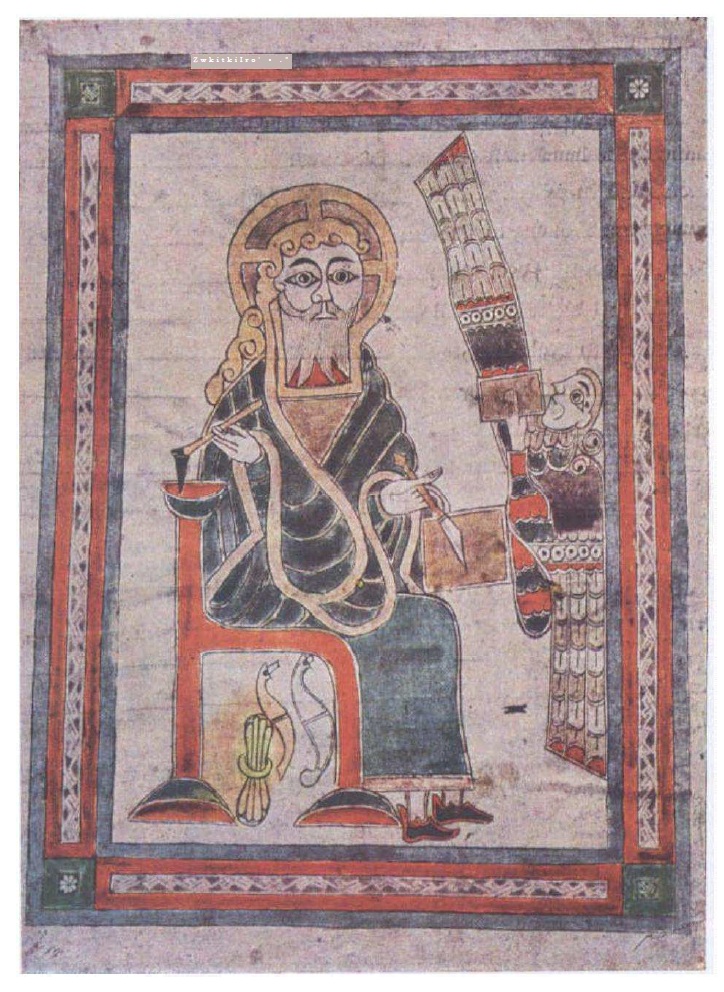
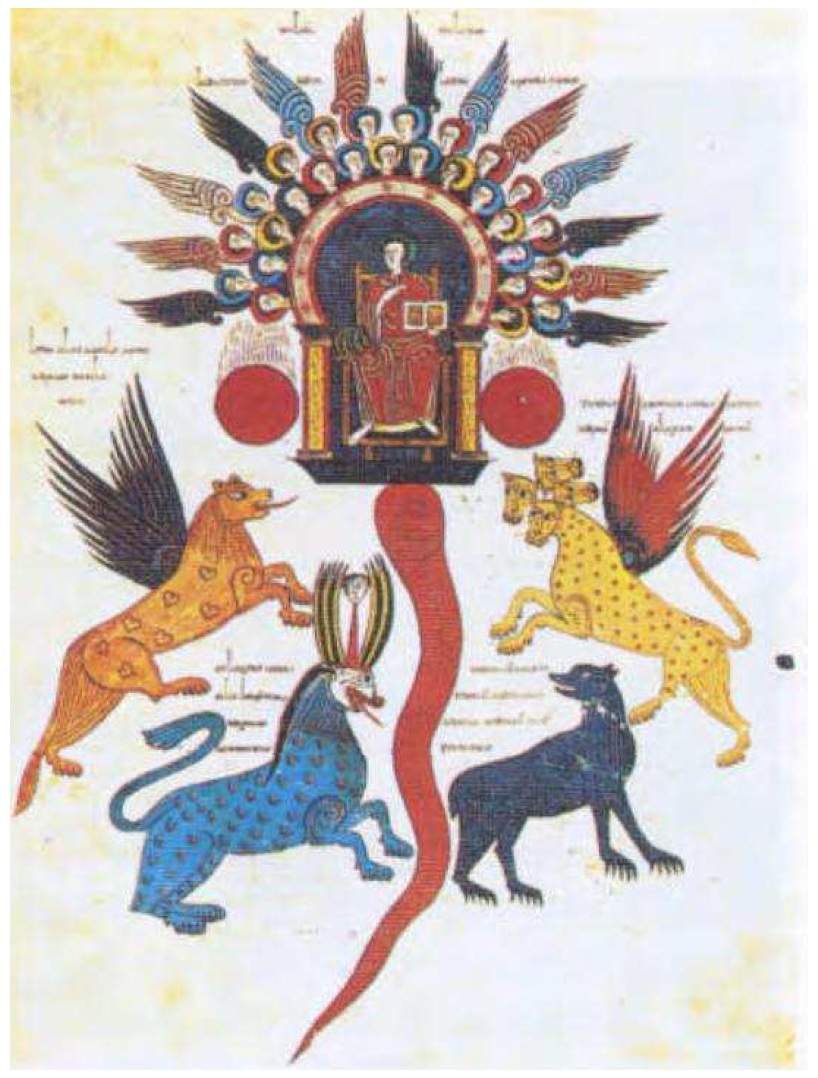
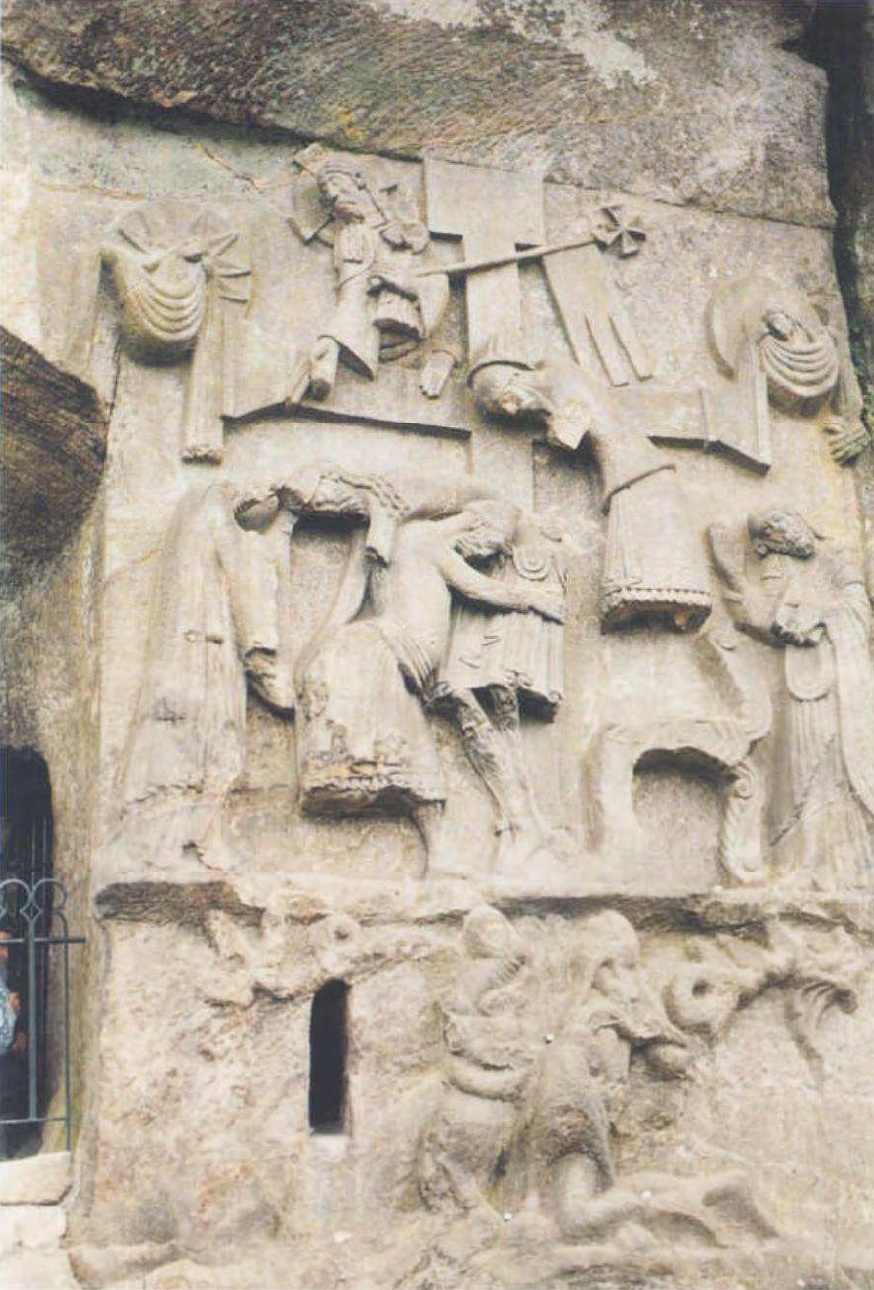
|
|
|
Sources
[web01] https://de.wikipedia.org/wiki/Masoreten
[web02] https://de.wikipedia.org/wiki/Tiberias
[web03] https://de.wikipedia.org/wiki/Bollandisten
[web04] https://worldhistoryedu.com/samaritan-torah/
[web05] https://de.wikipedia.org/wiki/Samaritaner
[web06] https://de.wikipedia.org/wiki/Origenes
[web07] https://de.wikipedia.org/wiki/Semitische_Sprachen
[web08] https://de.wikipedia.org/wiki/Axiom
[web09] https://de.wikipedia.org/wiki/Evangelienharmonie
[web10] https://de.wikipedia.org/wiki/Tatian
[web11] https://de.wikipedia.org/wiki/Otfrid_von_Wei%C3%9Fenburg
[web12] https://de.wikipedia.org/wiki/Heliand
[web13] https://de.wikipedia.org/wiki/Johann_Andreas_Schmeller
[web14] https://de.wikipedia.org/wiki/Irenäus_von_Lyon
[web15] https://de.wikipedia.org/wiki/Didache
[web16] https://de.wikipedia.org/wiki/Externsteine